
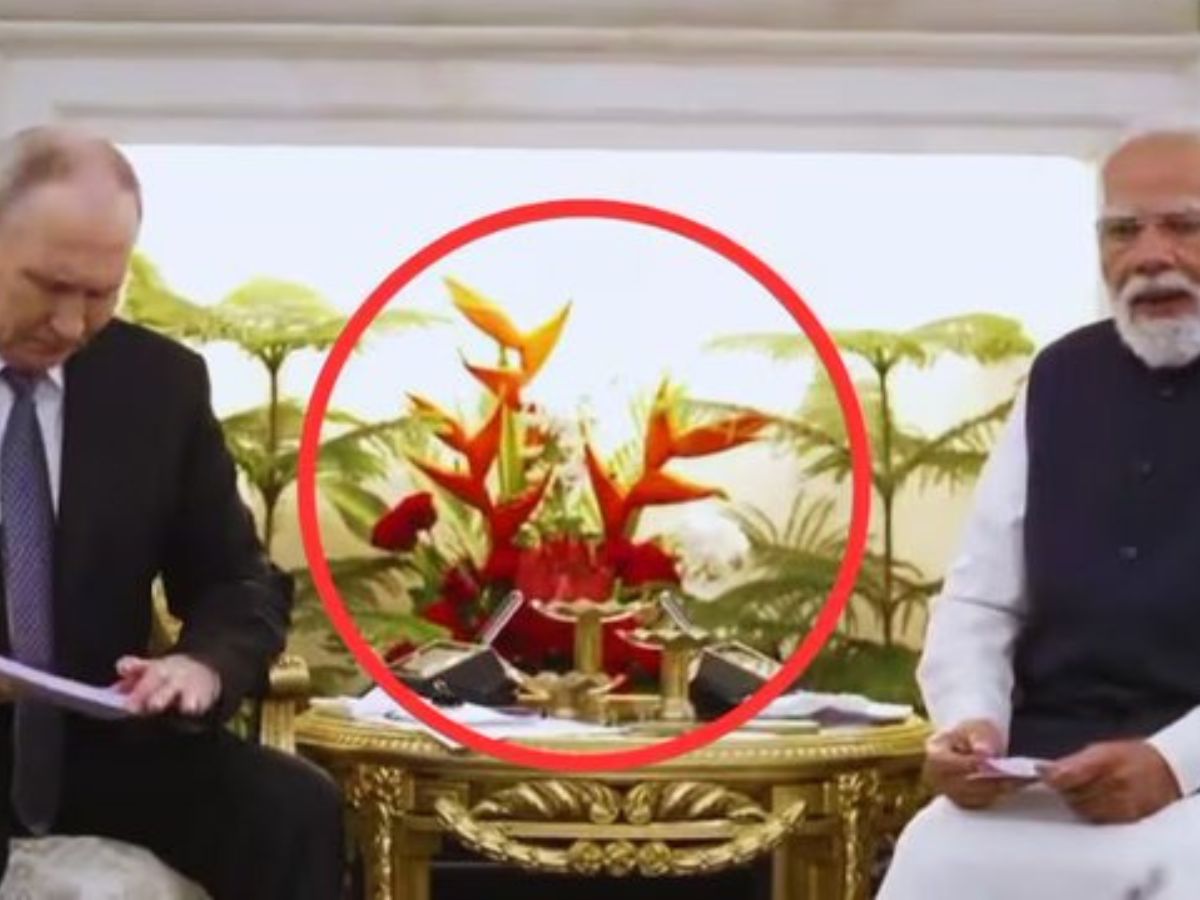
Russian President Vladimir Putin visit to India for the India-Russia Summit 2025 was marked by extraordinary diplomatic gestures, including an airport welcome by Prime Minister Narendra Modi, reflecting the deep, time-tested friendship between the two nations.
While global attention focused on defense deals and strategic discussions, a seemingly small detail in the décor behind the leaders during their meeting captured unexpected attention and sparked curiosity: the presence of a striking tropical plant known as the Heliconia.
10 Interesting facts About Heliconia plant are:
1. What Does a Heliconia Plant Look Like?
It has large, banana-like leaves and brightly colored red, orange, pink, or yellow bracts, lending it a tropical, ornamental look.
2. Cultural Significance of the Heliconia Plant
The Heliconia is a plant of cultural significance in the tropics, embodying renewal, beauty, and an exotic flair. Ceremonies, traditional decoration, and various celebrations use this plant.
3. What is the Scientific Name of the Heliconia Plant?
Scientifically, this plant is known as Heliconia, which belongs to the family of Heliconiaceae.
4. Does the Heliconia Plant Help Reduce Air Pollution?
Yes, like most broad-leaved tropical plants, Heliconia contributes to better air quality by absorbing carbon dioxide and releasing oxygen, though it is not specifically known as an air-purifying plant.
5. How Much Does a Heliconia Plant Cost?
The cost of a Heliconia plant can vary from ₹200 to ₹1,500 in India, depending upon the species, size, and nursery.
6. Where is the Heliconia Plant Mostly Found?
The Heliconia primarily grows in the tropics of Central America, South America, the Pacific Islands, and some parts of Southeast Asia.
7. How Many Species of Heliconia Exist Worldwide?
There are over 200 species of Heliconia worldwide, with many species cultivated for landscape use.
8. Is the Heliconia Plant Found in India?
Heliconia is native to and grown throughout India, especially in tropical states such as Kerala, Karnataka, Goa, Tamil Nadu, and the Northeastern region.
9. Does Heliconia Grow Better in Sunlight or Shade?
Heliconia does best in bright, indirect sunlight to partial shade, although some varieties tolerate full sun with adequate watering.
10. Why are Heliconia Flowers Important to Hummingbirds?
The flowers of heliconia are essential to hummingbirds, as their long tubular bracts provide nectar, perfectly matching the beaks of hummingbirds, thereby making them the major pollinators of the plants.