
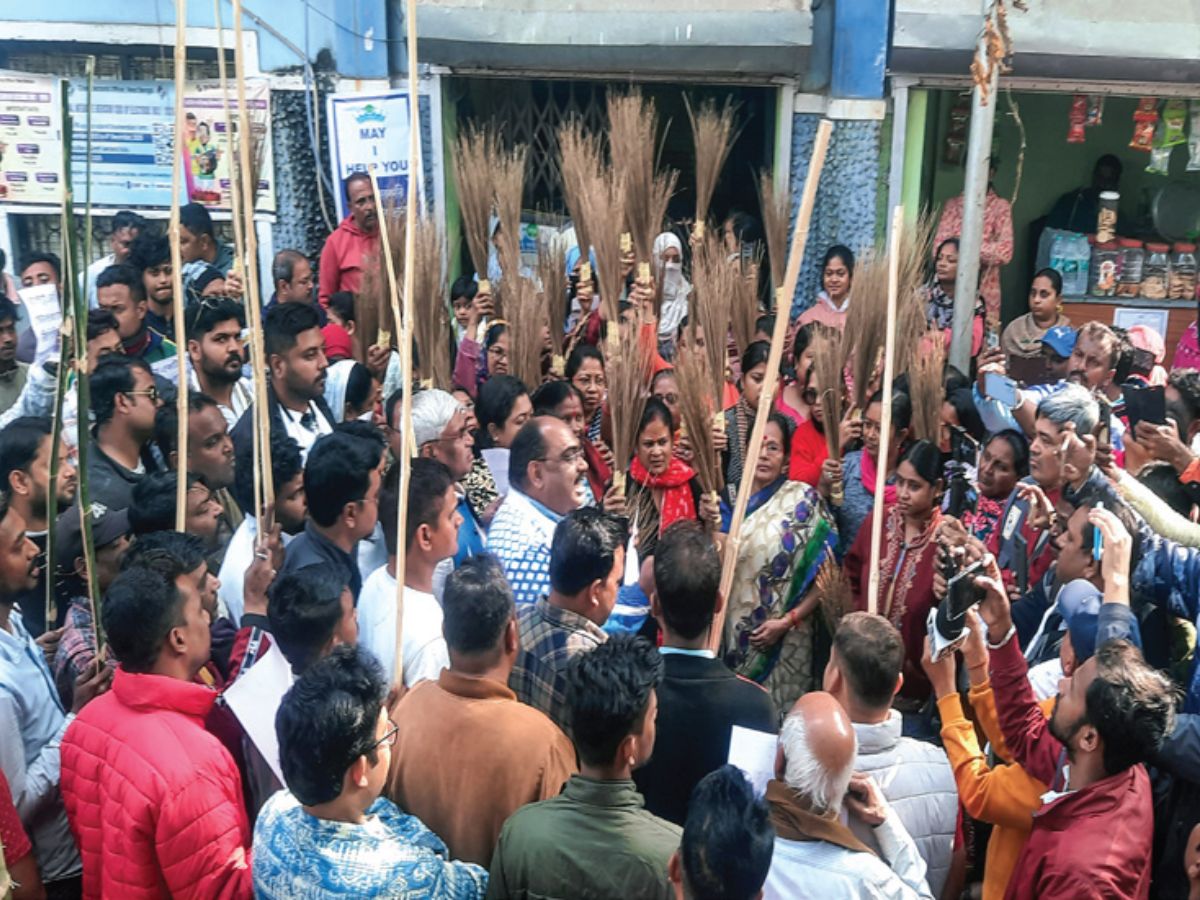
A day after the Supreme Court stepped in to alleviate the “stress and strain” faced by ordinary voters during West Bengal’s Special Intensive Revision (SIR) of electoral rolls, issuing a slew of binding directions to the Election Commission of India (ECI) to make the process transparent, accessible and voter-friendly, and reiterating that the core purpose of the exercise was to ensure that no eligible voter is excluded, protests and violence broke out in various places across the State to protest “SIR harassment”.
In many places, BJP workers were assaulted by Trinamool Congress activists while going to hearing centres to submit Form 7. This form is used to point out names which may be deleted. Since the protests were largely led by Trinamool Congress leaders, the police stood by inactive even when hearings were disrupted and venues ransacked.
In Basanti in South 24-Parganas district, the BDO office where SIR hearings were being conducted was attacked, ransacked and furniture and documents were destroyed. The same situation prevailed in Sandeshkhali in North 24-Parganas.
Roads were blocked and tyres set ablaze as demonstrations erupted across multiple districts in West Bengal on Tuesday, with protesters alleging systematic harassment of voters during the ongoing electoral roll revision process in the poll-bound State. The unrest occurred in South 24 Parganas, North 24 Parganas, Jhargram, and Purba Medinipur, prompting authorities to strengthen force deployment in affected areas. The protests came just a day after the Supreme Court emphasized that the SIR process must be “transparent” and should not cause “inconvenience” to electors. The apex court had instructed the Election Commission to display the names of those on the “logical discrepancies” list at gram panchayat bhavans and block offices, where documents and objections could be submitted.
Demonstrators alleged that despite possessing valid documents, elderly citizens and genuine voters were being served SIR notices under the pretext of “logical discrepancies” or being “mismatched with the voter list of 2002,” from when the SIR was last conducted in the State. The grievances centred on what protesters described as arbitrary removal of eligible voters from electoral rolls.
In South 24-Parganas districts, protesters blocked roads in areas including Dholahat and Polba, forcing authorities to deploy security personnel to clear obstructions and prevent escalation. “A few roads were blocked temporarily, but the situation is now under control. We are in constant touch with local representatives and ensuring that no adverse law-and-order situation develops,” a senior police officer told The Daily Guardian.
Shankar Ghosh, BJP chief whip in the West Bengal Assembly, said: “The criminal activities of the TMC is the direct brainchild of Mamata Banerjee and Abhishek Banerjee.”
The protests were particularly intense in Purba Medinipur’s Haldia Debhog Gram Panchayat, where locals alleged disproportionate targetting of specific communities. According to protesters, around 650 of 1,248 voters from booth number 269 in Manoharpur received hearing notices, with a majority allegedly belonging to minority communities.
This pattern of notices raised concerns about potential voter disenfranchisement ahead of upcoming elections. The demonstrations highlighted the tension between election officials conducting the revision exercise and voters who fear being wrongfully struck off electoral rolls. The SIR process, designed to update and clean voter lists, has reportedly become a source of anxiety for many citizens who question the criteria being used to identify discrepancies.
Police officials maintained they had limited authority, emphasizing their role was confined to maintaining law and order rather than addressing electoral grievances.