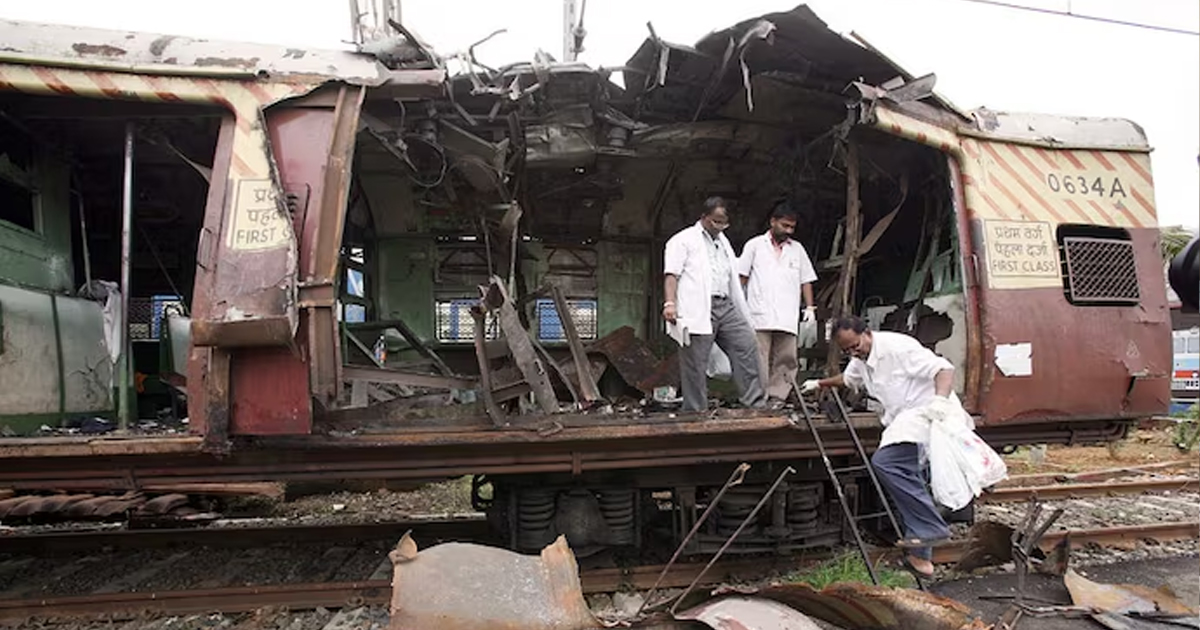
In a historic verdict almost two decades after one of India’s most lethal terror strikes, the Bombay High Court on Monday acquitted all 12 men who had been convicted in the 2006 Mumbai train bombings. The explosions had killed 189 people and injured over 800, jolting the heart of the city’s suburban railway system.
A division bench consisting of Justices Revati Mohite Dere and Gauri Godse passed the order, pointing out serious mistakes in the case of prosecution. The court determined that the evidence produced was not sufficient to support a conviction under the law.
Key Witnesses and Testimony Questioned
The bench had serious concerns about the credibility of the main prosecution witnesses. “The defence had raised serious questions regarding the test identification parade. Most witnesses had remained quiet for abnormally long periods, some for four years or more, before spontaneously identifying the accused. This is unusual,” the court stated in its operative order.
One of the witnesses had also testified in several other unrelated cases, including the Ghatkopar blast case, which went against the credibility of the testimony. Many others could not clarify how they were able to remember the accused after such prolonged delays.
Torture, Coerced Confessions, and Procedural Flaws
The bench noted that most of the confessions were made under coercion, with charges of torture by the police. Identification parades were done in doubtful ways, and some witnesses weren’t even questioned during the trial.
As far as physical evidence goes, the bench further stated, “As for recoveries such as RDX and other explosive substances, the prosecution was unable to prove that the evidence was inviolate until it was in the Forensic Science Laboratory.”
The High Court accused the prosecution of “non-application of mind” and held that the case had not been established beyond a reasonable doubt. “It is hard to say that the prosecution can stand on its charges,” the bench stated.
19 Years Behind Bars: Justice Delayed but Delivered
The High Court decision overruled the October 2015 verdict of the Maharashtra Control of Organised Crime Act (MCOCA) court, which had awarded death sentences to five of the accused and life sentences to the remaining seven.
One of the 12, Kamal Ansari, passed away in 2021 from COVID-19 in jail. The other 11, who spent 19 years behind bars, will now be released.
Defendant Yug Mohit Chaudhry, the lawyer for some of the accused, hailed the verdict, saying, “This judgment will be a sign of hope for those wrongly incarcerated.” The bench replied, “We did our duty, and it was our responsibility.”
Public Prosecutor Raja Thakare also accepted the verdict and added, “The judgment would serve as a guiding light for future trials.”
The 2006 serial blasts remain one of the darkest chapters in Mumbai’s history, with seven coordinated bomb explosions in first-class compartments during the evening rush hour on the Western Railway line.