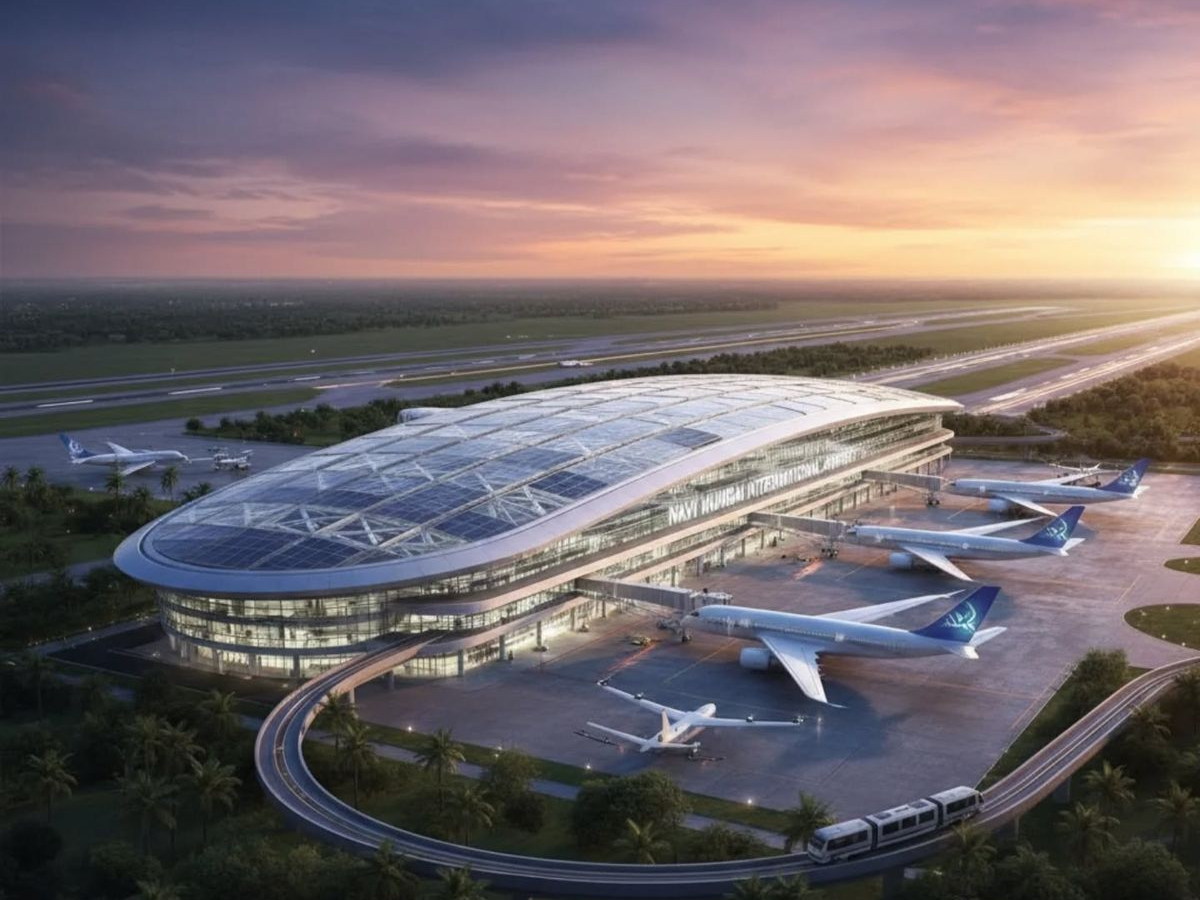
Prime Minister Narendra Modi will inaugurate the first phase of the gigantic ₹19,647 crore Navi Mumbai International Airport (NMIA) project on October 8. This inauguration is a milestone for India’s aviation industry, making NMIA an important new gateway for the Mumbai Metropolitan Region (MMR).
A Second International Gateway for Mumbai
NMIA, a greenfield facility, will be the MMR’s second international airport, in addition to the current Chhatrapati Shivaji Maharaj International Airport (CSMIA). This highly awaited airport is set to commence commercial operations in December 2025.
The project cleared a major hurdle recently when the Directorate General of Civil Aviation (DGCA) issued it the mandatory aerodrome license on September 30.
The construction is being carried out by Navi Mumbai International Airport Ltd, a consortium company. The Adani Group is at the head of the consortium with a 74% stake, and the City and Industrial Development Corporation of Maharashtra (CIDCO) has the remaining 26%. CIDCO Vice Chairman and Managing Director Vijay Singhal confirmed the launch, saying the “second airport of Maha Mumbai” would be commissioned by the Prime Minister.
Key Features and Future Plans
The International Air Transport Association (IATA) has assigned the code ‘NMI’ to the new facility. PM Modi is expected to arrive at approximately 2:40 pm for a tour of the terminal building before addressing the dignitaries.
Several major carriers, including Air India Group, IndiGo, and Akasa Air, have already committed to partially relocating their operations to NMIA once it launches.
Stretching 1,160 hectares, NMIA will be one of Asia’s biggest aviation centers. Once completed in full, the airport will have four terminals and will have the capacity to handle a maximum of 90 million passengers per annum and process 3.25 million metric tons of cargo.
Also Read: Cyclone Shakti Weakens Over Arabian Sea, IMD Predicts Heavy Rain for Eastern India
Multi-Modal Connectivity and Green Design
A highlight of NMIA is its position as India’s very first multi-modal transport-linked airport. It provides inclusive accessibility choices, bringing the flyers through expressways, highways, metro, suburban railway, and even water taxis.
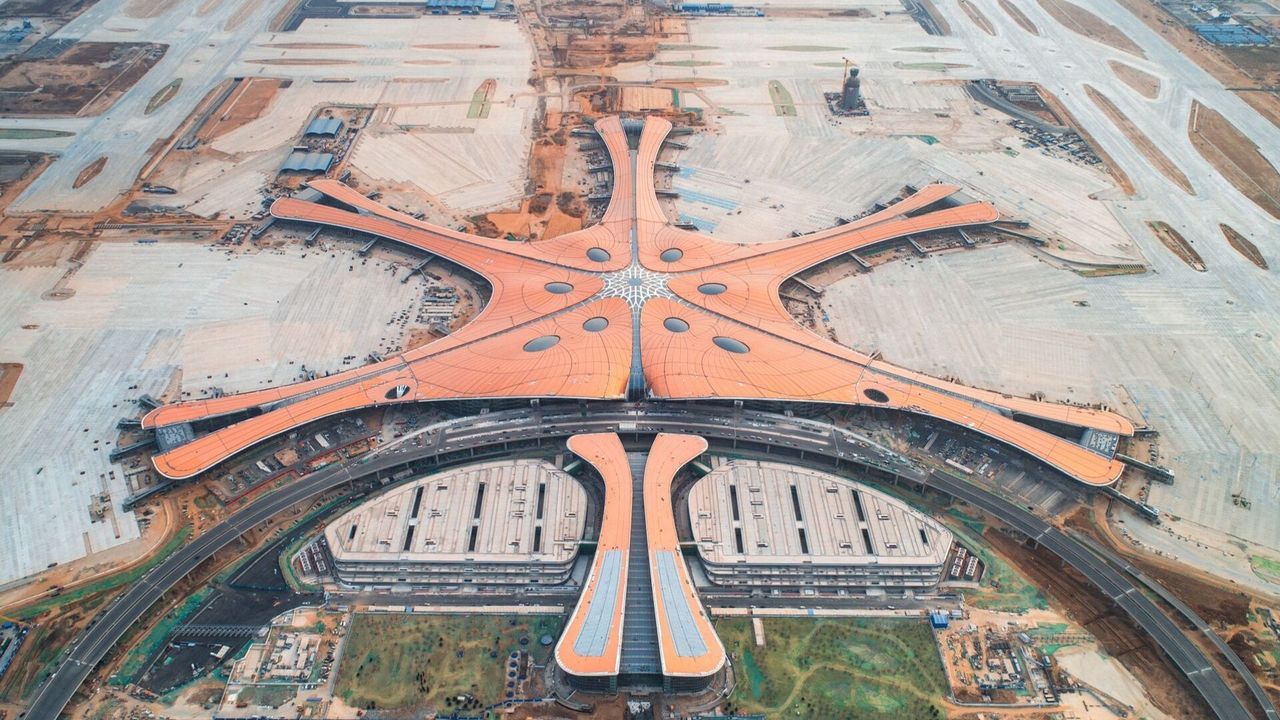
The airport also highlights its commitment to sustainability by including infrastructure for sustainable aviation fuel (SAF) storage. To enhance passenger experience and operational efficiency, an Automated People Mover (APM) system will connect all terminals internally, streamlining movement within the large campus.
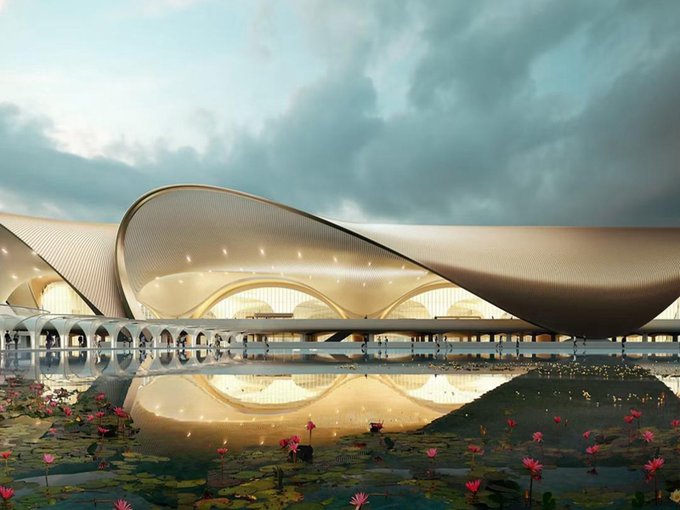
The inauguration of NMIA’s first phase signifies a major step toward decongesting Mumbai’s air traffic and boosting the economic growth of the entire region.
Also Read: Who Is Prashant Kishor? Age, Education, Net Worth, Family and Political Career Explained