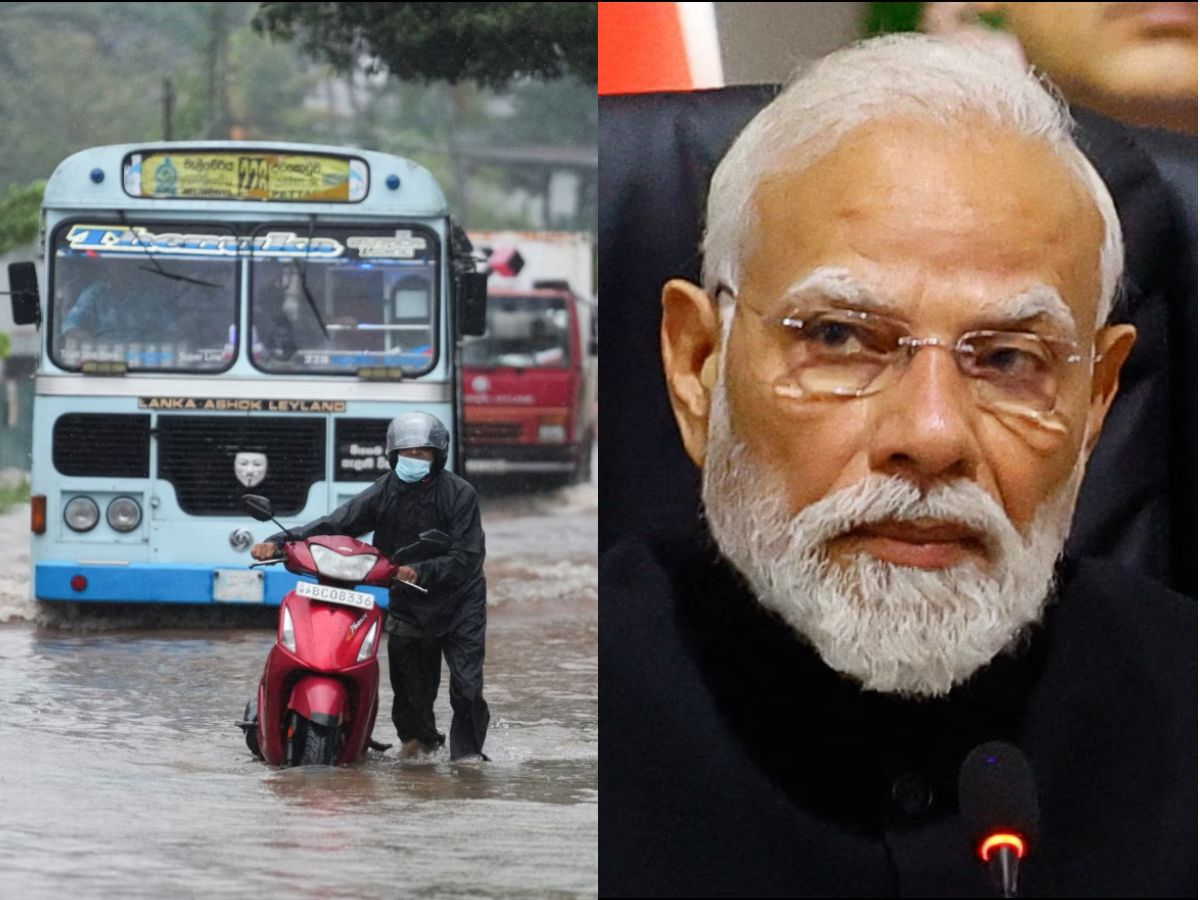
Amid severe flooding and landslides caused by Cyclone Ditwah, Sri Lanka faces widespread devastation and loss of life. Thousands are displaced, hundreds remain missing, and infrastructure has been heavily damaged. India has swiftly responded, offering humanitarian aid and rescue support to help the island nation cope with the crisis.
PM Modi Extended Support to Sri Lanka After Cyclone Ditwah
India quickly stepped in to offer help to Sri Lanka after the devastating impact of Cyclone Ditwah, which caused widespread floods and landslides across the island. On Monday, Narendra Modi called Sri Lanka’s newly elected President Anura Kumara Dissanayake to express condolences and promise full support. The phone call underlined India’s readiness to assist during this humanitarian crisis.
In the wake of thousands of casualties, missing persons, and large-scale destruction, the immediate response from India has been swift and wide-ranging. As emergency rescue and relief efforts continue, the two leaders pledged to stay in close touch.
What PM Modi Promised Sri Lanka?
During the call, PM Modi conveyed India’s solidarity with Sri Lankan people. He said India stands strongly with the island nation “in this hour of need.” Dissanayake responded with deep gratitude. He praised the rapid arrival of rescue teams and relief supplies sent by India. He also passed on the thanks of the Sri Lankan people for the timely help.
PM Modi assured that, under India’s strategic “Neighbourhood First” initiative and the maritime-aid mission Operation Sagar Bandhu, New Delhi will continue to support Sri Lanka as it rebuilds homes, infrastructure, and livelihoods.
Massive Relief Operation Launched by India
India dispatched a large-scale humanitarian mission just hours after the call. Two transport aircraft — a C-130 and an IL-76 — carried paramilitary teams and relief supplies. A second C-130J plane landed in Colombo with approximately 10 tonnes of disaster-response materials, medical personnel, and emergency kits.
Additionally, the Indian Navy’s warship and its aircraft carrier deployed navy helicopters and teams to assist with rescue operations. Within days, India had delivered around 53 tonnes of relief material by air and sea. More than 2,000 Indians stranded in Sri Lanka were evacuated back home.
The country also sent two urban search-and-rescue teams, comprising 80 personnel from the national disaster-response force, to assist flood-hit families. Over 150 people have reportedly been rescued so far.
Cyclone Ditwah in Sri Lanka: Death Toll, Missing & Recovery Plans
The impact of Cyclone Ditwah has been catastrophic. The Sri Lankan disaster agency reports that over 334 people have died, with hundreds still missing. Thousands of families lost homes and crops. In the worst-affected districts, including Kandy, Nuwara Eliya, and Badulla, death tolls are highest and many homes lie submerged or destroyed.
The Sri Lankan government has now proposed creating a special recovery fund. It plans to draw support from both public donations and private-sector contributions. The fund aims to help rebuild damaged homes, restore infrastructure, and revive the livelihoods of affected families.
Meanwhile, international aid is arriving: another country recently donated US$1 million, showing growing global solidarity. The government has also requested a global damage assessment led by the World Bank to gauge the full scale of destruction and help plan long-term recovery efforts.
What This Means for India–Sri Lanka Relations?
India’s rapid response signals strong regional solidarity under its “Neighbourhood First” policy. The relief efforts reinforce the country’s role as a first responder in regional disasters. For Sri Lanka, the support offers timely lifelines to thousands displaced or stranded.
The cooperative relief efforts could also deepen diplomatic ties between the neighbours. Experts suggest that the timely Indian assistance may strengthen trust and bilateral cooperation, especially in disaster response, humanitarian aid, and regional stability.