
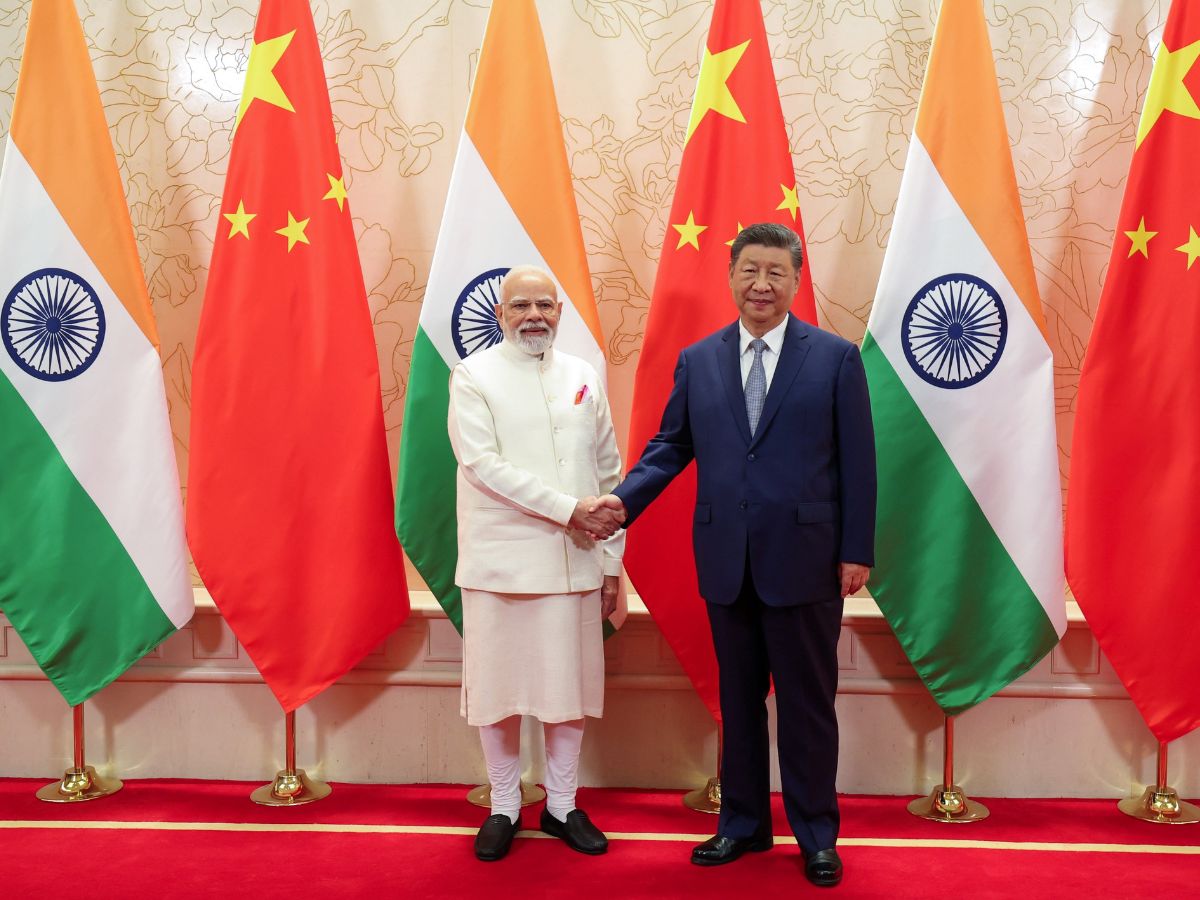
Prime Minister Narendra Modi stressed that India’s ties with China should not be judged through the prism of a “third country”, in what seemed to be a pointed remark about the United States and former President Donald Trump’s aggressive tariff policies. His comments came on Sunday after holding talks with Chinese President Xi Jinping on the sidelines of the Shanghai Cooperation Organisation (SCO) Summit in Tianjin on August 31.
Focus on Strategic Autonomy
According to India’s Ministry of External Affairs (MEA), both leaders agreed on the need to strengthen cooperation on bilateral, regional, and global issues such as countering terrorism and ensuring fair trade in international platforms. The statement highlighted the importance of “strategic autonomy”, suggesting that India and China intend to make decisions based on their own interests rather than external influence.
A Meeting After Seven Years
This meeting carried particular weight, as it marked Modi’s first visit to China in seven years, amid efforts to rebuild trust following the violent Galwan border clash that had soured ties. The discussion signaled a thaw in relations after years of hostility.
Both leaders emphasized that “differences should not turn into disputes,” echoing a line Indian ministers have often repeated. They also underlined the significance of India and China as two major economies capable of stabilizing global trade. On the sensitive border issue, the MEA noted Modi’s call for peace and tranquility in frontier areas, stressing the importance of last year’s successful disengagement and the continued calm since then.
Positive Developments in Ties
The two sides welcomed the “positive momentum and steady progress” in their relationship since their previous meeting in Kazan, Russia, in October 2024. Both leaders reaffirmed that India and China were partners in development, not rivals, and that cooperation between their 2.8 billion people was essential not only for the growth of the two nations but also for building a multipolar Asia and world in the 21st century.
Other positive steps included the resumption of direct flights and visa services as well as the reopening of the Kailash Manasarovar Yatra, which plays an important role in people-to-people exchanges.
Modi also extended an invitation to President Xi to attend the BRICS Summit in 2026, which India will host. Xi, in turn, welcomed the invitation and expressed China’s support for India’s BRICS presidency.
In a separate meeting with Cai Qi, a senior member of the Communist Party of China’s Politburo Standing Committee, Modi sought support for implementing the shared vision discussed with Xi.
Also Read: Tianjin Buzzes as PM Modi Meets Xi Jinping at SCO Summit 2025 | Watch