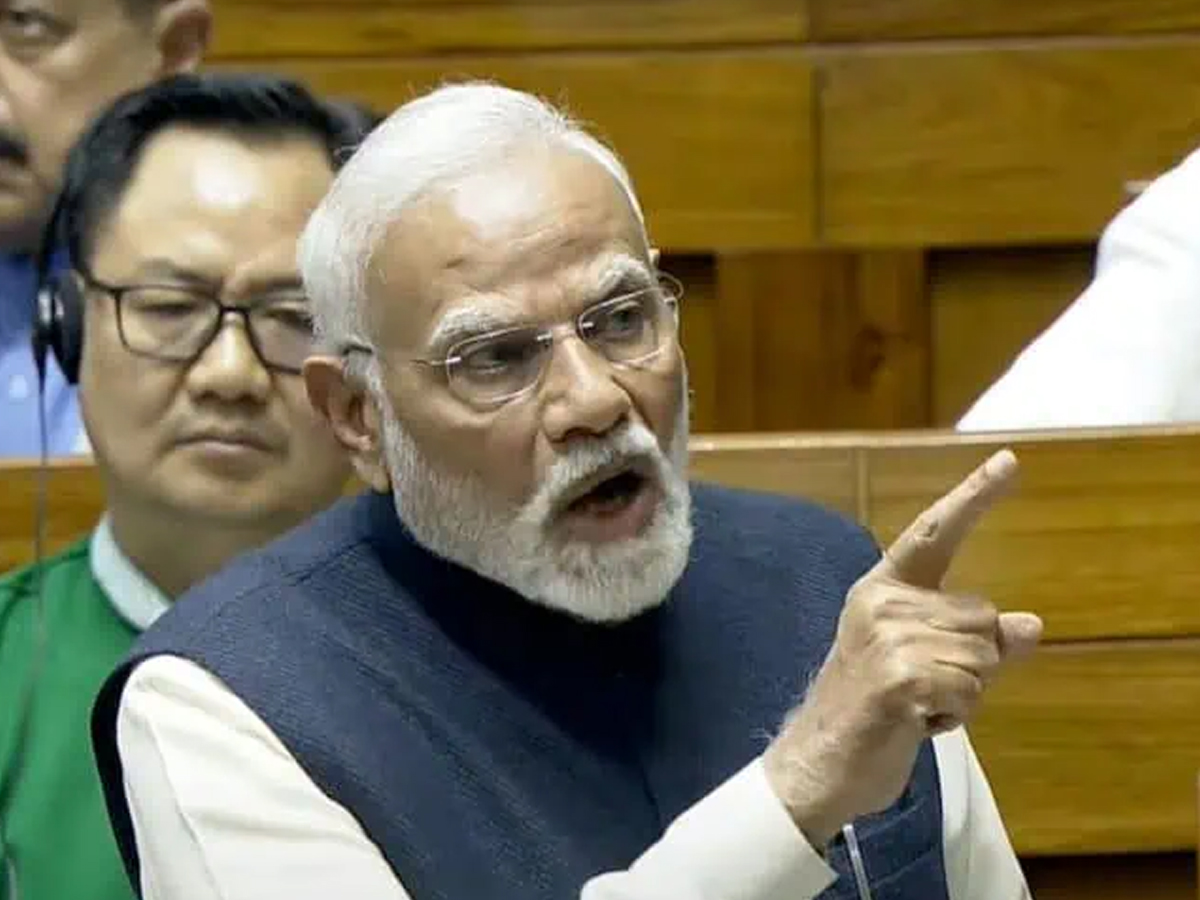
In a sharp opening to Parliament’s 150-year discussion on Vande Mataram, Prime Minister Narendra Modi accused the old guard of altering the song to suit “communal concerns.” He said the decision — taken decades ago — hurt national unity more deeply than many realize. Modi argued that the modification had consequences that echoed into India’s darkest periods.
What Modi Said on Vande Mataram: Nehru, Jinnah, and the Song
Modi accused former Prime Minister Jawaharlal Nehru of echoing the concerns of Muhammad Ali Jinnah. According to Modi, Nehru once wrote to Subhas Chandra Bose that Vande Mataram might “provoke and irritate Muslims”. Modi said this showed a willingness to “pander to communal concerns.”
He also tied the song to later events. “When Vande Mataram completed 100 years, the Constitution was throttled, and those who lived for patriotism were put behind bars,” he remarked, referring to the Emergency of 1975.
VIDEO | Debate over Vande Mataram: Speaking in Lok Sabha, PM Modi (@narendramodi) says, “Pandit Jawaharlal Nehru wrote a letter to Subhash Chandra Bose after Jinnah’s opposition to Vande Mataram, stating that he had read the background of Vande Mataram and thought it might… pic.twitter.com/eVbdB1brK6
— Press Trust of India (@PTI_News) December 8, 2025
For Modi, celebrating 150 years of Vande Mataram now offers a chance to restore its full meaning — before the song’s spirit was compromised.
The “Lost Verses” and Why They Matter
The original composition by Bankim Chandra Chattopadhyay had several stanzas, of which only the first two are officially sung today. In 1937, the Indian National Congress reportedly chose to adopt a truncated version for national gatherings — dropping stanzas that invoked Hindu goddesses.
That decision, Modi argued, “broke the song into pieces.” What was once a rallying cry of unity lost part of its power, he said.
Why This Debate Matters Today
The 150th anniversary of Vande Mataram comes at a politically meaningful time. For Modi and his supporters, reviving the full legacy of the song is more than nostalgia — it’s part of renewing a sense of national identity rooted in shared history and pride.
For many in Congress and elsewhere, however, the 1937 change was about making the song inclusive for a religiously diverse India. The debate today again brings to the fore old tensions around identity, history, and what it means to be Indian.