
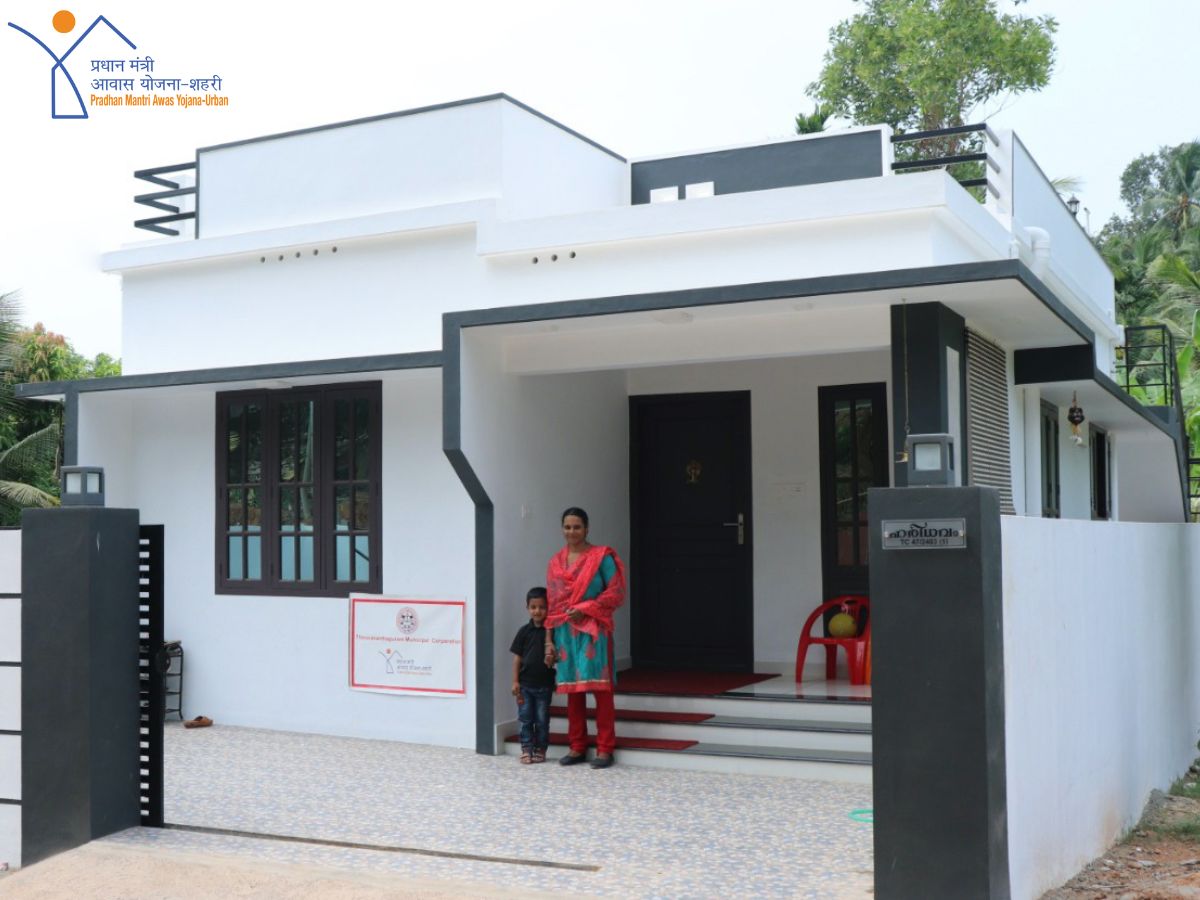
Ministry of Housing and Urban Affairs (MoHUA) sanctioned additional 1.47 lakh pucca houses under the Pradhan Mantri Awas Yojana – Urban 2.0 (PMAY-U 2.0), taking the total sanctioned houses to 8.56 lakh. It was approved at the fourth Central Sanctioning and Monitoring Committee (CSMC) meeting that took place on 12 August 2025 in New Delhi. Presided over by Secretary Shri Srinivas Katikithala, the meeting was the first Housing for All (HFA) Division event at the Kasturba Gandhi Marg office.
ALSO READ | Pradhan Mantri Awas Yojana: How to Apply the Form Online and Offline
Numbers and Approvals Across India
The 1,46,582 new houses cleared by the government span 14 states and union territories: Gujarat, Himachal Pradesh, Ladakh, Madhya Pradesh, Manipur, Maharashtra, Mizoram, Odisha, Puducherry, Punjab, Tamil Nadu, Tripura, Uttarakhand, and Uttar Pradesh. The extensive clearance reflects the government’s pan-Indian vision for urban housing construction.
With this, the total of sanctioned houses in PMAY-U 2.0 is now at 8.56 lakh, a figure that indicates significant advancement since the beginning of the scheme but continues to lag behind the overall national goal that is intended to cover several million of city poor.
ALSO READ | 8th Pay Commission: The Delay in the Notification Raises Eye-brows
Reality Check: Progress vs. Ground Challenges
Though the numbers reflect progress, ground reality shows divergent results. Though there is increasing sanctioned housing stock, pace of construction and fund release continues to be an issue in many states. Delayed release of instalments to beneficiaries has resulted in delays in completion of homes within time.
Moreover, beneficiary selection and verification processes, though improved with satellite imaging and multilayer checks, occasionally encounter issues of exclusion errors and allegations of fake beneficiary entries. The challenge remains to ensure that urgent housing needs of the most vulnerable urban populations are met without delay or corruption. In most of the city centres, fast urbanisation still surpasses housing stock, rendering the sanctioned figures a move in the right direction but not a solution. Infrastructure deficiencies, slum rehabilitation, and availability of land add to complicating timely execution.
ALSO READ | Reformed Slabs: ACs, Daily-use Products May Get Huge GST Slash
Prioritising Improved Monitoring and Target Completion
The Ministry of Housing has stepped up monitoring tools, such as constant tracking of progress and liaison with state governments and local authorities, to fill the gap between sanction and delivery. The Central Sanctioning and Monitoring Committee plays a central role in speeding up clearances and removing bottlenecks timely.
The recent clearances also lay special stress on providing space for senior citizens, differently-abled individuals, and economically weaker sections, to ensure inclusivity in housing benefits.
Conclusion
The latest approval of 1.47 lakh homes under PMAY-U 2.0 is a milestone in India’s urban housing project, taking the total to 8.56 lakh homes approved. The government, though, continues to grapple with construction delays, timely funds transfer, and proper identification of beneficiaries. These need to be strengthened to enable India’s vision for ‘Housing for All’ in towns and cities to be realised in the near future. The concerted leadership of MoHUA, spearheaded by Secretary Srinivas Katikithala, and collaborative efforts with states will be pivotal in transcending these challenges and achieving the ambitious urban housing goals.