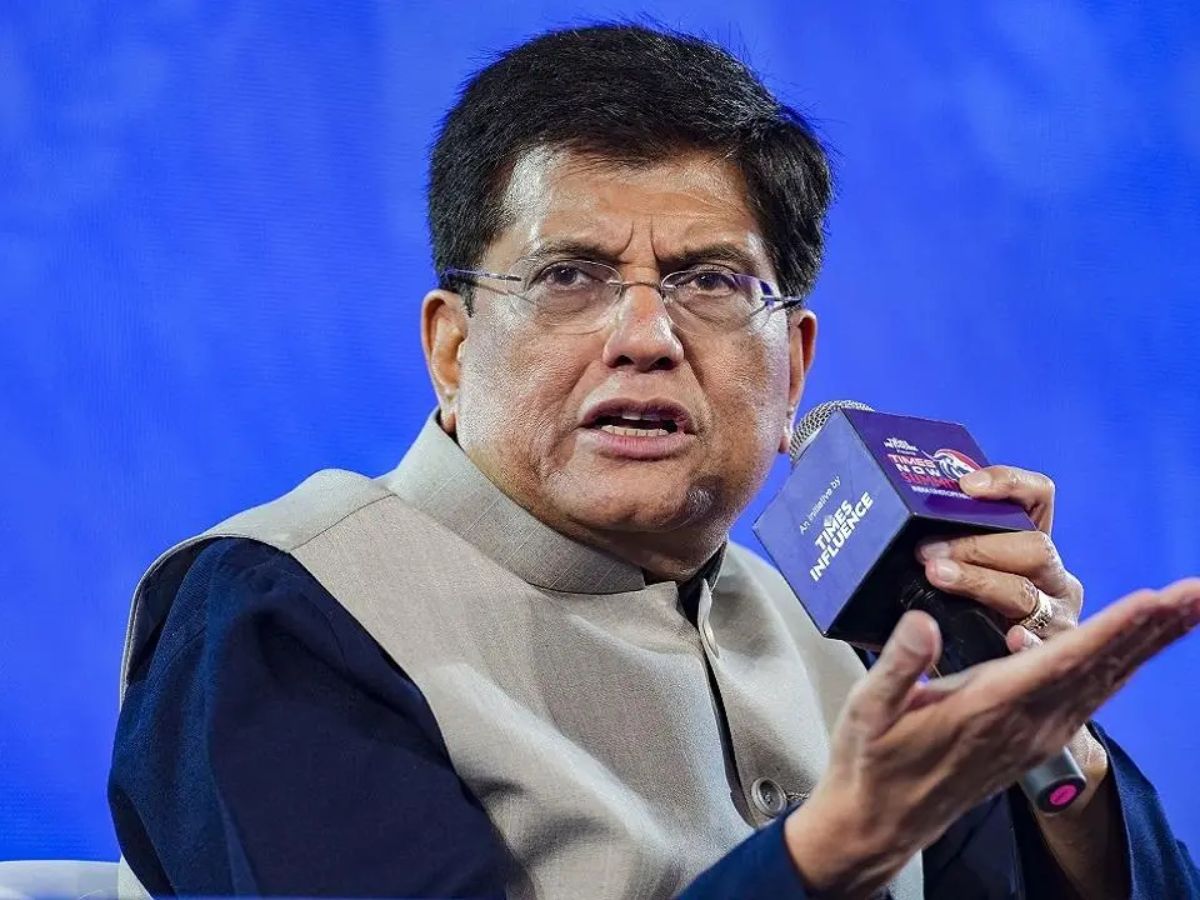
Union Commerce and Industry Minister Piyush Goyal criticized Western countries, especially the US and UK, for double standards on Russia. He raised the issue during the Berlin Global Dialogue, confronting UK Trade Minister Kemi Badenoch over India’s energy trade with Moscow.
“So then why single out India?” Goyal asked, highlighting that Germany is seeking an exemption from US sanctions on Russian oil, and the UK has already secured one. When Badenoch explained the exemption related to a specific Rosneft subsidiary, Goyal responded, “We also have a subsidiary in India of Rosneft.”
India-US Trade Deal Talks Continue
Piyush Goyal’s remarks come amid pressure from the US and its allies for India to reduce imports of discounted Russian crude. The Trump administration imposed additional tariffs on Indian goods over Russian crude purchases, pushing duties to nearly 50%. India has called these tariffs “unfair, unjustified, and unreasonable.”
The US has recently sanctioned Russia’s largest oil producers, Rosneft and Lukoil, due to the Ukraine war. Despite this, Piyush Goyal emphasized India’s independent trade policy, saying, “We never do trade agreements with deadlines or with a gun to our head.”
Trade Partnerships Driven by National Interest
Goyal outlined India’s long-term strategy, focused on becoming a $30 trillion economy in the next 20–25 years. “We recognize the future and negotiate accordingly. We will always seek the best deal for the country,” he said.
He stressed that India’s trade partnerships are guided solely by national interest. “I don’t think India has ever decided who its friends will be based on any consideration other than national interest,” Goyal said.
He added, “If someone tells me tomorrow I can’t be friends with the EU or can’t work with Kenya, that’s not acceptable.” He noted that trade deals go beyond tariffs or market access; they also involve trust and long-term relationships.
Negotiations with the EU and US
India is currently negotiating bilateral trade agreements with the EU and the US. The goal is to double trade with the US to $500 billion by 2030. Despite short-term challenges, Goyal said India’s long-term economic fundamentals are strong.
“We have a very resilient structure, 1.4 billion young, aspirational people, and we’re looking ahead – not making suboptimal deals under pressure,” he said.
India’s Independent Trade Policy Gains Global Attention
Goyal’s firm stance signals that India will chart its own trade course without succumbing to external pressure. Analysts say this approach may encourage other emerging economies to pursue independent trade strategies while balancing global diplomatic relations.
India’s careful approach to Russian oil imports and ongoing negotiations with the US and EU show that the country is prioritizing long-term economic growth and strategic partnerships over short-term pressures.