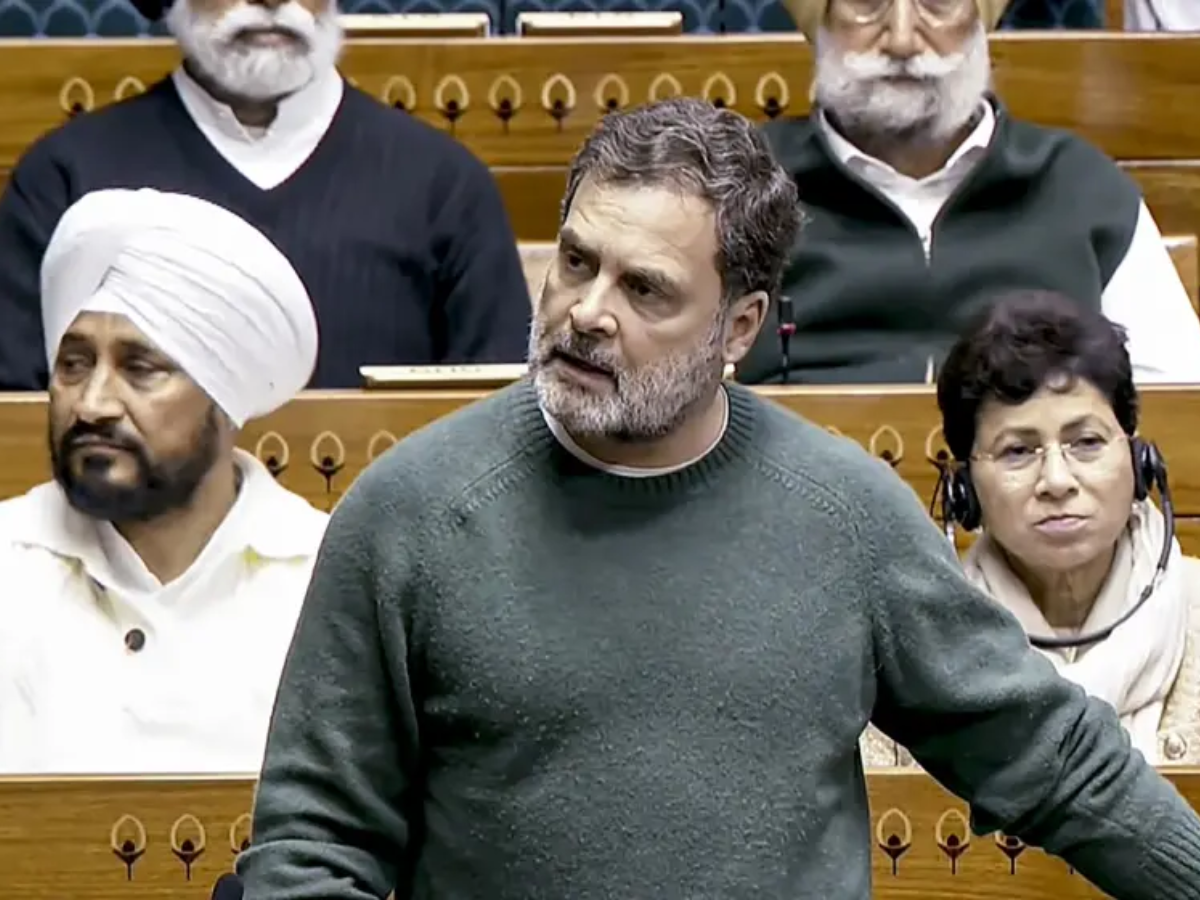
New Delhi: A sharp exchange in Parliament over India’s trade engagement with the United States widened on Tuesday after the government invoked historical episodes from the Congress era to counter Leader of Opposition Rahul Gandhi’s charge that the present dispensation had “surrendered Indian interests” during trade negotiations with Washington.
Gandhi criticised the government over what he described as significant concessions in the trade understanding with the US, using an analogy drawn from martial arts techniques to underscore his argument.
Government sources, rejecting the allegation as baseless, said it was the Congress that had a record of failing to protect national interests.
In remarks made outside the formal parliamentary debate, they referred to episodes from the Cold War and the 2008 civil nuclear agreement to argue that Congress-led governments had previously compromised sovereignty.
Among the references cited was the work of historian Paul M. McGarr in Spying in South Asia, published in 2024. The book discusses claims made by former US ambassador to India Daniel Patrick Moynihan in his 1978 memoir. Moynihan wrote that the CIA had channelled funds to Indian political actors during the Cold War to counter communist influence and claimed that on two occasions money was funnelled to the Congress party. He also alleged that in one instance funds were passed when Indira Gandhi was Congress president. The claims relate to a period when Gandhi was active in national politics.
The same book also recounts early intelligence policy under India’s first Prime Minister Jawaharlal Nehru. Citing archival material, McGarr writes that Nehru expressed scepticism in the early 1950s about expanding intelligence services “in a big way”, arguing that such expansion was beyond the country’s capacity at the time. The account situates that position within the fiscal constraints and institutional limitations of the post-Independence period, including limited China expertise and linguistic capability.
Historians have noted that covert funding of political movements formed part of US Cold War strategy in several regions.
Government sources also pointed to the 2008 India–US civil nuclear agreement negotiated under then Prime Minister Manmohan Singh with US President George W. Bush. Archived US statements at the time said India had committed to separate its military and civilian nuclear facilities and to place its civilian programme under international safeguards.
Under the arrangement, India submitted a separation plan identifying which reactors would be designated civilian and subject to inspection by the International Atomic Energy Agency. Military facilities and the strategic weapons programme were kept outside the safeguards regime.
As per law, the inspections are conducted by the IAEA under a negotiated agreement, not by the United States.