
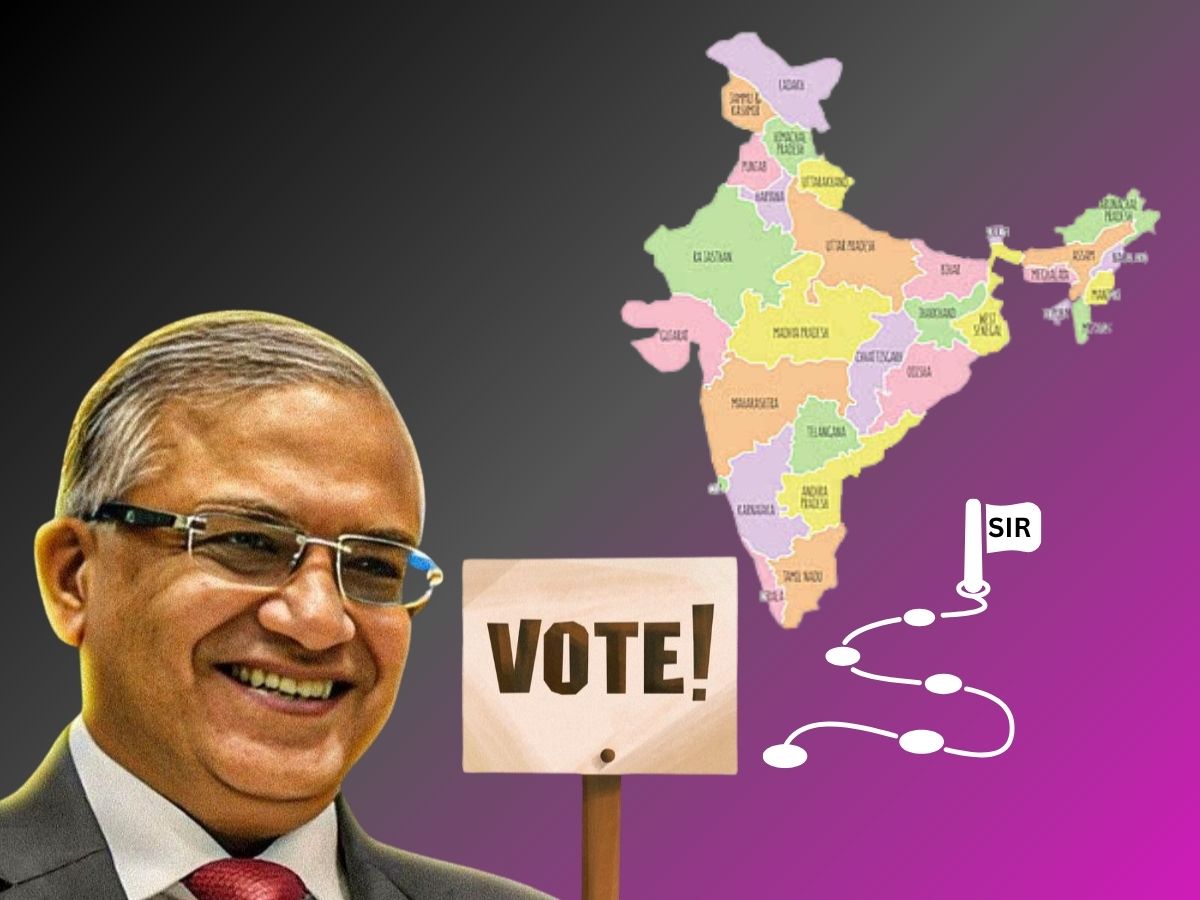
The Election Commission of India (ECI) is preparing to launch a Pan-India Special Intensive Revision (SIR) of electoral rolls, aimed at ensuring a cleaner and more accurate voter database across the country. The exercise will begin in phases from early November 2025, starting with states headed for elections in 2026 such as Assam, Kerala, Tamil Nadu, Puducherry, and West Bengal.
ECI’s Plan and Implementation Strategy
The ECI conducted a two-day conference with Chief Electoral Officers (CEOs) to touch up preparations for the mammoth exercise. Chief Election Commissioner Gyanesh Kumar, and Commissioners Sukhbir Singh Sandhu and Vivek Joshi went through training modules for Booth Level Officers (BLOs) and district officials to impart uniformity and transparency to the process.
The Commission has recommended state election offices to cross-match available rolls against those of earlier intensive revisions, e.g., 2002, 2005, and 2008, and use an eligibility cut-off year like the Bihar model of 2003. The states must also merge Aadhaar and other official documents to prevent duplicate or fake entries.
Government’s Stand and Roadmap
The Union government has extended full support to the ECI’s SIR initiative, framing it as part of a broader reform to bolster electoral integrity and reduce instances of voter duplication. Officials see the SIR as a foundational step toward digitised, real-time voter roll maintenance integrated with the Aadhaar ecosystem.
In Tamil Nadu, initial checks between the years 2002 and 2025 rolls have already found differences of 24% in rural areas and 60% in cities, emphasising the need for the revision. After the November launch, the plan involves inter-state data audits, the linking of community certificates to electoral lists, and the inclusion of real-time monitoring dashboards at both national and state levels.
Opposition Criticism and Allegations
Opposition, comprising the Congress and members of the INDIA bloc, has angrily criticised the SIR, accusing it of being a political instrument to disenfranchise vulnerable groups and gerrymander electoral constituencies. Mallikarjun Kharge and Akhilesh Yadav have accused the election panel of removing selected voters’ names from backward and minority classes, especially in Bihar and Uttar Pradesh. Demonstrations were held in the Parliament building with slogans like “vote chori band karo” and “stop SIR,” blaming the ECI for being biased.
Implications for Democracy
Supporters of the move say that the countrywide voter roll update will make the election process more transparent, avoid electoral manipulation, and bring India’s voting system up to date. Critics caution, though, that political meddling and mismatches in data may undermine people’s trust in democratic processes if security mechanisms are not improved.
The Pan-India SIR is set to be a landmark a milestone administrative reform capable of redefining electoral integrity so long as it is fair, exhaustive, and non-partisan in implementation.