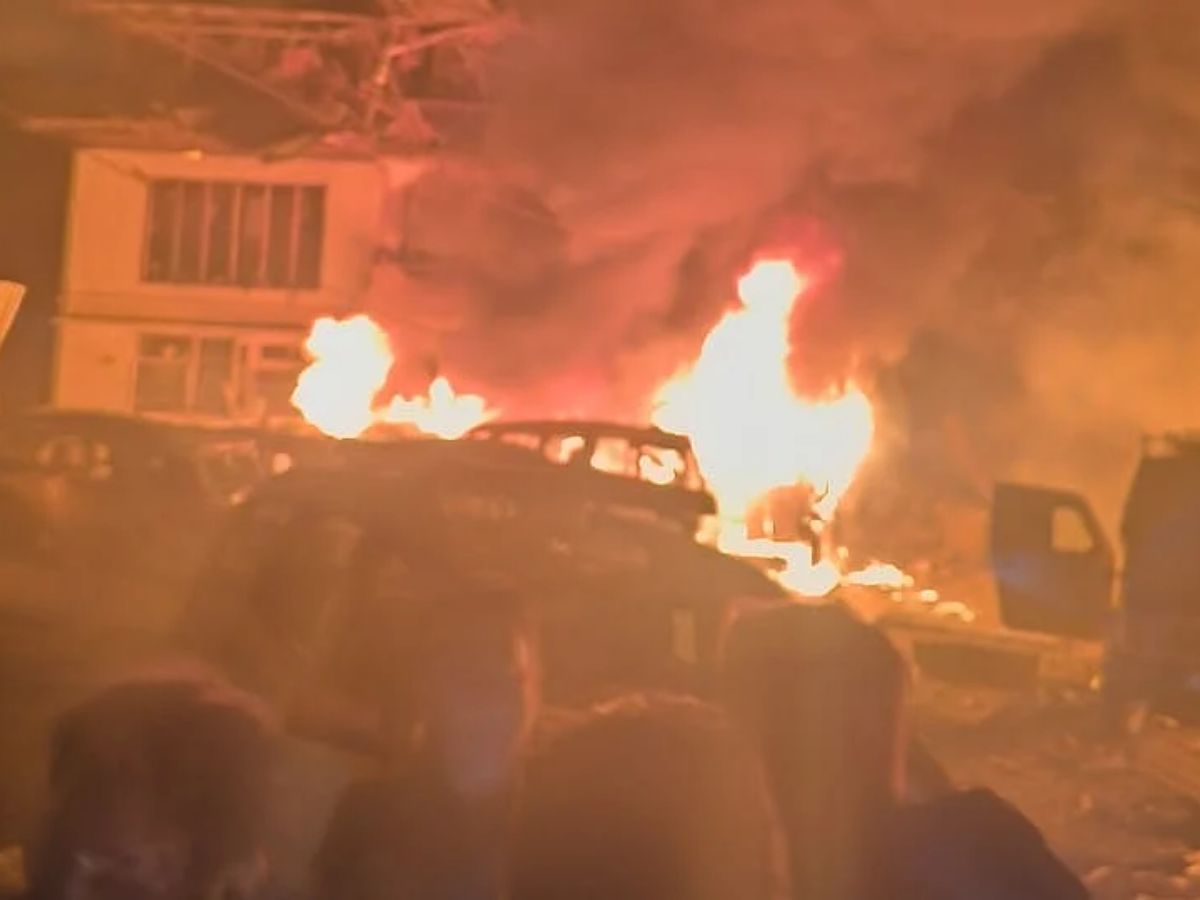
A massive explosion at the Nowgam Police Station in Jammu and Kashmir has triggered a full-scale emergency response after 2,900 kg of seized ammonium nitrate blew up during forensic sampling. The blast killed nine people, injured 29 others, and spread explosive material across the residential area, forcing authorities to seal the neighbourhood and launch an extensive sanitisation drive.
Nowgam Blast: Massive Clean-Up Operation Begins
Authorities launched a large-scale sanitisation drive in Nowgam after a massive blast at the local police station killed nine people and injured 29 others. Officials said the explosion scattered a huge quantity of ammonium nitrate across the surrounding area, making the clean-up urgent and complex.
The blast took place while a Forensic Science Laboratory (FSL) team was collecting samples from around 2,900 kg of seized explosives. Most of the recovered material was ammonium nitrate. Revenue officials, police personnel posted at the station, and a local tailor were also present. The tailor was stitching pouches for the explosive samples.
Nowgam Blast: Security Forces Seal the Area
The police sealed all roads leading to the station with barbed-wire barricades. The station is located inside a densely populated residential area. Officials said the restrictions will continue until the entire zone is declared safe. The move aims to prevent public movement and avoid any chance of secondary explosions.
CRPF road-opening teams and dog squads are clearing the area. Officials said the sanitisation process will take time because of the scale of the dispersal.
Nowgam Blast: Shockwave Felt 5 km Away
The force of the explosion was extremely high. Residents reported hearing the blast up to five kilometres away. The shockwave damaged homes, shops, and parked vehicles within a one-kilometre radius. Windowpanes shattered, walls cracked, and debris scattered across lanes and rooftops.
At first light, senior officers of the J&K Police, CRPF, and Army reached the site. Among them were DGP Nalin Prabhat, ADGP Javeed Gillani, ADGP CID Nitish Kumar, and IGP Kashmir V.K. Birdi. They inspected the damage and coordinated ongoing rescue and sanitisation operations.
Nowgam Blast: Explosives Seized From Faridabad Module
The police chief confirmed nine deaths and 29 injuries. He said the seized explosive material had originated from a case in Faridabad. According to him, “the 2,900 kg of explosives, mainly ammonium nitrate, had been seized in Faridabad based on intelligence provided by Dr Muzamil and Dr Adeel.”
The police brought the material to Kashmir for forensic examination. Sampling was underway when the explosion occurred.
Nowgam Blast: Sampling Work Led to the Blast
Officials said the FSL team followed the standard process of sampling. The large volume of ammonium nitrate made the work slow and sensitive. The presence of unstable material increased the risk during handling. Investigators are now trying to establish what triggered the explosion during the sampling process.
Incident Highlights Gaps in Handling Huge Seizures
The blast has raised serious questions about handling and storing bulk explosives in regular police stations. Security experts say police stations are not equipped to handle large quantities of volatile substances such as ammonium nitrate.
Many are pushing for specialised explosive-handling units, dedicated storage yards, and stricter national-level protocols to prevent similar accidents. They believe this incident could lead to a policy shift across agencies that handle large seizure recoveries.