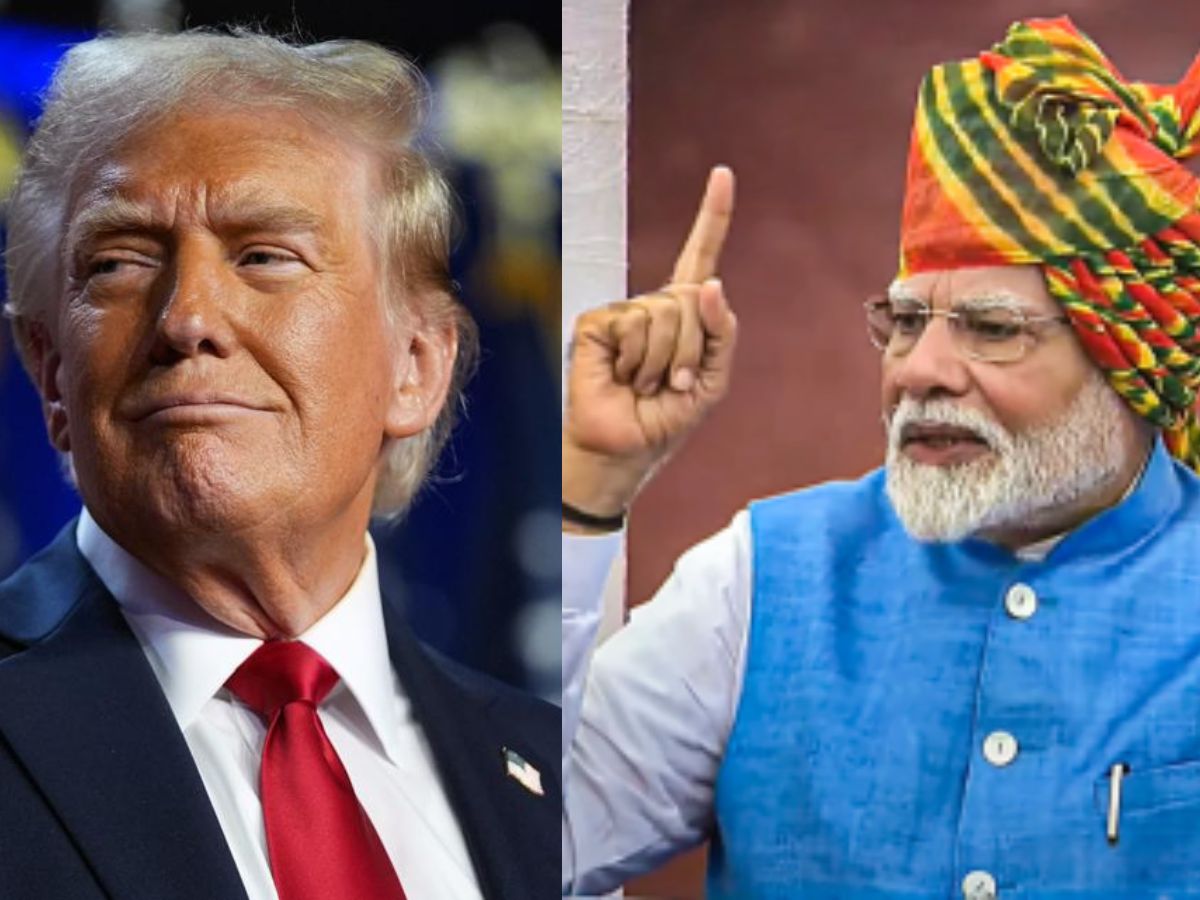
In his 79th Independence Day speech at the Red Fort, Prime Minister Narendra Modi gave a strong message on India’s trade policy, especially in the context of rising tariff tensions with the United States. PM made it clear that India isn’t going to give in to the US under the tariffs’ pressure. Opting to put front-stage the protection of Indian farmers and the dairy industry, Modi strongly rejected pressures from Washington, making it amply clear that India will not exchange crucial interests or livelihoods for short-term trade gains.
Also Read | PM Modi Independence Day 2025 Speech: Top Takeaways You Must Know
Tariffs and the US Pressure
The past few months have witnessed the US ramp up its pressure on India, doubling tariffs on Indian exports from 25% to a whopping 50%. This act, primarily because of India’s ongoing import of Russian oil and its refusal to open up agriculture and dairy markets, risked further complicating trade relations. At the same time, negotiations over a bilateral trade agreement (BTA) have stalled, with the US demanding easier access for agricultural commodities like corn, soybeans, apples, almonds, and processed dairy products. Modi, however, stood his ground.
Also Read | Big GST Reforms and Relief This Diwali, Promises the PM
Modi’s ‘Wall’ for Indian Farmers
Spelling out the country’s stand before the nation, Modi categorically declared: “If any policy goes against India’s farmers, fishermen, cattle rearers, Modi is standing like a wall.” He reiterated that India’s farmers’ interests would never be compromised, no matter the pressure from outside, upholding India’s time-tested refusal to make duty concessions that could compromise the domestic agri-dairy industry. This stands aligned with India’s policy of protecting its primary producers, replicated in trade agreements with partners such as Australia and Switzerland.
Atmanirbhar Bharat and Economic Self-Reliance
Modi’s speech pivoted to India’s broader vision- Atma-nirbhar Bharat (self-reliant India). He celebrated the nation’s agricultural self-sufficiency achieved after independence, saying, “It was a challenge to ensure food for all post-independence, but our farmers made us self-sufficient.” He cautioned against the global rise in “economic selfishness,” urging Indians to focus on strengthening domestic industries rather than devaluing others or bowing to global pressures.
Dairy and Agriculture: Absolutely Non Negotiable
At the centre of the standoff is the vital position of agriculture and dairy in the socioeconomic structure of India. These industries have hundreds of millions of employees and are the backbone of rural incomes. Modi reaffirmed that opening these markets to foreign competition—particularly from advanced agribusiness countries, would undermine price support mechanisms, imperil domestic producers, and undermine food security. Without having made concessions to lower tariffs or permit greater US market penetration in these industries, despite continued BTA negotiations, India has held firm.
India’s Forceful Trade Policy
Modi sent a message: India would prefer to endure tariff increases rather than compromise the interests of its farmers and dairy farmers. He urged policies favouring domestic development and “Made in India” goods, indicating a determined departure towards an increasingly forceful, protectionist, and self-sufficient trade approach.
In summary, Modi’s Independence Day speech crystallised India’s commitment to agricultural and dairy self-sufficiency, underpinning a tough stance on tariffs and trade in the face of mounting external pressures, especially from the US.