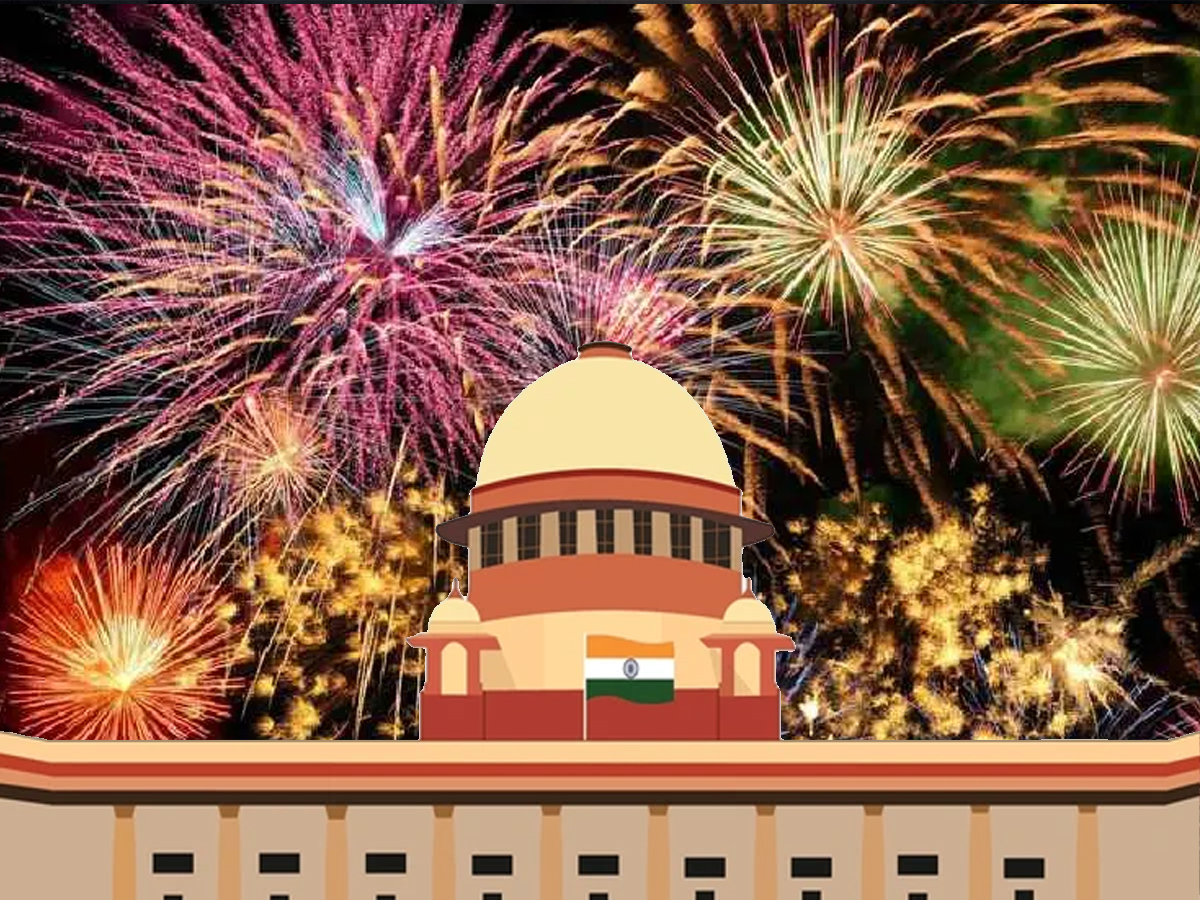
The Supreme Court has raised a key question about India’s firecracker rules. On Friday, Chief Justice BR Gavai asked why bans apply only to Delhi-NCR when many other cities also struggle with pollution.
“If citizens in NCR are entitled to clean air, why not people of other cities?” he said. The CJI added, “We can’t have a policy just for Delhi because they are elite citizens of the country. I was in Amritsar last winter, and the pollution was worse than in Delhi. If firecrackers are to be banned, they should be banned throughout the country.”
The case comes just weeks before Diwali, when firecracker use usually peaks and air quality in North India drops sharply.
Delhi-Focused Rules Questioned
For years, Delhi-NCR has seen strict rules on firecrackers during Diwali. Authorities say the region’s toxic winter air gets worse due to stubble burning, cold weather, and fireworks.
But now, the top court says this policy may not be fair to people outside Delhi. Chief Justice BR Gavai pointed out that many other cities face the same or worse conditions.
ALSO READ: Bomb Threat at Delhi’s Taj Palace Hotel Proved a Hoax, After Massive Security Sweep
Senior Advocate Aparajita Singh agreed. She said, “Elites take care of themselves. They go out of Delhi when there’s pollution.” The court has asked the Commission for Air Quality Management (CAQM) to respond to a plea for a nationwide firecracker ban.
Recent Firecracker Orders
In the past year, courts and governments have passed tough rules in Delhi-NCR:
- December 19, 2024: Delhi imposed a year-round ban on making, storing, selling, and bursting firecrackers.
- January 17, 2025: The Supreme Court extended this ban to NCR districts in Haryana and Uttar Pradesh.
- April 3, 2025: The court rejected requests to allow “green crackers” or relax the ban for certain months.
- In May 2025, the court warned to take severe punishment against the NCR states if they did not implement the ban.
These moves have made NCR the strictest region in India for firecracker rules.
What a Nationwide Ban May Bring?
If the court approves a ban across India, all states will have to follow similar rules. This could mean:
- Fines and penalties for making, selling, or using firecrackers.
- Year-round checks under the Environment (Protection) Act, 1986.
- Tighter monitoring during festivals like Diwali.
Such a move could also shape public opinion. Many people are now more aware of health risks linked to air pollution. A wider ban may encourage cleaner and safer celebrations.
ALSO READ: PM Narendra Modi Manipur Visit Today: Top 10 & Opposition’s Strong Reaction
Balancing Culture & Health
A national ban will also raise questions about balancing tradition with health. Fireworks are a part of celebrations like Diwali, weddings, and sports victories. But doctors warn that firecracker smoke causes more asthma, lung issues, and heart problems. Children and the elderly are the most affected.
Environmental groups say India should promote eco-friendly ways of celebrating, like laser shows, drones, and community light displays. Cities like Sydney and Shanghai have already started moving in this direction. The Supreme Court’s decision may push India to choose between protecting traditions and ensuring clean air for all.
ALSO READ: Why PM Modi’s Manipur Visit Is Important? Biren Singh Calls It a Step Towards Lasting Progress