
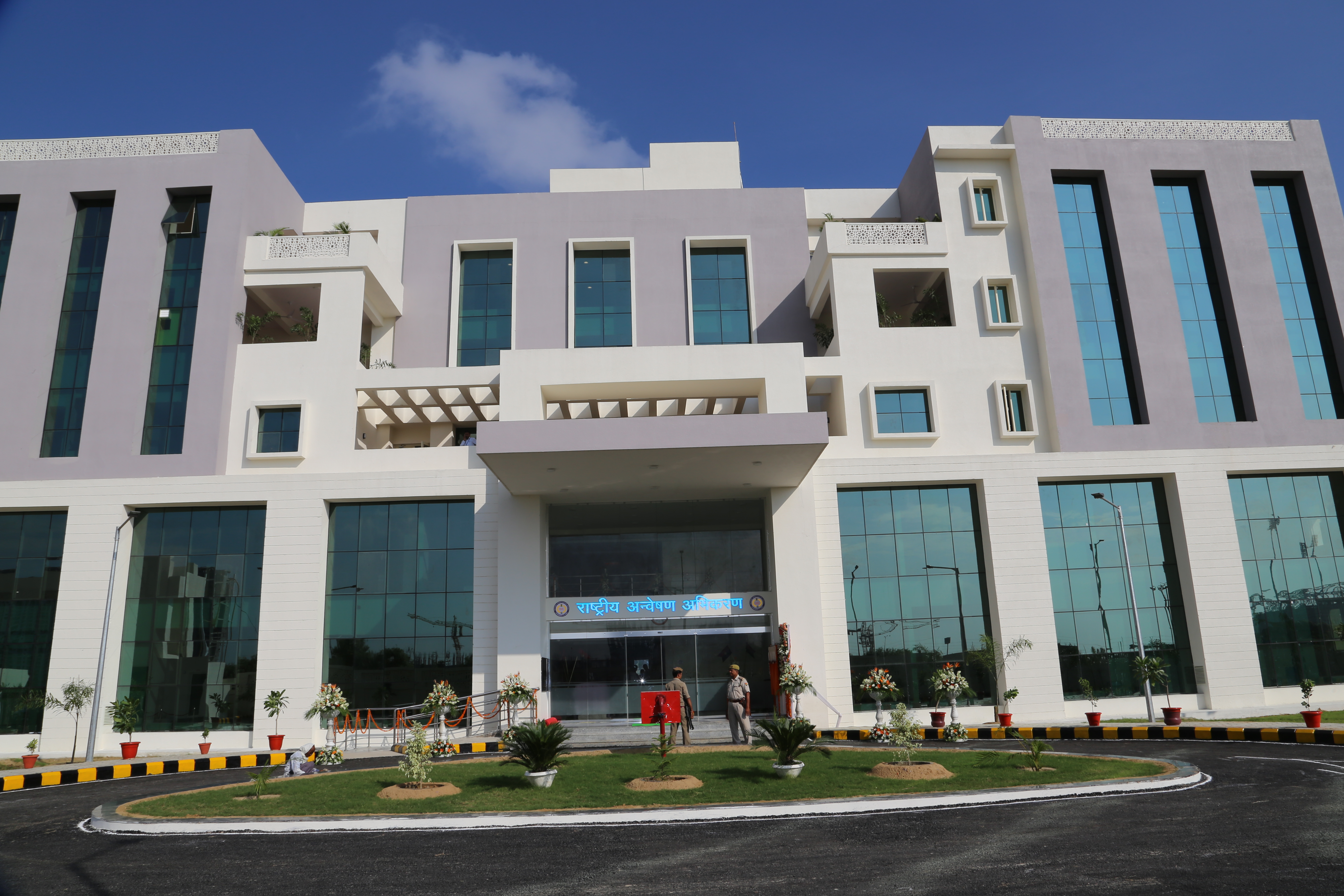
The NIA’s probe into the Red Fort car blast case has revealed a chilling conspiracy by the accused to carry out a series of terror attacks in Lucknow with targets including legislative assembly and other prominent locations with high footfalls, official sources said on Monday.
They said that two of the key accused — Dr Muzammil Shakeel and Dr Shaheen Saeed — travelled from Haryana’s Faridabad to Lucknow between August 25 and 30, 2025 as part of a “calculated reconnaissance trip” for this terror conspiracy.
Muzammil conducted hostile reconnaissance of various targets which were symbols of the government in Uttar Pradesh. He recced the general area of Vidhan Sabha, Bapu Bhawan (civil secretariat) and areas with high footfalls like Imambara, Lal Bagh and Aminabad, the sources said.
The accused persons found these places as suitable targets for their mission. “They were contemplating a plan to explode a car laden with explosives near these building complexes,” a source said.
The probe by the National Investigation Agency (NIA) has also found that accused Muzammil used his phone to search chemical shops in Lucknow stocking the two precursor chemicals required to manufacture Triacetone Triperoxide (TATP), the highly unstable peroxide explosive known internationally as the ‘Mother of Satan’, which was used in the Delhi Red Fort car blast on November 10 last year.
Shaheen, on Muzammil’s instructions, copied the names of these relevant shops in her own handwriting — a list later recovered by the NIA from her phone, the sources said.
The duo stayed at the residence of one of the relatives of Shaheen at Lucknow. Shaheen’s ancestral house, where her father lives separately, is located at Khandari Bazar, Lal Bagh, they said.
Muzammil then asked a “witness”, who hails from Lucknow and was familiar with the city, to physically enquire at these shops about availability of the chemicals in large quantities, the sources said.
This witness was roped in by Muzammil as he was a local and could make enquiries without raising suspicion, unlike Muzammil who could be immediately identified as an outsider, they said.
According to the sources, the accused persons also searched for a place at a remote location of the city where their explosive-making operations could be carried out in a clandestine manner, in the same way as they were operating in the rented house in Khori Jamalpur in Faridabad.
The NIA, through a detailed investigation involving deposition of multiple eye witness accounts and technical analysis, following the financial trail has established the entire sequence of events that transpired during this Lucknow visit.
These findings are part of a voluminous 7,500-page chargesheet filed by the NIA on May 14 in connection with the high-intensity vehicle-borne IED blast that rocked the national capital on November 10 last year.
The anti-terror agency’s investigation establishes that the Ansar Ghazwat-ul-Hind (AGuH) interim terror module — linked to Al-Qaida in the Indian Subcontinent (AQIS) — aimed to set up a covert base in Lucknow, with the objective of launching a series of blasts using the same explosive making technique that they used for carrying out the deadly Red Fort blast, the sources said.
However, their plans were foiled after busting of the module — also known as “doctor” or “white-collar” module due to involvement of medical professionals.
A wider “jihadi conspiracy” was later exposed through a detailed scientific and forensic investigation as the accused, some of whom were radicalised medical professionals, were found to be inspired by AQIS/AGuH ideology to carry out the deadly attack, according to the NIA chargesheet.