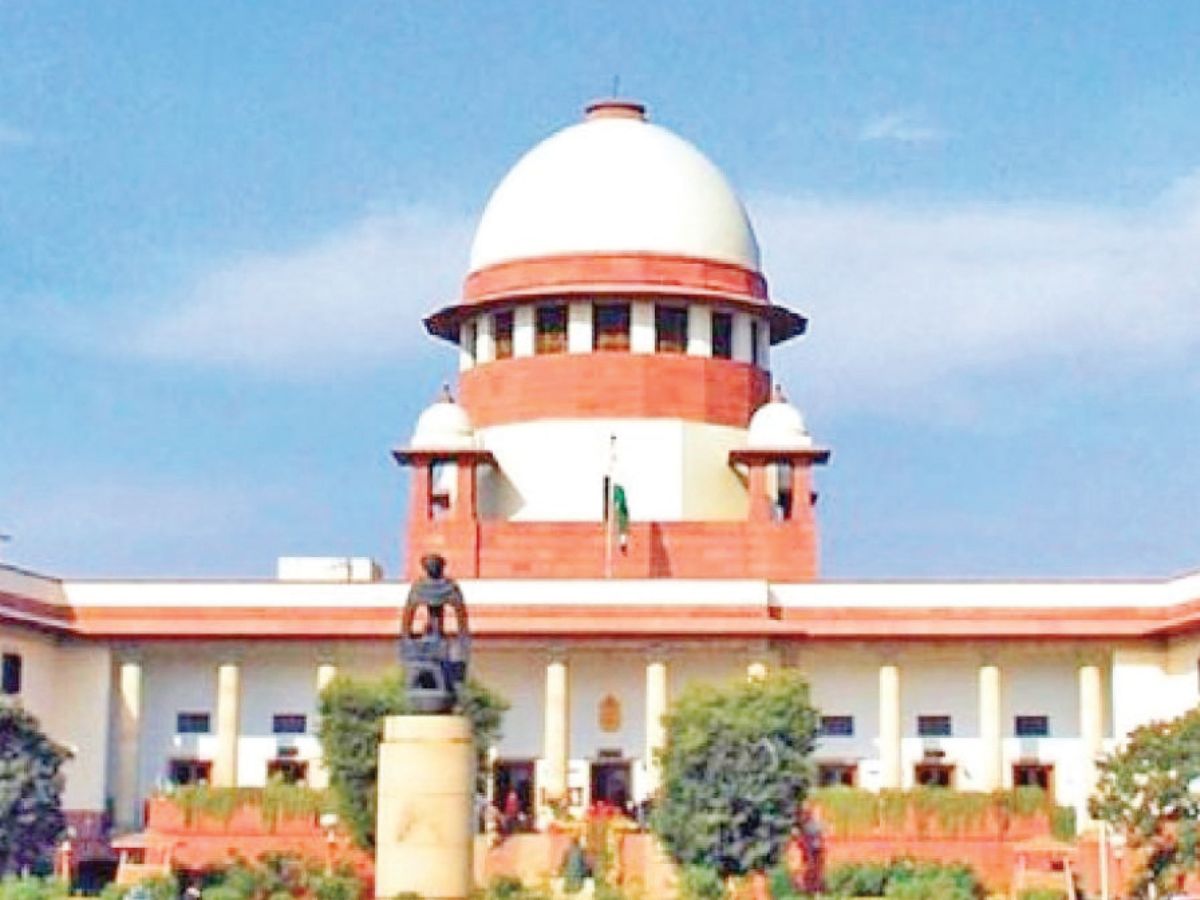
The Supreme Court on Wednesday underscored that illegal mining in the Aravalli region must be halted forthwith, observing that such activity causes irreversible environmental damage with grave longterm consequences.
The Bench cautioned that any negligence in ecologically sensitive areas such as the Aravallis would directly impact future generations. The Court also reiterated the need to constitute a high-powered committee to examine issues concerning the Aravalli range. The proposed committee will comprise scientists and experts from the fields of environment, forestry and allied domains. The Supreme Court extended the stay on its earlier order that had fixed a 100-metre limit for mining in the Aravalli areas.
A Bench headed by Chief Justice of India Surya Kant directed the amicus curiae and other stakeholders to suggest names of experts for inclusion in the committee. In its order, the Court clarified that no fresh petitions should be filed on the issue.
During the hearing, Additional Solicitor General K.M. Natarajan, appearing for the Rajasthan government, assured the Court that the State would ensure that no illegal mining takes place.
The Court further directed that the high-powered committee should suggest the names of its members and stated that such a body would be constituted to arrive at a scientific definition of the Aravalli range. The committee will include independent experts from the fields of environment, forestry, geology and other related disciplines.
Environmentalists have cautioned that adopting a uniform criterion could exclude nearly 90 per cent of the ancient Aravalli range, spread across Haryana, Rajasthan and Gujarat, from being categorised as Aravallis, potentially opening the door to mining activities in those areas.
Accepting the recommendations of the Ministry of Environment, Forest and Climate Change, the Supreme Court had earlier observed that a clear and scientific definition is essential to protect the Aravallis, one of the world’s oldest mountain ranges.
The committee had recommended that the hill range, along with its subsidiary slopes, adjoining land and related landforms, irrespective of the degree of slope, should be treated as part of the Aravallis.