
New Delhi:
In a step towards making the National Capital Region’s air cleaner, the central government on Monday signed an MoU with Ashok Leyland under its ambitious old vehicle replacement scheme.
According to government estimates, the scheme is expected to benefit around 2.07 lakh commercial vehicle owners across Delhi-NCR, including nearly 1.91 lakh trucks and over 16,000 buses. Owners of BS-IV and older vehicles will be incentivised to replace their fleets with cleaner alternatives, while BS-III and older vehicles will have to be scrapped at authorised vehicle scrapping facilities.
To kick start the ₹9,585-crore clean-air initiative for Delhi-NCR, this is the first Original Equipment Manufacturer (OEM) roped in by the Ministry of Road Transport and Highways (MoRTH). The MoU also has Ashok Leyland’s electric mobility arm, Switch Mobility, as another OEM.
Under the MoU, the companies will offer an 8% discount on the ex-showroom price of eligible vehicles purchased under the programme. For electric vehicles, the discount will be capped at the level applicable to an equivalent internal combustion engine vehicle category.
The scheme offers a broader package of incentives to encourage fleet owners to retire older commercial vehicles. Apart from the OEM discount, the Centre will provide a 5% interest subvention on loans and monthly fuel vouchers for five years.
Participating state governments will provide up to 100% concession on motor vehicle tax for ten years and waive registration fees for eligible beneficiaries.
The government expects more automobile manufacturers to join the programme in the coming weeks.
Transporters and Experts Caution
However, the transporters believe the success of this scheme will be limited since the majority of the BS-IV heavy vehicles are relatively new and it may not be financially viable to switch to a new vehicle. Rajendra Kapoor, President of All India Motors and Goods Transport Association, says “60-70% of the BS-IV trucks are only 5-6years old. Owners still have lakhs in EMIs to pay. How can they afford to switch to a new vehicle and begin another EMI?”
While experts do welcome the development, they too hope for a favorable ‘math’. “For owners running fully depreciated trucks, the math still has to work in their favour. Owners of older trucks are running them because they’re cheap to operate, so the scrappage or resale math needs to actually beat the cost of keeping an old vehicle running,” says Moushumi Mohanty of Center for Science and Environment.
Transporters also suspect a sudden increase in scrapping of older vehicles could significantly impact the resale price and distort the market to the disadvantage of heavy-vehicle owners.
“Such distortion could badly hurt the financial health of small and medium transporters who own less than 10 vehicles,” said Rajendra Kapoor.
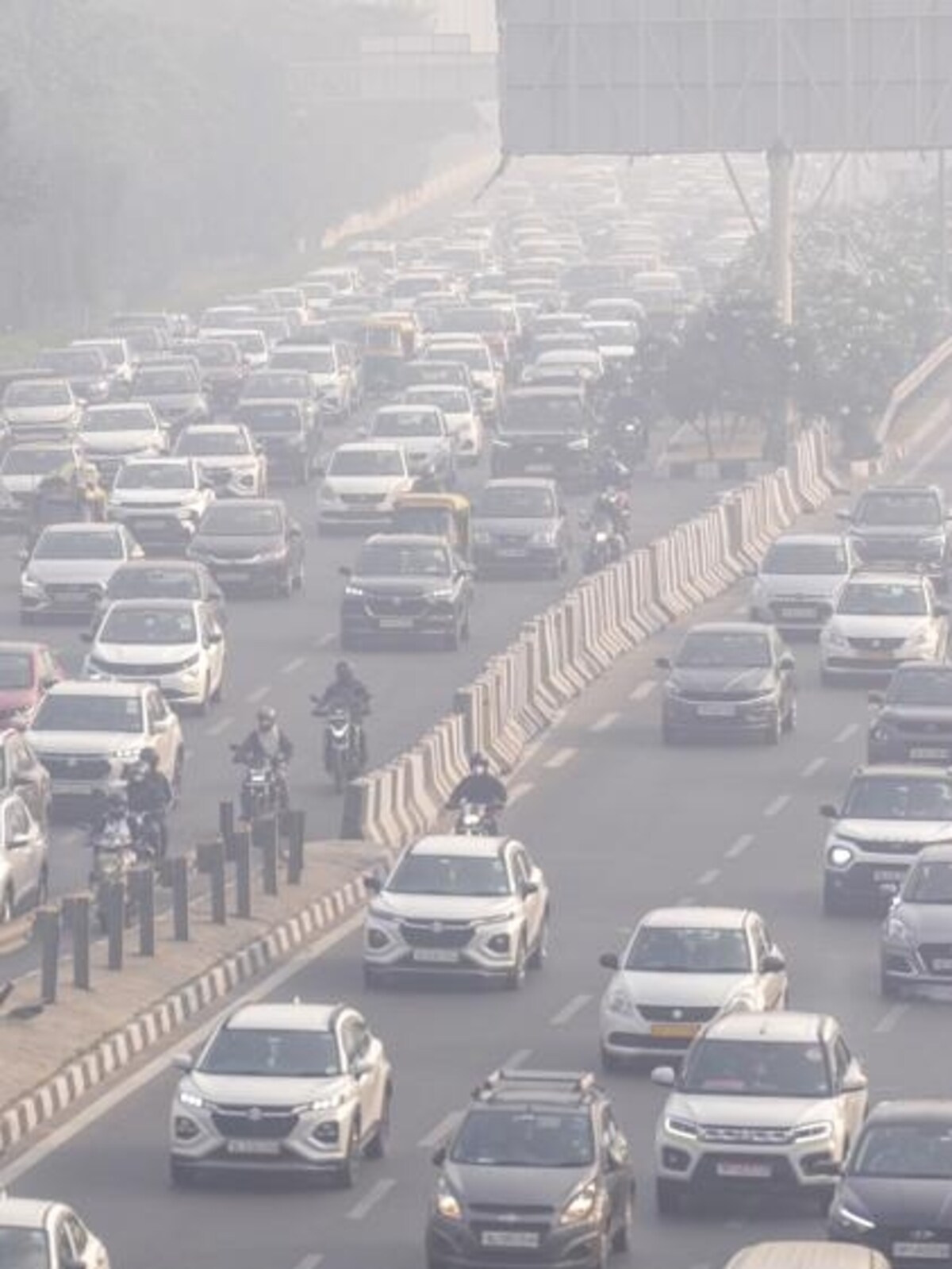
According to a study by the Automotive Research Association of India (ARAI) and The Energy and Resources Institute (TERI), the transport sector contributes 14% of PM2.5 pollution in Delhi-NCR. Trucks and buses alone account for 36% of such PM2.5 emissions despite constituting only around 3% of the vehicle fleet.
However, any future impact of the scheme could be reduced if vehicles from outside the region continue to enter NCR. “Unless paired with strict entry checks, the same ‘retired’ diesel truck could be rerouted to NCR through migrating their registration, and ultimately blunting any positive impact of the air,” concludes Moushumi Mohanty.