
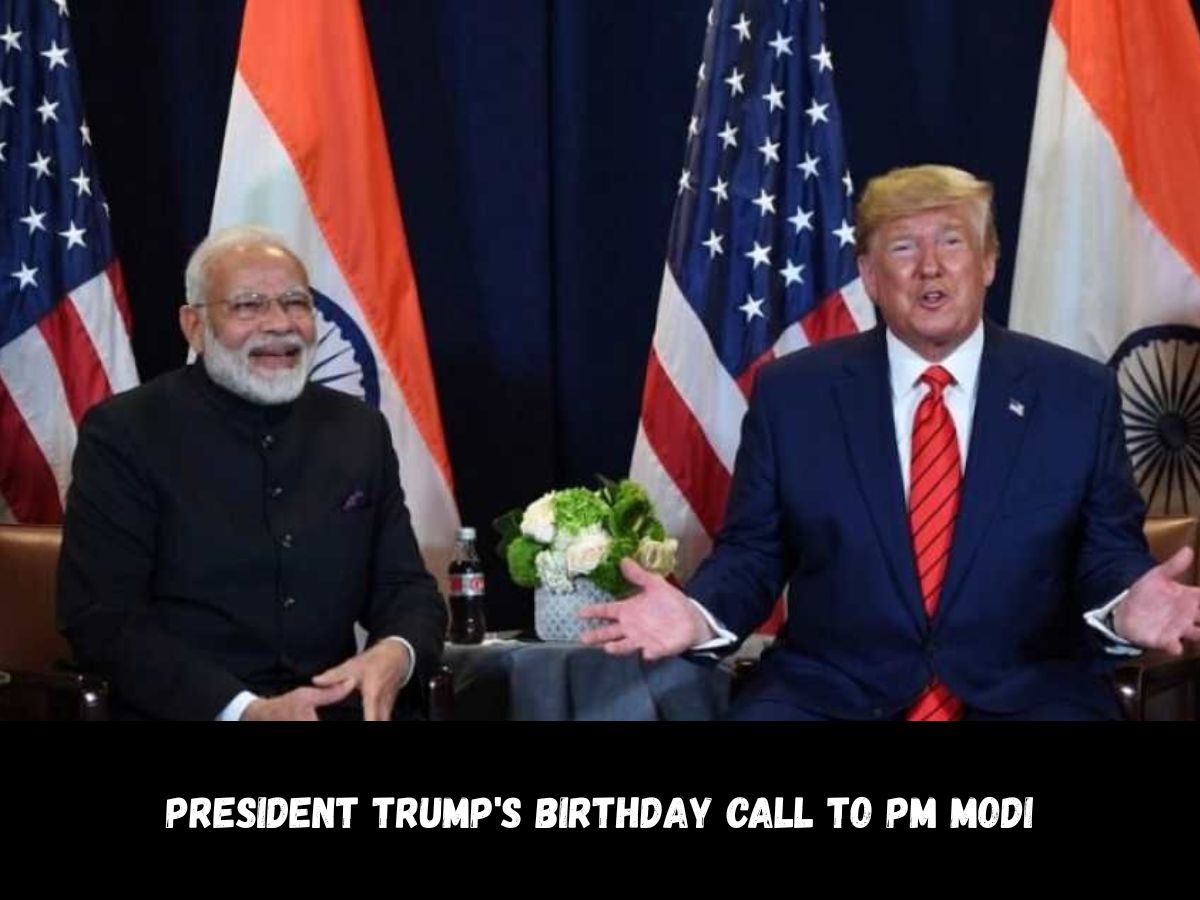
“Just had a wonderful phone call with my friend, Prime Minister Narendra Modi.” This statement from former US President Donald Trump on Truth Social wasn’t just a simple birthday wish. It was the latest chapter in a carefully choreographed dance of personal diplomacy that has successfully pulled a critical trade deal back from the brink of collapse. The phone call, which was made on the eve of PM Modi’s 75th birthday, was a potent political reset button as well as a personal gesture. This was the second call between the two leaders within a week.
What Was the Exact Exchange Between the Two Leaders?
The bonhomie began with Trump’s call. In response, PM Modi took to X (formerly Twitter) to publicly thank his “friend.” His message, however, went far beyond gratitude for the birthday sentiment. He strategically linked the personal gesture to their professional goals, writing: “Like you, I am also fully committed to taking the India-US Comprehensive and Global Partnership to new heights.” Crucially, he added, “We support your initiatives towards a peaceful resolution of the Ukraine conflict.” Trump mirrored this sentiment on his own platform, thanking Modi for his support on “ending the War between Russia and Ukraine.”
How Did This “Thaw” Directly Impact Policy?
The impact was immediate and tangible. Hours before the birthday call, trade deal talks between the US and India formally resumed in New Delhi. Both sides issued brief statements describing the discussions as “positive and forward-looking.” This was no coincidence. The personal rapport between the two leaders directly paved the way for negotiators to get back to the table, setting aside public acrimony to focus on a mutually beneficial deal.
What Major Hurdles Remain on the Trade Deal?
Despite the positive momentum, significant obstacles persist. The fundamental issues that caused the stalemate are still on the table:
Russian Oil: President Trump has consistently chided India for being a top buyer of Russian oil, viewing it as funding the Ukraine war. While his focus has recently shifted to Europe, this remains a major point of contention for US officials.
India’s Red Lines: India has firmly stated it will not allow a free flow of American agricultural and dairy products. Protecting Indian farmers is a non-negotiable promise for PM Modi, making concessions on items like US corn a major hurdle.
Also Read: Farmers vs. Fair Trade: The High-Stakes Hurdles in US-India Trade Negotiations
What About the Nobel Prize and Pakistan?
Adding a layer of complexity is Trump’s recurring claim that he “stopped a nuclear war” between India and Pakistan following India’s Operation Sindoor in 2019. He often cites this as part of his push for a Nobel Peace Prize. Notably, just hours before his friendly birthday call to Modi, Trump again spoke of stopping seven wars, including one between India and Pakistan. India has consistently rebuffed these claims, and even a Pakistani official recently denied such an event.
For now two pals currently have a reciprocal companionship that has been anticipated for a longer period of time.