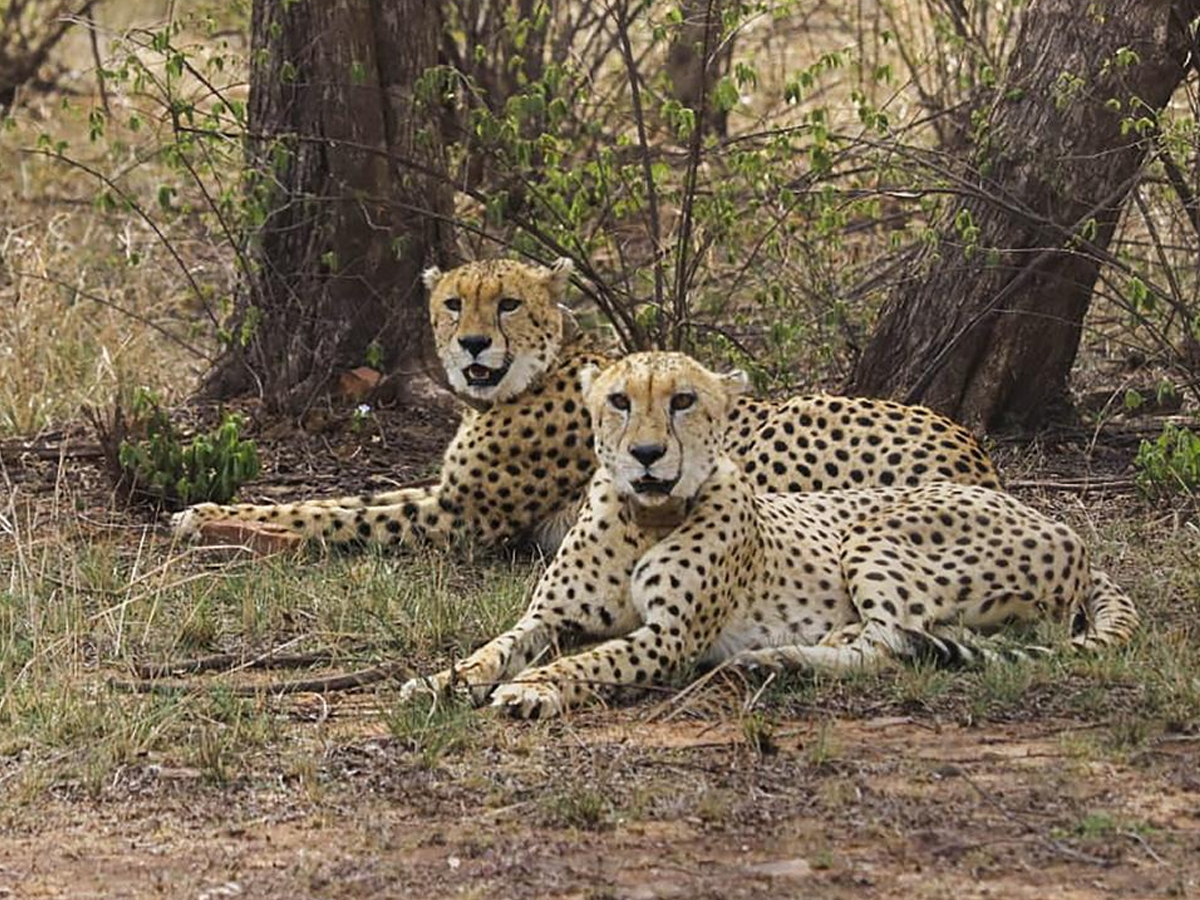
India’s cheetah reintroduction programme has achieved a major success. On Monday, Mukhi, a female cub born at Kuno National Park, will become the first India-born cheetah to reach adulthood. Officials call this a historic moment in the project’s mission to create a self-sustaining cheetah population in the country.
“Mukhi, a female cub born to Namibian cheetah Jwala on March 29, 2023, will reach adulthood, as it will turn 915 days or 30 months old, on Monday, ready to contribute to increasing the cheetah population in India,” Project Cheetah director Uttam Kumar Sharma told PTI.
Mukhi’s Survival Story
Mukhi’s journey has been tough. She was one of four cubs born to Jwala. While three died due to extreme heat, Mukhi survived and grew stronger with time.
“Of the four cubs Jwala delivered, three died due to extreme heat, but Mukhi survived and has grown well. Today our efforts have yielded encouraging results,” Sharma said.
Her survival shows the progress made by Project Cheetah despite many challenges.
The Beginning of Project Cheetah
Project Cheetah began on September 17, 2022. On that day, Prime Minister Narendra Modi released eight cheetahs from Namibia into a special enclosure at Kuno. It was the world’s first intercontinental relocation of a large wild carnivore.
In February 2023, India brought 12 more cheetahs from South Africa. With these introductions, the aim was to build a stable population of cheetahs in India.
Current Numbers at Kuno National Park
India now hosts 27 cheetahs in total. Of them, 16 were born in the country. Since the start of the project, 26 cubs have been born at Kuno. However, 19 cheetahs have died—nine imported adults and 10 India-born cubs.
Despite these losses, India has seven more cheetahs than it initially brought in. At present, there are 24 cheetahs at Kuno and three at Gandhi Sagar Wildlife Sanctuary.
The survival rate of cubs at Kuno stands above 61 percent. This is higher than the global average of 40 percent. Officials say this shows the project is moving in the right direction.
They describe the progress as a “big success.”
Future Plans for the Project
To strengthen the gene pool, officials are working to bring in more cheetahs. Negotiations are underway with African countries like Botswana and Namibia. India is expected to import 8 to 10 cheetahs by December this year.
With Mukhi reaching adulthood, India has taken an important step in restoring the cheetah population. This milestone adds hope for the long-term survival of the species in the country.