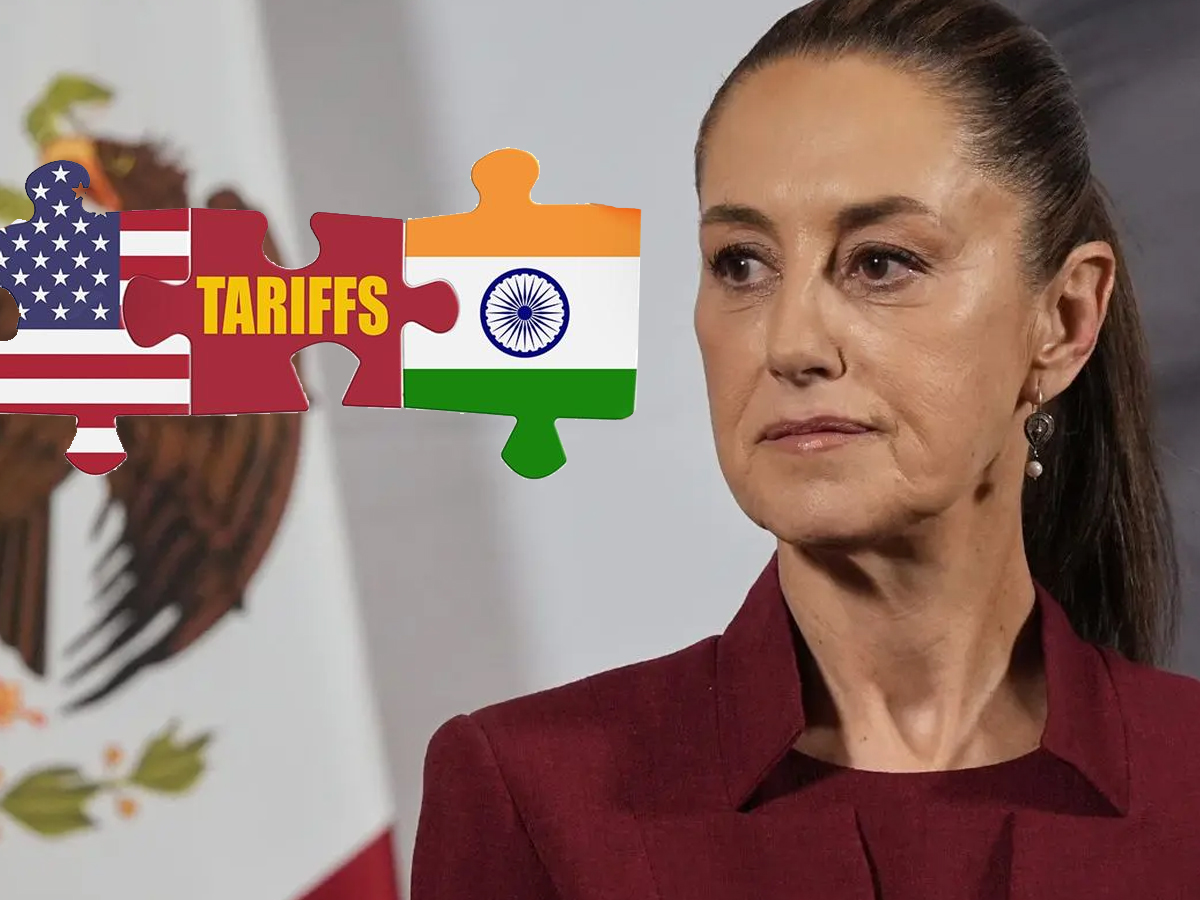
Mexico has introduced heavy new tariffs on a wide range of Asian imports, marking a sharp shift from its long-standing free-trade policies. The Senate approved the new regime, which increases duties up to 50% on over 1,400 products from countries without a formal trade agreement with Mexico. The countries affected include India, China, South Korea, Thailand, and Indonesia.
The tariffs will gradually roll out starting next year and extend through 2026. Industrial inputs, consumer goods, automobiles, auto parts, textiles, plastics, metals, apparel, and footwear are among the products facing higher duties.
Most products are expected to fall under a 35% duty, while key items, such as Chinese cars, may attract the maximum 50% rate.
Mexico’s Tariff on India: Impact on India’s Export Market
For Indian exporters, the tariff hike comes at a critical time. Mexico has been a key gateway to the North American market for Indian companies, especially for textiles, auto components, and engineering goods.
“The new tariffs will increase costs for Indian exporters and could reduce competitiveness in key sectors,” said trade analysts following the developments. With India’s products now facing higher duties, companies may reconsider supply chain routes through Mexico to reach the US market.
Several Mexican manufacturers also warned that the tariffs would raise production costs and push inflation higher. India’s Commerce Ministry has not yet released an official statement on the issue.
US Influence and Strategic Calculations
Analysts suggest that Mexico’s sudden protectionist turn may be influenced by the United States ahead of the USMCA review. The Mexican government appears to be aligning with Washington’s tougher stance on Chinese goods.
Although President Claudia Sheinbaum denied that the tariffs were linked to US pressure, the structure mirrors American trade measures. “These tariffs strengthen Mexican products in global supply chains and protect priority jobs,” said Emmanuel Reyes of the ruling Morena party.
Mexico’s Tariff on India: Reactions Within Mexico
The tariffs have drawn mixed reactions domestically. Opposition senator Mario Vazquez criticized the move, saying it acts as a “tax on consumers.” Local auto groups welcomed the higher duties, warning that cheap Chinese imports threaten Mexico’s domestic manufacturing.
The legislation also gives Mexico’s Economy Ministry broad authority to revise tariffs on non-FTA countries. This flexibility could lead to further adjustments, making the export landscape more uncertain for Indian companies.
Challenges Ahead for Indian Exporters
Indian firms will need to navigate a more complex trade environment. Increased duties will impact pricing, competitiveness, and long-term planning for exports to Mexico. Some businesses may explore alternative routes to access North American markets or focus on local partnerships in Mexico to offset cost increases.
With protectionist trends rising across North America, Indian exporters must adapt quickly to remain competitive in the region.