
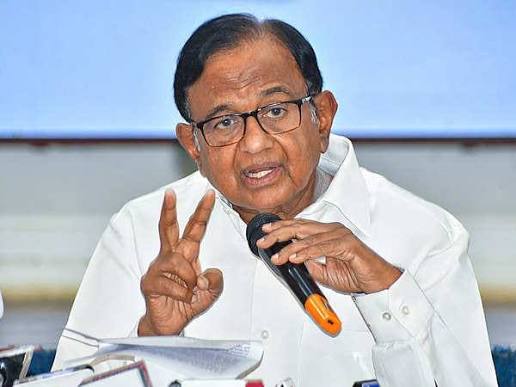
Senior Congress leader and three-time former Manipur Chief Minister Okram Ibobi Singh has said the Assembly elections due in early 2027 will decide not only the next government but also the future of the violence-hit state. Addressing the media at Congress Bhavan in Imphal on July 12, Singh alleged that law and order in Manipur had “totally collapsed” under the current government. He also questioned the effectiveness of central intervention and the state’s ability to function independently.
Singh’s remarks came after an arson attack at Kanto Sabal in Imphal West district on July 11. According to reports, a mob of nearly 600 people allegedly set fire to at least three abandoned Meitei houses in an area located close to a major Army camp and central forces deployment. Singh described the incident as “very surprising” and said it reflected the repeated violence that has become common in the state. He questioned how such an incident could take place despite the heavy security presence and alleged that state police and fire tenders were prevented from responding.
The latest incident comes as Manipur continues to face ethnic violence, mainly between the Meitei and Kuki communities, since May 2023. The conflict has resulted in hundreds of deaths, thousands of displaced people, and deep divisions in society. The dispute over land, resources, political representation, and the demand for Scheduled Tribe status for Meiteis has also drawn in Naga groups, making the situation more complex. The Kanto Sabal arson attack and the killing of a Kuki farmer in Kangpokpi district on the same day have again highlighted the fragile security situation.
Singh also criticised the implementation of President’s Rule in the state. President’s Rule was imposed in February 2025 after the resignation of then Chief Minister N. Biren Singh during the continuing unrest. It was revoked in February 2026 after a new BJP-led government headed by Yumnam Khemchand Singh took office. Singh questioned whether President’s Rule had been effectively implemented and said, “We want to ask whether President’s Rule is actually being implemented in Manipur or not.” He also described the absence of any statement from the state Home Minister on the Kanto Sabal incident as “unfortunate” and a sign of administrative failure.
Lok Sabha MP Bimol Akoijam supported Singh’s concerns. He criticised the alleged inaction of central forces stationed near the 57th Mountain Division and called for institutional accountability. Akoijam said the focus should move beyond ethnic divisions and instead examine governance failures, poor coordination, and official responsibility. He also said efforts were being made to collect ground reports for submission to the central leadership.
Singh further alleged that democracy was being “wiped out” and questioned whether the Manipur government was functioning independently or under “remote control” from Delhi. His remarks reflect long-standing concerns in the Northeast over the role of the Centre in the region’s security and administration.
Manipur has remained in crisis since the violence erupted in 2023. More than 60,000 people were displaced, thousands of homes were destroyed, and trust between communities suffered a major setback. Curfews, internet shutdowns, and heavy security deployment became common. The BJP government led by Biren Singh faced allegations from opposition parties and Kuki groups of favouring the Meitei community, while Meitei organisations accused both the Centre and the state government of failing to stop illegal immigration and militancy linked to instability in Myanmar.
Although President’s Rule was intended to restore stability, tensions continued. The formation of the new BJP government under Khemchand Singh in February 2026 was seen as an effort to restore elected governance. However, opposition leaders argue that conditions on the ground have not improved significantly. Arrests have been made in the Kanto Sabal case, including a village chief and another suspect, and the present Chief Minister has condemned the violence. However, Singh and Akoijam argue that these actions are only reactive and do not show effective control of the situation.
The continuing unrest has also affected the state’s economy and daily life. Schools, markets, and public activities continue to face disruptions in both the valley and hill districts. The movement of illegal arms, cross-border challenges involving Myanmar, and competing ethnic demands have further complicated efforts to restore peace. Union Home Minister Amit Shah and central agencies have taken several steps, but challenges remain in coordination among state police, central forces, and local stakeholders.
At the same time, Congress has begun strengthening its organisation ahead of the 2027 Assembly elections. On July 12, the party welcomed 11 new members, including former police officer Th Brinda Devi and former BJP candidate Anwar Hussain, as part of its efforts to expand support across different communities.
The Assembly elections, expected in February-March 2027, will be crucial for the 60-member House. The BJP will seek to retain or increase its political strength despite the continuing crisis, while Congress hopes to return to power by presenting itself as a party focused on reconciliation and accountability. Regional parties, including the National People’s Party (NPP), could also play an important role in the electoral outcome. Political assessments suggest a close contest, with the Meitei-dominated valley and hill districts expected to have different electoral priorities.
Referring to the continuing violence, Singh asked, “How long can we tolerate such violent acts as Manipuris and as citizens of this country?” His remarks reflect growing concern over the future of Manipur as the state moves toward the 2027 elections. The coming months will be critical in determining whether political leaders can move beyond political differences and focus on restoring peace, security, and public confidence.