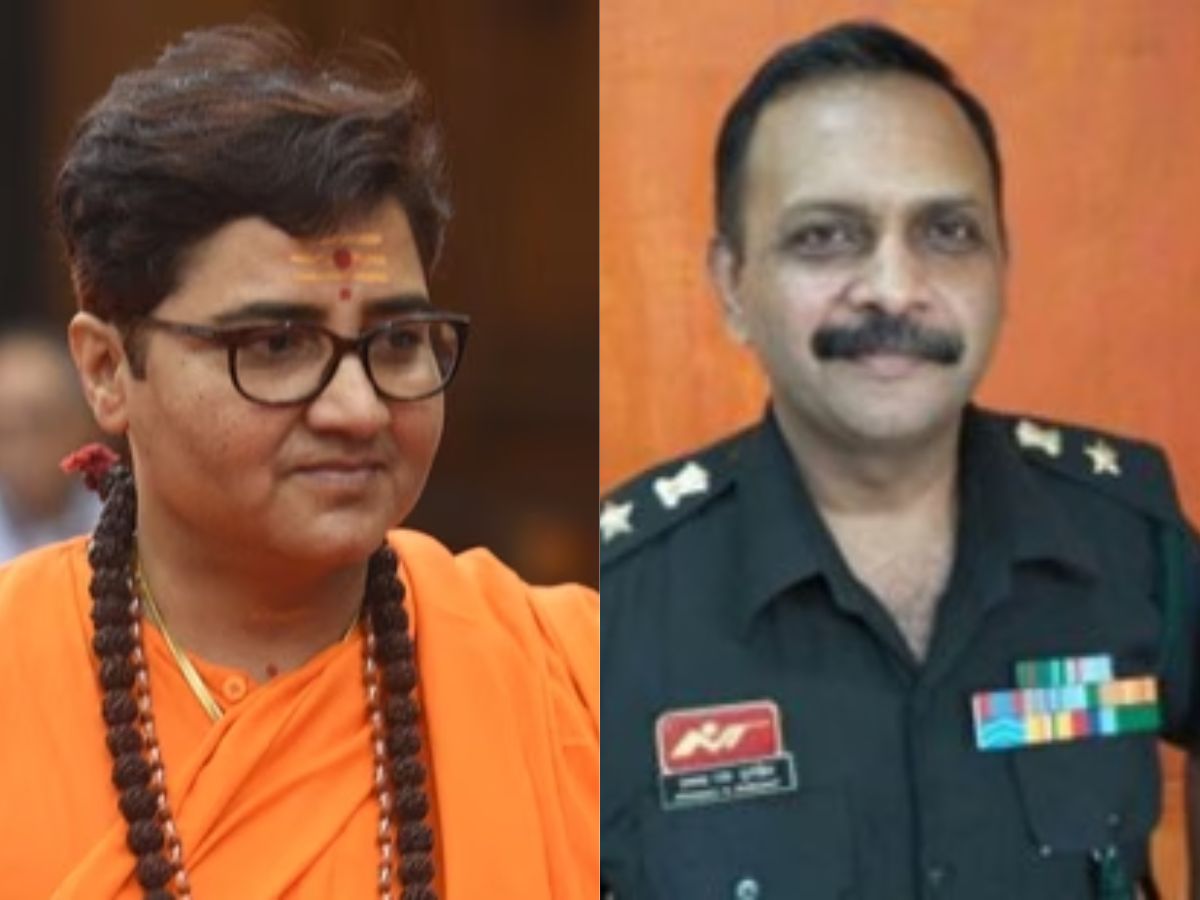
A court in Mumbai has acquitted all seven accused in the 2008 Malegaon blast case. BJP MP Pragya Singh Thakur and Lt Col Prasad Purohit are among those acquitted of all charges, bringing an end to a nearly 17-year-long battle in court.
Background of the Case
The explosion occurred on September 29, 2008, in the town of Malegaon in Maharashtra’s Nashik district. It killed six individuals and injured about 100 others. The accused were arrested by the Maharashtra Anti-Terrorism Squad (ATS) within weeks of the blast. One of them was granted bail in 2011, while the rest were behind bars until 2017.
Let’s take a look at all the key accused of the case:
Pragya Singh Thakur
The first accused, Pragya Thakur (55), a former ABVP activist from Madhya Pradesh, was apprehended on the grounds that it was alleged that a motorcycle used to execute the bomb-planting belonged to her.
Prosecution’s Allegations:
The ATS alleged that she had attended meetings where the plan of the conspiracy was hatched and that she brought to the forefront the key absconding accused, Ramji Kalsangra and Sandeep Dange, with the rest of the accused.
Defense & NIA Stand:
Thakur had dismissed any involvement and accused the ATS of custodial torture and political rivalry. In 2016, the NIA stated that there was not enough evidence against her and questioned the ATS claim regarding the use of the motorcycle. However, the special court insisted on her trial based on ‘prima facie’ evidence as she was the owner of the bike.
Political Career:
Thakur joined Parliament in 2019 as a BJP MP from Bhopal. She raised a controversy by referring to the assassin of Mahatma Gandhi as a ‘deshbhakt’, to which PM Modi reacted that he ‘would never be able to forgive her’.
Lt Col Prasad Purohit
A former army officer, Purohit had been accused of helping to form the Abhinav Bharat outfit in 2006 and conspiring to carry out the blast as a revenge. He discussed the idea of a ‘Hindu Rashtra’ and a government in exile.
Defense Argument:
Purohit argued he was collecting intelligence as part of his work in Military Intelligence. He presented papers substantiating he couldn’t have obtained RDX as alleged. Get bail in 2017, and he went back to work with the Army.
Ramesh Upadhyay
Charges:
A former Army Major, Upadhyay reportedly attended meetings where a Hindu constitution was discussed and was made the working president of Abhinav Bharat through an election.
Interception Evidence:
The ATS and NIA quoted intercepted conversations between him and Purohit mentioning Thakur’s arrest.
Defense:
He refuted the constitutionality of the intercepts and accused compelled witness testaments. During his prison time, Upadhyay ran unsuccessfully in state elections.
Ajay Rahirkar
Role:
Rahirkar, Pune-based businessman, was reported to be Abhinav Bharat’s treasurer, dealing with money for weapon purchases.
Legal Outcome:
Released on bail in 2011, the Bombay High Court said there was no direct link between his alleged involvement and the explosion.
Defense:
He said he was not falsely implicated and was not involved with the incident.
Sudhakar Chaturvedi
Charges:
Chaturvedi, an informant of Military Intelligence, had RDX traces supposedly found at his rented premises. The ATS linked these with the blast material.
Contradictions Raised:
Two Army officers told the NIA that they witnessed an ATS officer changing the location before the search, questioning the forensic evidence.
Defense:
Chaturvedi asserted no involvement, citing unreliable proof and withdrawn witness statements.
Swami Amrutanand Devtirth (Sudhakar Dwivedi)
Key Claims:
Dwivedi was reported to have a laptop that held audio recordings of meetings to plan. The ATS mentioned these as key evidence, such as videos making mention of ‘revenge’ blasts in Malegaon.
Defense Challenges:
He alleged the laptop may have been tampered with and he was mistakenly identified. He also insisted that injuries were not due to a real explosion.
Court Position:
Though the ATS claimed he had pleaded guilty under MCOCA, the court subsequently dropped the Act, making the confession inadmissible.
Sameer Kulkarni
Involvement Alleged:
Kulkarni, arrested in 2008, was accused of advocating the concept of a Hindu state and facilitating destruction of evidence post-arrest. The ATS established the charges with messages and calls.
Legal Stand:
Kulkarni rejected the charges, charges of fabricating evidence, and questioned the legality of the case under UAPA.
Court’s Response:
The Bombay High Court and Supreme Court upheld the continuation of the case despite Kulkarni’s objections.
Two Accused Still at Large
Ramchandra Kalsangra and Sandeep Dange, both described as RSS workers in the NIA chargesheet, are wanted. Officials state that they were involved in masterminding and carrying out the blast. There were claims in 2016 that ATS had killed them, but the officials are yet to confirm. They are still on wanted lists.
All seven accused have now been acquitted following years of court proceedings. While a few charges fell through due to tainted evidence, recanted depositions or technical grounds, the case still raises questions about the investigation procedures and application of anti-terror legislation in India.