
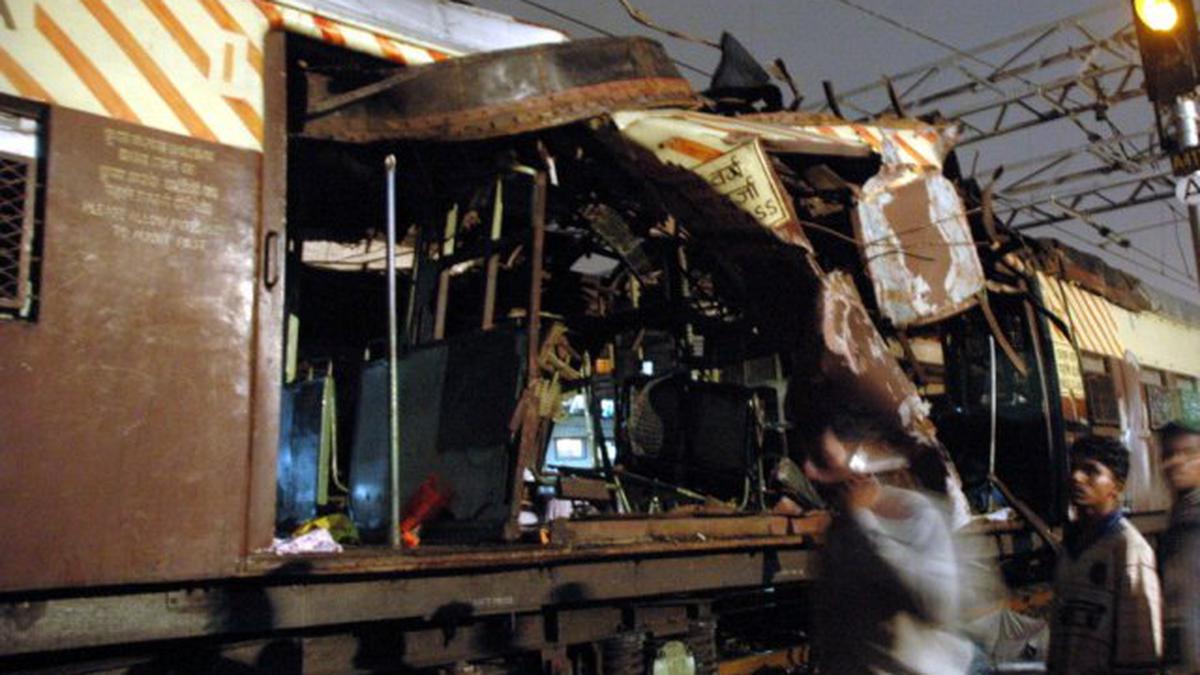
The Maharashtra administration has appealed before the Supreme Court against the acquittal recently granted by the Bombay High Court to 12 convicts in the 2006 Mumbai suburban train bombing, which cost 180 lives and injured many hundreds more. The Supreme Court will hear the petition on July 246.
“The prosecution has completely failed to prove its case against the accused.” “It is difficult to believe the accused committed the crime,” the bench stated. It went on to highlight systemic flaws, such as inadequate evidence preservation, mechanical application of the Maharashtra Control of Organised Crime Act (MCOCA), and failure to question key witnesses.
High Court Overturned 2015 Verdicts for Evidentiary Failures
The petition comes in the wake of a significant ruling made by the Bombay High Court on Monday that overturned a special court ruling in 2015 that stipulated five death penalties and seven life sentences. In its blistering 671-page decision, a special bench led by Justices Anil Kilor and Shyam Chandak destroyed the prosecution’s case, concluding that the evidence lacked credibility and the accused’s confessional remarks were inadmissible. The judges noted that the confessions looked to be copied, obtained under torture, and lacked authenticity. The bench pointed at serious procedural lapses such as unreliable eyewitness accounts, improper application of the Maharashtra Control of Organized Crime Act, and the mind-boggling standardization of supposedly coerced confession made without independent corroborative evidence.
Confessions Unadmitted, Sample Found Untrustworthy
The key point of the acquitting was the discharge of confessional statements produced by the prosecution. The confession, according to judges, was mechanically “reproduced” and might have been gathered under duress. So, nothing would let them in according to Indian law. Also, the governing court observed systemic failures in the handling of physical evidence and the inconsistencies in the chain-of-custody documents. “This government has completely failed to prove the case against the accused. The accused are to be said to believe they have committed an offense,” observed the bench critical of the evident disintegration of integrity.
Against this high court ruling, Maharashtra Chief Minister Devendra Fadnavis has taken pretty strong stands. He has called the acquittals “deeply shocking.” The state decided to challenge the judgment before the Supreme Court because the blasts in 2006 were of such magnitude that they threatened both national security and public faith in the justice system. Background: In 2006, Coordinated Urban Terrorism July 11, 2006, represented one of the most terrible examples of urban terror in post-independence India. The assailants carried out seven synchronized bombings along Mumbai suburban train networks during the busiest evening hours, devastating the western line of the city and creating nationwide condemnation.
This started what had become one of the largest anti-terror investigations carried out under MCOCA. The 2015 trial culminated in a rare batch of severe penalties, which, thanks to the High Court ruling, have become invalidated. Among those convicted were Kamal Ansari; the death row inmate died in custody in 2021. The remaining will be released, except where other criminal proceedings are pending against them.
It is likely that this decision of the High Court will lend itself to further debates on reform of criminal procedure, especially issues around admissibility of confessions, improved protocols for handling evidence, and the adequacy of ethical standards in investigative practices enacted under special anti-terror laws. Moreover, the directive has been made for further shaping the legal framework regulation of terrorism in India-the coming Supreme Court.