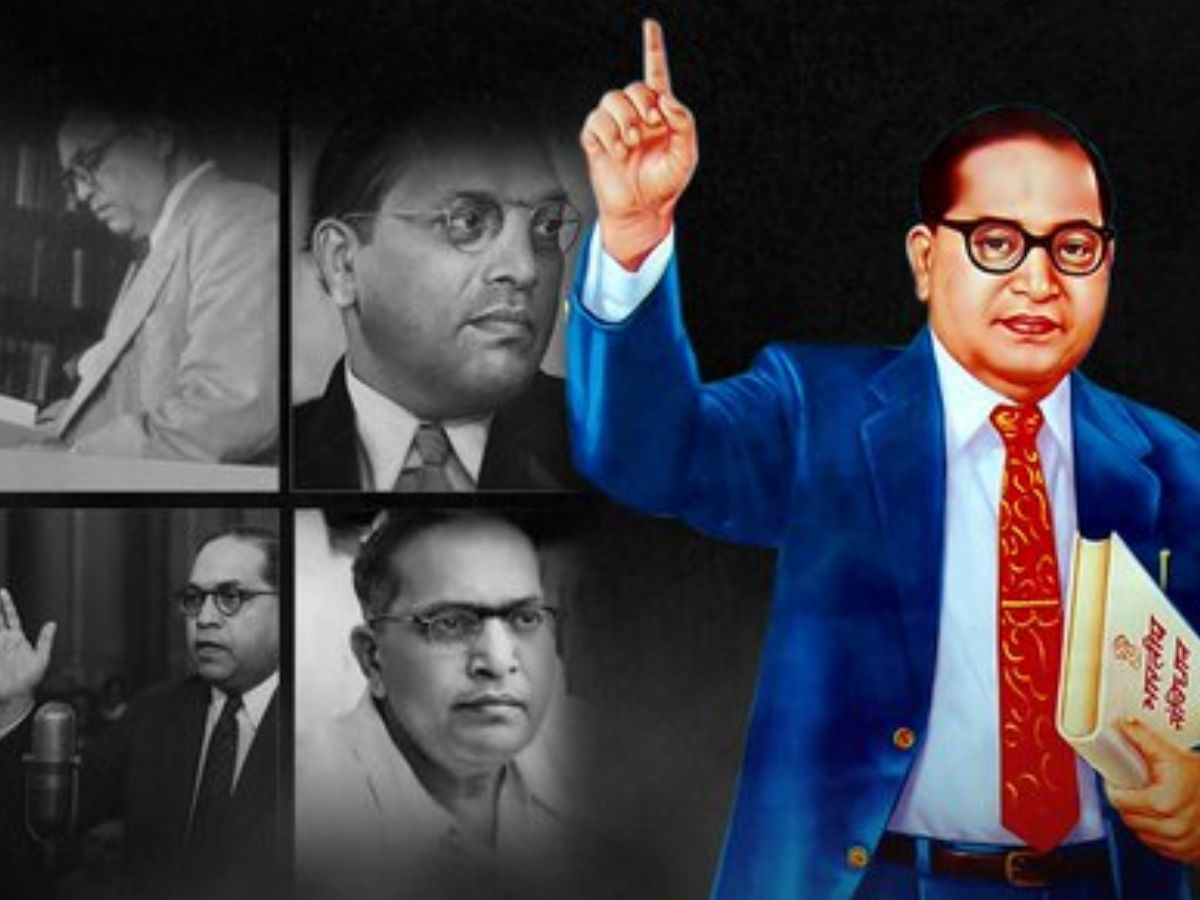
India pays tribute on the death anniversary of Dr. Bhimrao Ramji Ambedkar, the chief architect of the Indian Constitution, every year on December 6. The day is also called Mahaparinirvan Diwas, a time to honor a leader who dedicated his life to fighting for Dalit rights and eliminating untouchability.
Throughout his life, Ambedkar worked tirelessly to eradicate inequality and caste-based discrimination.
The year 2025 marks the 70th anniversary of Ambedkar’s passing on December 6, 1956. The term ‘Mahaparinirvan’, derived from Sanskrit Buddhist texts, signifies the day Lord Buddha attained nirvana after his death.
Ambedkar’s principles were deeply influenced by Buddhist philosophy, and many regard him as a modern-day Buddhist guru for his relentless efforts against social evils like untouchability. On this day, Indians reflect on his teachings and pay homage to his vision of a just and inclusive society.
Early Life and Education of Dr. B.R. Ambedkar
Bhimrao Ramji Ambedkar was born on April 14, 1891, in the Mhow Army Cantonment (now in Madhya Pradesh) to a Dalit family. From childhood, he faced discrimination, segregation, and untouchability due to his caste.
Despite these challenges, Ambedkar excelled academically. He earned a Bachelor’s degree in economics and political science from Elphinstone College, a Master’s in economics from Columbia University, a doctorate from the University of London in 1923, and another PhD from Columbia University in 1927.
His higher education in the USA was sponsored by the Maharaja of Baroda, requiring him to serve in the princely state. In 1918, he joined the Accountant-General’s Office in Baroda but had to resign after 11 days because he could not secure permanent residency due to his caste identity.
Role of Dr. B.R. Ambedkar in India’s Independence Movement
Ambedkar’s involvement in India’s independence movement was unique. Unlike leaders focused on persuading the British to leave, Ambedkar’s activism centered on Dalit rights, often bringing him into conflict with the Indian National Congress.
He first sought political safeguards for untouchables in a presentation to the Southborough Committee, which was preparing the Government of India Act, 1919. By the early 1930s, during the Round Table Conferences, he had become the foremost leader of the Dalit community.
Ambedkar strongly advocated for separate electorates for backward classes, seeing it as essential to empower them politically. However, M.K. Gandhi opposed this, fearing it would divide Hindus, and went on a hunger strike. Ambedkar ultimately agreed to the Poona Pact of 1932, replacing separate electorates with reserved seats in provincial assemblies.
He also led landmark social movements. In 1924, he founded the Bahishkrit Hitakarani Sabha to uplift the depressed classes, with the motto: “Educate, Agitate, Organise”. In 1927, at a Depressed Classes Conference in Mahad, he led Dalits to drink from a public water tank, challenging centuries of social restrictions. A few months later, he publicly burned the Manusmriti, a Hindu law book imposing harsh restrictions on untouchables, as a protest against social injustice.
Ambedkar served as a nominated member of the Bombay Legislative Council from 1926–1934, founded the Independent Labour Party in 1936, and established the All-India Scheduled Castes Federation in 1942 to represent Dalits politically.
Father of Indian Constitution
Ambedkar is widely known as the father of the Indian Constitution. He played a central role as Chairman of the Drafting Committee and was a member of several other important committees.
Representing the Scheduled Caste Federation, he wrote and submitted States and Minorities to the Sub-Committee on Fundamental Rights, providing strong protections for Dalits. His well-researched, insightful speeches and interventions earned him respect from other Assembly members and cemented his leadership in shaping India’s Constitution.
Laws for Dalit Rights
In 1947, Ambedkar became India’s first Law Minister. One of his major initiatives was the Hindu Code Bill, which aimed to reform personal laws on marriage, divorce, inheritance, and adoption. The bill faced strong opposition and was eventually withdrawn, prompting Ambedkar’s resignation in 1951.
In the first general elections of 1952, he contested as a Scheduled Caste Federation candidate from Bombay North Central but finished fourth. He was later elected to the Rajya Sabha.
In 1956, Ambedkar, along with 365,000 followers, converted to Buddhism, creating the Dalit Buddhist movement (Navayana or Neo-Buddhism), promoting social justice through Buddhist principles.
Ambedkar’s health declined in later years, and he passed away in his sleep on December 6, 1956, at his home in Delhi. His birth anniversary is celebrated as Ambedkar Jayanti, and he was posthumously awarded the Bharat Ratna in 1991.
Key Writings of Dr. B.R. Ambedkar
Dr. Ambedkar authored several important books:
-
Administration and Finance of the East India Company
-
The Evolution of Provincial Finance in British India
-
The Problem of the Rupee: Its Origin and Its Solution
He also wrote influential works on social justice, including:
-
The Annihilation of Caste – based on a speech, considered a seminal text on Dalit life and politics
-
What Congress and Gandhi Have Done to the Untouchables
-
Pakistan or the Partition of India
The Ministry of External Affairs has published his complete collection of writings and speeches in 17 volumes, preserving his legacy for future generations.
Also Read: Green Fuel That Converts Air Into Gasoline: What It Is, Who Invented It & How Much It Costs