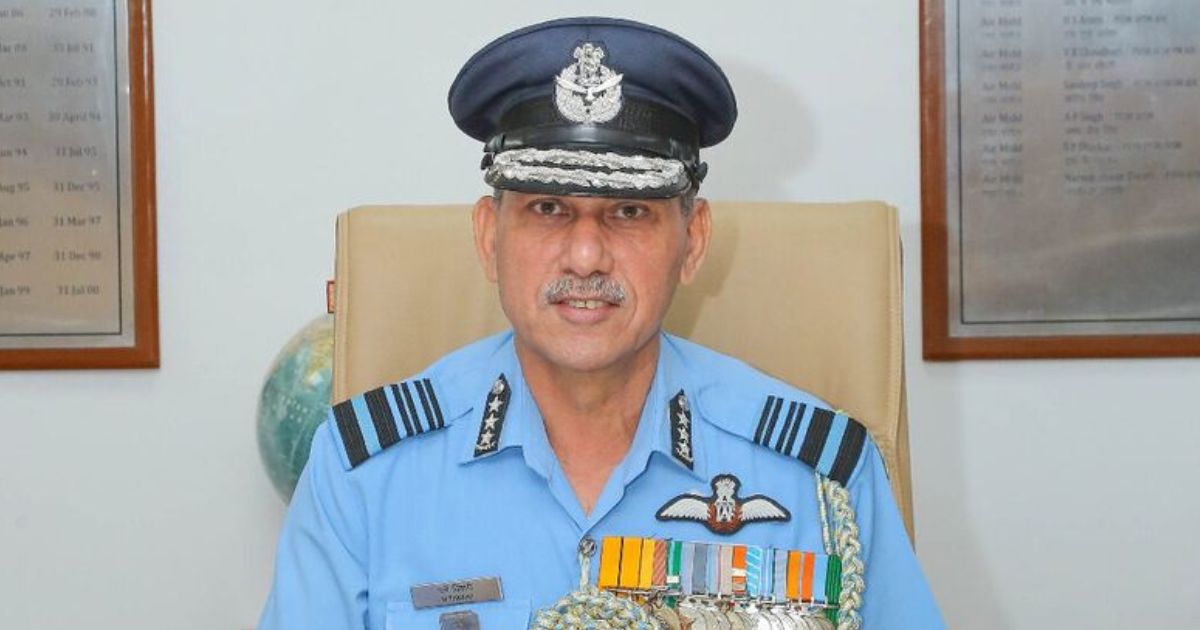
Indian Armed forces launched ‘Operation Sindoor’ between 7th to 10th May, 2025 responding to the cowardly terrorist attack of Pahalgam on 22nd April. May 10, 2025, saw South Asian security severely remade in the wake of the swift developments of Operation Sindoor, a campaign of air strikes commanded by the Indian Air Force (IAF) in retaliation for a catastrophic terrorist attack in Pahalgam. According to important observations given by Indian Air Force Vice Chief Air Marshal Narmdeshwar Tiwari, this operation will be remembered for years to come as a turning point in contemporary regional strategy and application of air power.
India reacted forcefully and proportionally to the Pahalgam attack, the IAF conducted precision bombing deep inside Pakistan and Pakistan-occupied Kashmir with the aid of highly sophisticated weapons such as BrahMos, Scalp, Crystal Maze-2, and Rampage missiles launched by its fleet of Rafale, Sukhoi-30MKI, and Mirage-2000 fighter planes.
Air Marshal Tiwari, during a seminar conducted by the Centre for Air Power Studies and College of Air Warfare, explained the campaign’s record decisiveness: “Less than 50 weapons can bring the adversary to the talking table—that is an example that needs to be studied and will be studied by scholars.” Tiwari added that these strikes are against Pakistani airbases, radar sites, and installations near nuclear plants and command centers and have gravely damaged Pakistan’s military morale and capability. What is significant, and is being carefully noted by strategists globally, is the cost-effectiveness and success of the mission. Tiwari added that the events confirmed the long-term relevance of manned fighters vis-a-vis drones in high-risk compellence and coercive diplomacy. With belligerent exchanges increasing, Pakistan retaliated with mostly drones and missile barrages, but Indian sorties’ psychological and material effects compelled Islamabad to go to international mediators within a 72-hour timeframe, and after an intensive diplomacy effort spearheaded by the US and other major nations, a ceasefire was requested by Pakistan—silencing hostilities by the evening of May 10.
Operation: Sindoor is a sea change in India’s military approach: not just hitting militant camps, but hitting strategic infrastructure head-on conveys a different message on escalation thresholds. Air Marshal Tiwari’s observations underscore the ways in which discriminate, limited, and calibrated application of air power can quickly bring enemies to heel, without ever incurring the risk of larger conflict.
A year on, Operation Sindoor’s legacy continues to shape defence thinking—not so much as an exhibition of technologic prowess, but as a stark reminder of doctrine, deterrence, and the changing calculus of regional security.