The Leaders Behind the Divide
Partition in 1947 was not merely the demarcation of borders; it was the clash of visions, ambitions, and apprehensions of some of the most powerful leaders of the subcontinent. Mahatma Gandhi, Jawaharlal Nehru, and Muhammad Ali Jinnah were major protagonists in the formation of two nations but their divergent ideologies could not stop the aftermath of chaos.
Gandhi, the moral compass of India’s independence movement, remained steadfastly against partition. He envisioned a united India, where Hindus, Muslims, Sikhs, and others could coexist. Gandhi’s emphasis on non-violence and interfaith harmony made him a symbol of hope, yet he found his voice increasingly drowned out as communal tensions escalated. Despite fasting, marches, and appeals to conscience, he could not stop the wave of violence that engulfed Punjab and Bengal.
Jawaharlal Nehru, India’s first Prime Minister, felt the same wish for united India as Gandhi did, but he was also confronted with the practical realities of an administration on the verge of collapse. Nehru mediated strained negotiations with the British and Muslim League while attempting to keep the public in order. His own leadership was characterized by both idealism and realism: he wished for unity but acknowledged that imposing it might result in even more bloodshed.
Jinnah’s Vision: A Homeland of His Own
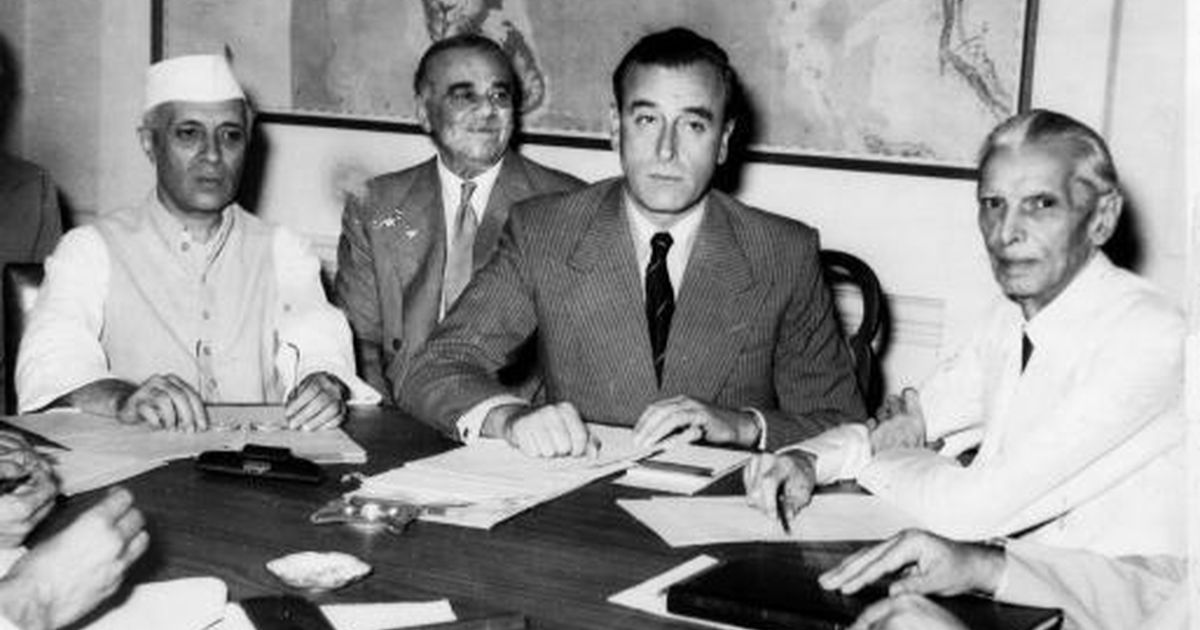
Muhammad Ali Jinnah, the political leader of the All-India Muslim League, sat opposite the negotiating table. Jinnah contended that Muslims would be politically and culturally marginalized in India with a Hindu majority. His vision of Pakistan as a homelike homeland for Muslims was both a reaction to deep-seated fears among Muslims and a political maneuver.
The difference between Jinnah’s conviction and Gandhi and Nehru’s wish for togetherness laid the foundation for conflict. Gandhi and Nehru were willing to compromise, but Jinnah was not. His insistence on Pakistan prevailed, creating a nation in just about overnight but at the cost of tremendous human suffering.
Decisions, Borders, and Consequences
The rushed British withdrawal and the delineation of the Radcliffe Line introduced a deadly sense of speed. The borders were mapped out in weeks, not providing ample time to prepare for the ensuing mass migrations. Millions of Hindus and Sikhs migrated to India, and Muslims migrated to Pakistan, many on foot, through violence-wracked areas.
Women experienced the worst. They were kidnapped, raped, or forced into marriage, and the elderly mothers and adolescent girls became the main guardians of families. Refugee trains were ambushed, villages destroyed, and communities obliterated within days. While families lost homes, possessions, and loved ones, women bore children, negotiated passage, and fought for survival against impossible odds.
The decisions made by Gandhi, Nehru, and Jinnah moral, political, or strategic intersected with this human suffering in ways that history still grapples with. Gandhi’s calls for peace could not stem the tide of violence. Nehru’s governance struggled to handle the refugee crisis, and Jinnah’s Pakistan had to manage an entirely new state amid chaos.
The Enduring Legacy
Partition left deep scars, both physical and psychological. Gandhi’s assassination in 1948, just months after independence, symbolized the cost of division. Nehru’s leadership laid the foundation for modern India, yet he inherited the challenge of managing intercommunal tension. Jinnah’s creation of Pakistan fulfilled the dream of a Muslim homeland but also carried the burden of a society built amid violence and displacement.
Decades on, Partition still colours the India-Pakistan relationship. Wars, border disputes, and political invective trace their origins back to 1947. But beneath the politics, the accounts of women, children, and ordinary families who suffered the turmoil remind us that Partition was not merely a historical episode, Partition was a human tragedy.
Recalling the actions of Gandhi, Nehru, and Jinnah together with the life of common people gives a clearer image. It indicates that leadership may inspire, but it cannot always stop suffering. Partition was a trial of vision, strength, and endurance and lessons learnt are reverberating across generations.
ALSO READ: Drawn In Ink, Sealed In Blood: The Partition That Split A Nation In Two