While opposition parties are attacking the Punjab Government’s land pooling policy and farmer unions are trying to turn it into an issue, the common farmer is supporting this policy and has already started giving land to the government.
For the first time, a government has introduced such a policy in which farmers’ land will not be acquired. Many experts had questioned whether farmers would give land to the government without acquisition, assuming the scheme would fail. However, the reality appears to be quite the opposite. The land pooling policy has become a cause of concern not for farmers but for private builders. Farmers are participating in this scheme with enthusiasm.
In Patiala’s Urban Estate, farmers have agreed to give approximately 150 acres of land under land pooling to the government. In Mohali as well, more than 50 farmers are ready to give their land. In Amritsar too, farmers are showing interest in the scheme and want to donate their land for the creation of an urban estate. This clearly shows that apart from those who oppose it politically or commercially, the ordinary farmer is very positive about this policy.
Under this scheme, if a farmer gives one acre of land for the development of an urban estate, they will receive a 1000-square-yard residential plot within the estate, which they can sell at any time. Additionally, they will get a 200-square-yard commercial SCO (shop-cum-office), which they can also sell as per their discretion. These plots are several times more valuable than the current rate of the farmer’s land, which is why farmers are happily accepting this scheme.
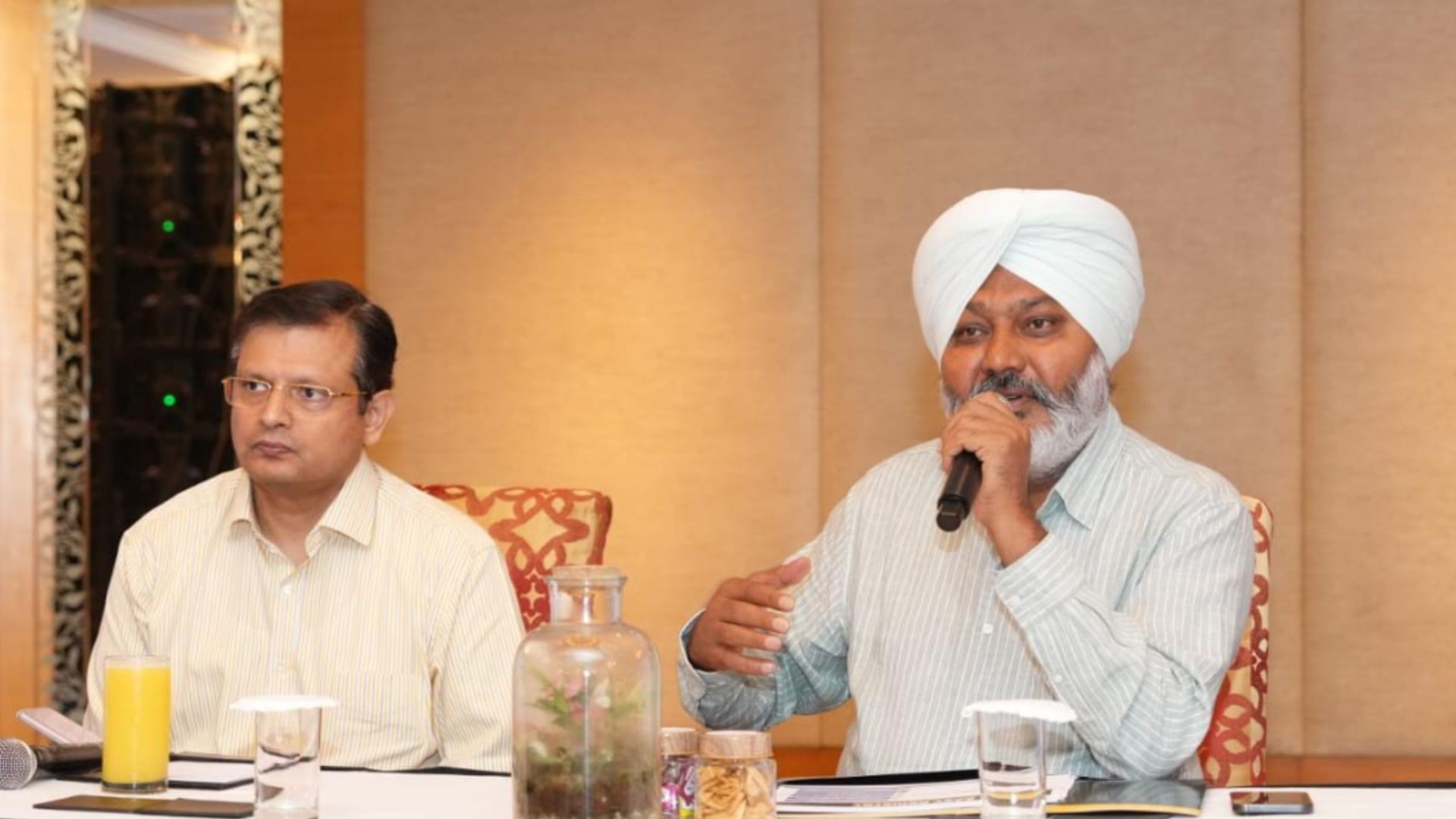
The Punjab government has launched its land pooling scheme, promising to provide common people with secure residential rights and basic infrastructure. Finance and Revenue Minister Harpal Singh Cheema stated that under this policy, no farmer’s land will be acquired forcibly. Land will be pooled only with the consent of the farmer, and they will retain full rights over their share of developed land — free to sell or use it as they wish.
Cheema added that the scheme is gaining appreciation in Chandigarh, and discussions are ongoing with stakeholders. He also slammed the Congress, BJP, and Akali Dal, accusing them of having encouraged illegal colonies over the past 10 years, turning Punjab into a hotbed of unauthorized real estate. He said these parties promoted colonies built on 30-yard plots without basic amenities.
TDG Spoke to few farmers who gave their land in Land pooling scheme
1—Randhir Singh, a resident of village Pasyana, said he is involved in farming and supports the land pooling policy introduced by the government. According to him, the scheme appears to be in the interest of farmers and is a positive initiative by the Bhagwant Mann government. He owns three acres of land and believes the scheme is well-designed and beneficial. He added that other farmers in his village are also in agreement with the policy and have expressed support for it.
2—Harvinder Sharma from village Shermajra echoed similar sentiments. He comes from a farming family and expressed his gratitude to the Bhagwant Mann government for launching the land pooling scheme. He described it as an excellent initiative and stated that after officers explained the scheme to them in detail, they found it both practical and promising. Harvinder said he wants more families to join the scheme so they can secure their future, and thanked the government for including his village in the plan.
3—Rajesh Kumar, another farmer from the same region, also praised the land pooling policy. Coming from a farming background, he and his family discussed the proposal and found it favourable. He stated that the majority of farmers whose land falls under the scheme are happy with it, and only those left out are expressing opposition. According to him, officials clarified that each acre would be compensated with 1,000 square yards and the value of the land has already appreciated. If the land is pooled and allotted in PUDA-regulated areas, its worth could increase fivefold. He believes the scheme is lucrative and urged farmers to participate in it rather than resist it. Although a minor disagreement existed within his extended family, the majority have agreed to join the policy.
4—Rajinder Kumar, a farmer from Patiala, shared his wholehearted support for the land pooling scheme introduced by the Bhagwant Mann government. Coming from a long-standing farming background, Rajinder said the scheme has brought hope for a better and more secure future. He appreciated that the government has taken full responsibility for developing basic infrastructure like roads, sewage, water, and electricity, which, according to him, adds tremendous value to pooled land. Rajinder mentioned that after understanding the details explained by officials, it became clear that the scheme is thoughtfully structured and aimed at empowering small and marginal farmers. He believes that this model will make agricultural families financially stronger and open up new avenues of progress, including opportunities beyond farming. He urged fellow farmers not to hesitate and to come forward to become a part of this initiative.
5–Harvinder Singh, also from Patiala, expressed deep appreciation for the land pooling scheme, calling it a visionary step by the state government. He said that this is the first time in many years that farmers feel included in the state’s urban planning model. Harvinder, who has been farming for decades, said he has never seen such a transparent and beneficial approach, where the government assures that every landowner’s share remains intact and even grows in value. According to him, it’s not just land pooling but future pooling—where development, value addition, and a sense of collective upliftment are all rolled into one. He thanked the officials for patiently explaining the mechanism and motivating villagers with facts and figures. Harvinder stated that this scheme gives confidence to farmers that their land will not be sold off for pennies but transformed into something that benefits them directly. He called upon others to support the scheme and secure a better tomorrow for future generations.
On the other hand, political and commercial entities, especially political parties, believe that if this scheme succeeds, the Mann government will strengthen its hold not only among urban voters but also among farmers. Having a share in land within an Urban Estate is a new experience for farmers — something no previous government has ever offered.
This has implications, and the fear of those outcomes is clearly visible among political parties and the builder lobby. This scheme is linked to the plan of developing Urban Estates in 25 cities across Punjab. In the cities where the government has announced these Urban Estates, the sale of plots in private builders’ colonies has stopped. Now people are planning to buy cheaper and better plots in Urban Estates. That’s why the entire builder lobby stands opposed to this policy.
Political parties also sense that if the scheme of shared ownership succeeds, the Mann government will build a strong connection not just with urban voters but also with farmers. Sharing land in Urban Estates is a new experience for farmers — never before provided by any government.
If a group of farmers jointly pools 9 acres of land, they will collectively get 3 acres of developed land in return. On this land, they can build a group housing society or sell it to a builder at a desired price. Now the farmer no longer needs to sell their land out of compulsion — they can become builders themselves.
It is well known that residential plots are in high demand in Punjab’s cities. In the last 10 years, around 20,000 acres of land has been used for colonies, most of which were developed illegally and without basic infrastructure. This is why this policy is beneficial for common people and farmers — but the builder lobby is not happy with it.
Under the land pooling policy, the government plans to develop Urban Estates in:
Patiala, Sangrur, Barnala, Bathinda, Mansa, Moga, Ferozepur, Nawanshahr, Jalandhar, Hoshiarpur, Sultanpur Lodhi, Kapurthala, Phagwara, Nakodar, Amritsar, Gurdaspur, Batala, Tarn Taran, Pathankot, and Ludhiana. Through these newly planned areas, people will gain access to a high-quality lifestyle, and the unchecked growth of unauthorized colonies lacking basic facilities will be brought under control.