The acquittal of Aam Aadmi Party national convenor Arvind Kejriwal and senior leader Manish Sisodia in the Delhi excise policy case has triggered a major political churn across the country, with Punjab emerging as the immediate political battleground where the verdict is being interpreted as both legal vindication and a turning point ahead of the 2027 Assembly elections.
The Special Court order clearing Kejriwal, Sisodia and several others brought an end, at least for now, to one of the most politically contested corruption cases in recent Indian politics. The ruling has reshaped narratives not only in Delhi but also within Punjab, the only full state governed by AAP.
Kejriwal turns emotional after verdict
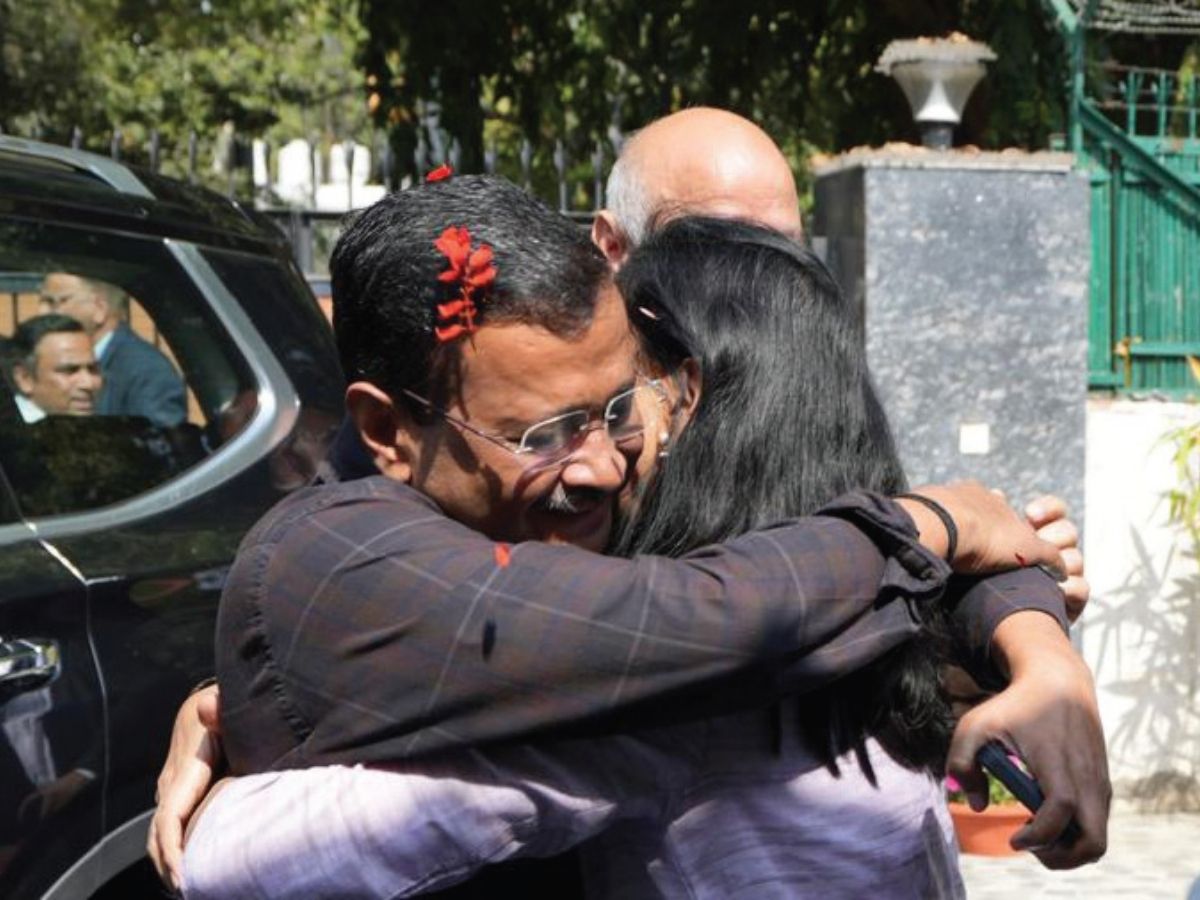
Moments after the court decision, Arvind Kejriwal appeared visibly emotional while addressing supporters and media persons outside the courtroom. Witnesses said he briefly broke down as the verdict was announced, calling it a triumph of truth after prolonged legal and political battles.
“We have always said the truth prevails,” Kejriwal said, asserting that false allegations had been imposed on the party leadership but ultimately failed judicial scrutiny.
The court discharged both leaders, observing lack of sufficient grounds to proceed with prosecution in the alleged liquor policy irregularities case, which had led to arrests, resignations and sustained political confrontation over the past two years.
For AAP, the decision marks restoration of political credibility around its anti corruption plank, which had come under intense attack since the investigation began.
Punjab leadership moves swiftly
Punjab Chief Minister Bhagwant Mann welcomed the verdict, stating that justice had ultimately prevailed despite attempts to politically destabilise elected governments.
Mann said the judgment reaffirmed faith in democratic institutions and proved that governance focused politics cannot be defeated through allegations lacking evidence. According to party sources, Mann personally congratulated Kejriwal soon after the order, describing the decision as moral vindication for the party’s leadership.
Within hours, celebrations were witnessed among AAP workers across Punjab, reflecting how closely the state government’s political messaging remains linked with the national leadership.
Kuldeep Dhaliwal calls verdict collapse of conspiracy
AAP Punjab Chief Spokesperson and MLA Kuldeep Singh Dhaliwal termed the acquittal proof that the alleged liquor scam was a politically motivated conspiracy aimed at eliminating AAP from national politics.
Dhaliwal accused the BJP, Congress and Shiromani Akali Dal of running sustained propaganda campaigns to damage Kejriwal’s image. He said the opposition’s narrative had collapsed “like a house of cards” after the court ruling.
According to Dhaliwal, investigative agencies were misused to jail senior leaders but failed to substantiate allegations in court.
Aman Arora demands apology from Centre
AAP Punjab President Aman Arora said the verdict exposed what he described as fabricated allegations created to politically destroy Kejriwal.
Addressing a press conference in Chandigarh, Arora asserted that justice may be delayed but cannot be defeated. He claimed that a sitting Chief Minister was jailed for months while Sisodia remained imprisoned for nearly two years purely for political reasons.
Arora demanded a public apology from Prime Minister Narendra Modi and Union Home Minister Amit Shah, alleging misuse of central agencies to settle political scores.
Harjot Bains links verdict to governance politics
Punjab Education Minister Harjot Singh Bains said the acquittal would be remembered as a major victory of honesty in democratic politics. He argued that opposition parties repeatedly spoke about a massive financial scam but investigative agencies failed to recover any illegal proceeds. Bains said education reforms and governance achievements became the real reason behind political targeting of AAP leadership.
He further asserted that the verdict would energise party workers ahead of the 2027 Punjab Assembly elections, predicting that AAP would surpass its 2022 electoral performance.
Verdict likely to influence AAP’s organisational strategy in Punjab
Beyond immediate political reactions, the acquittal is also expected to influence AAP’s organisational restructuring and campaign planning in Punjab. Party insiders indicate that the leadership now views Punjab as the strongest political base to demonstrate administrative stability after months of national level uncertainty surrounding its top leadership.
With legal pressure easing on Arvind Kejriwal and Manish Sisodia, senior party functionaries believe greater attention will now shift towards governance delivery and cadre consolidation in Punjab. The state government is likely to accelerate welfare announcements, education reforms and health infrastructure expansion in the coming months to reinforce the narrative that AAP represents performance driven politics rather than personality centric mobilisation.
Political analysts point out that Punjab has remained crucial for AAP’s national legitimacy since its sweeping victory in 2022. Any weakening of the Delhi leadership during the investigation period had indirectly placed additional political responsibility on Chief Minister Bhagwant Mann. The acquittal now redistributes that pressure, allowing Mann to function within a more secure national political framework backed by a legally strengthened central leadership.
The development also arrives at a time when early political positioning for the 2027 Punjab Assembly elections has already begun across parties. AAP leaders believe the verdict will help reconnect with sections of voters who were influenced by corruption allegations repeatedly highlighted by opposition parties.
At the same time, opposition formations are expected to sharpen scrutiny of the Mann government’s performance, particularly on employment generation, fiscal management and law and order issues. This suggests that while the acquittal provides political momentum, electoral outcomes will continue to depend on governance perception on the ground.
For AAP, however, the symbolism of the verdict remains powerful. The party is projecting it as confirmation that its leadership survived what it describes as the toughest political and legal challenge since its formation.
In Punjab’s intensely competitive political environment, that message is likely to shape campaign narratives, political alliances and voter engagement strategies in the months ahead.
BJP counters AAP narrative
Punjab BJP president Sunil Jakhar struck a cautious note following the verdict, stating that legal developments should not be misrepresented as political certification of innocence.
Jakhar maintained that investigative agencies operate within legal frameworks and judicial processes must run their full course, particularly as central agencies have indicated plans to challenge the order in higher courts. He said corruption allegations cannot be politically dismissed merely through celebratory narratives and added that governance performance, not courtroom outcomes alone, would ultimately shape public opinion.
His response reflects BJP’s broader attempt in Punjab to prevent AAP from converting the acquittal into an electoral advantage ahead of upcoming political contests.
Political reset in Punjab
The acquittal comes at a time when opposition parties in Punjab have intensified criticism of the Mann government over law and order concerns, financial stress and administrative functioning.
Political observers believe the judgment allows AAP to shift political discourse from governance challenges to questions of political victimhood and institutional vindication.
For Bhagwant Mann, the verdict strengthens internal party cohesion and reinforces Punjab’s strategic importance within AAP’s national expansion plans. The Delhi leadership’s legal relief removes a major political vulnerability that opposition parties had consistently used against AAP since 2022.
National implications
Nationally, the verdict restores Kejriwal’s political positioning as an anti corruption campaigner, the identity central to AAP’s rise from activism to governance.
The liquor policy case had cast uncertainty over the party’s expansion beyond Delhi and Punjab. With the leadership cleared by the trial court, AAP is expected to relaunch its governance based outreach in multiple states.
However, the Central Bureau of Investigation has already indicated it will challenge the ruling before the Delhi High Court, suggesting that legal proceedings may continue even as political narratives evolve.
Electoral road ahead
In Punjab, the acquittal is likely to become a central talking point in AAP’s political messaging. Party leaders are framing the judgment as proof that attempts to halt AAP’s rise through legal pressure have failed.
Opposition parties, meanwhile, are expected to counter by focusing on governance delivery rather than legal outcomes. As celebrations continue within AAP ranks, the verdict has undeniably reset the political conversation.
For Arvind Kejriwal and Manish Sisodia, the judgment represents legal relief after years of scrutiny. For Punjab politics, it signals the beginning of a renewed and sharper political contest where courtroom verdicts,
governance claims and electoral ambitions are set to intersect once again.