
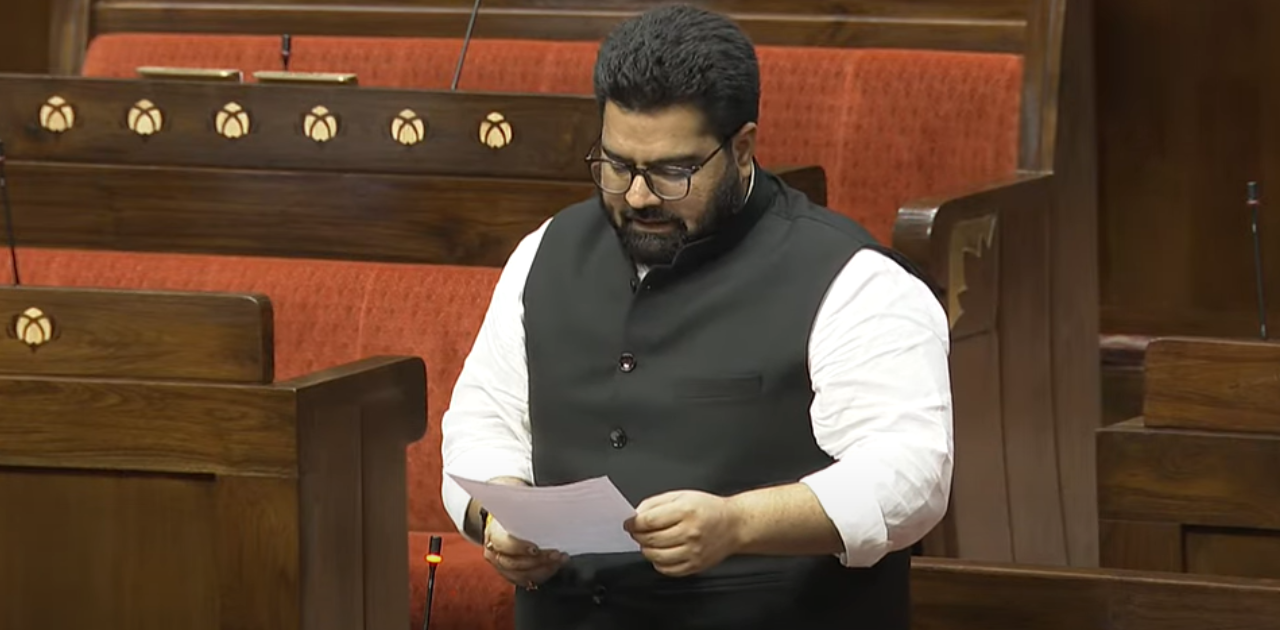
Rajya Sabha MP Kartikeya Sharma has proposed a national-level “Council for Future Affairs” (CFA) to prepare India to lead the global discourse on emerging technologies. While introducing a Private Member’s Resolution in Parliament, Sharma pointed out the immediate necessity for a dedicated institutional mechanism to target and steer the long-term innovation strategy for the country.
The proposed council would keep an eye on critical technologies like artificial intelligence, blockchain, quantum computing, biotechnology and small modular nuclear reactors. It would be a centralized one-stop shop for integration of policy and research across ministries, industries and academia to support the strategic interests of the nation.
According to the resolution, the CFA would serve as a single platform for combining research, industrial growth, policy planning and international cooperation, allowing India to take the lead in determining the future global order rather than merely participate in it.
Drawing from the idea of the pioneering state-level Department of Future in Haryana, Sharma argued that such a model could be scaled to the national level, giving India an agile and future-oriented body to track disruptions and turn them into opportunities. This department is designed to function as a think tank, catalyst and coordination hub across vital sectors including agriculture, healthcare, education, urban development and sustainability.
Besides coordination of policy and implementation, the CFA would keep a watch on global trends, develop indigenous capacities and attract foreign direct investment in advanced sectors. Research and Product Development Councils (RPDCs), specific to the domains, would report directly to the Prime Minister’s Office for inter-ministerial coordination and accountability.
“Under his visionary leadership, Haryana has emerged as a national model in future-oriented governance, showing how states can lead the way for national policy innovation,” Sharma said in reference to Haryana Chief Minister Nayab Singh Saini’s progressive governance.
According to the announcement, the MP also praised Prime Minister Narendra Modi’s visionary leadership, pointing out that the proposed CFA is a logical progression of the prime minister’s revolutionary vision for an India that is self-sufficient and empowered by technology.
Broad Political Support and Strategic Significance
His proposal has been supported by several parties in the Rajya Sabha that reflect growing consensus on the need for institutional foresight in India’s governance model. Taking further examples from the UAE’s Ministry of Cabinet Affairs and the Future, as well as Singapore’s Centre for Strategic Futures, Sharma emphasized that India cannot afford to be a reactive player but must become an active architect of its future.
He complimented India’s bold digital reforms-Aadhaar, UPI, and India Stack-as a great basis for laying further road and urged that spirit be flagged in front of all policymakers. The CFA would help propel India toward technological self-reliance, aligning innovation with national values and preparing the country for generational changes in economy, security, and society. With its big youth population and developing tech talent, the council would play a key role in harnessing the true potential of India’s demographic dividend. If the Council for Future Affairs were to be born into being, it could turn into a transformative institution shaping the long-term trajectory of India into a knowledge and innovation superpower.
Kartikeya Sharma said “By ensuring that we are not only ready for disruptive technologies but also actively shape them in accordance with our national priorities and values, the Council for Future Affairs will build upon this solid foundation laid by PM Modi and lead India into the next frontier.”
In order to speed up the conversion of research into innovations that are ready for the market, the resolution also suggests creating domain-specific Research and Product Development Councils (RPDCs) with financial backing and international collaborations.