
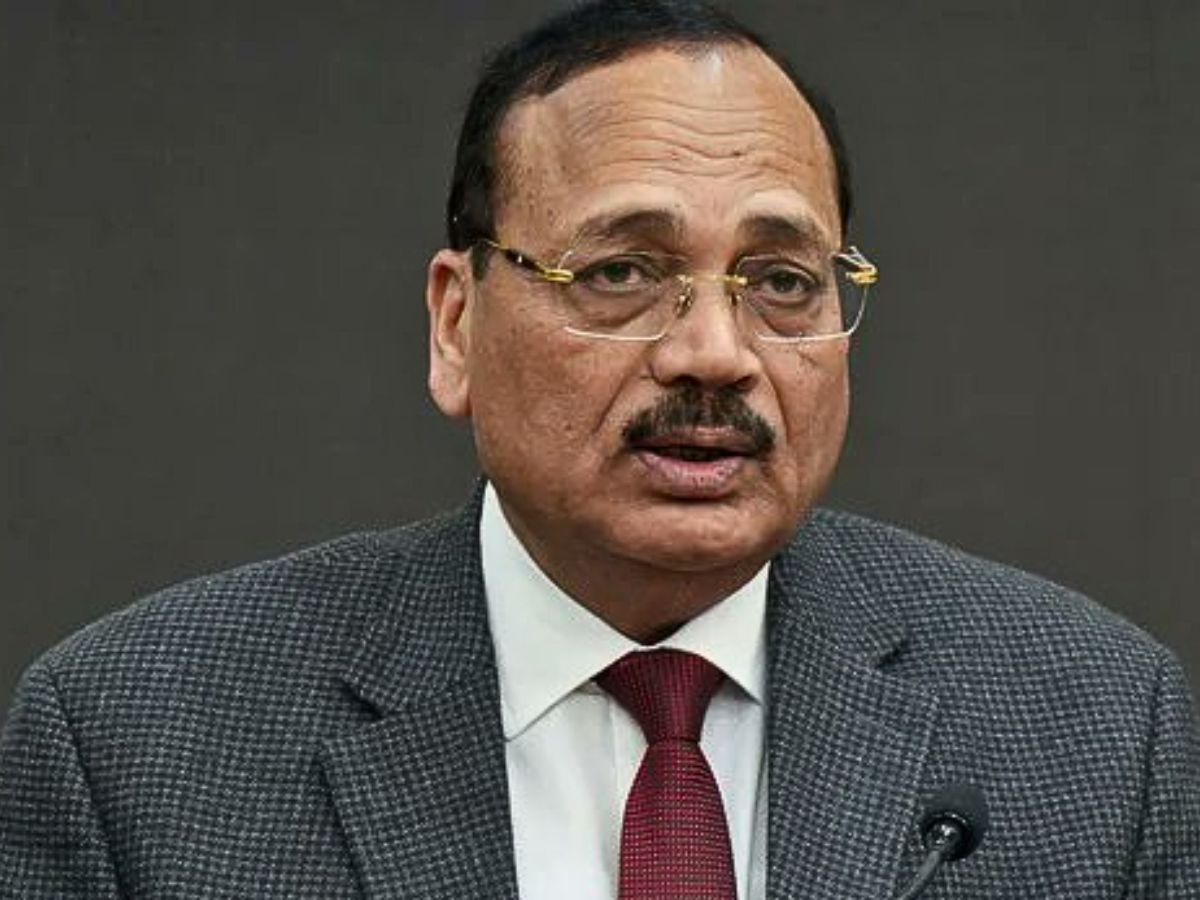
Justice Surya Kant will be sworn in as the 53rd Chief Justice of India today, succeeding formally Justice B.R. Gavai who demitted office on Sunday. He will have a tenure of almost 15 months, which will end on February 9, 2027, when he attains 65 years of age. His elevation has come at a time when the Supreme Court is expected to hear several high-impact constitutional matters, making the period of his leadership crucial.
What is Justice Surya Kant’s journey to the top?
Justice Surya Kant was born on February 10, 1962, in the district of Hisar, Haryana. His rise from small-town legal practice to the country’s highest judicial office is remarkable. Coming from a middle-class family, he built up his career steadily through the legal system to eventually get a Master’s degree in law with top academic honours.
He was the Chief Justice of the Himachal Pradesh High Court before being elevated to the Supreme Court. He was a judge earlier in the Punjab and Haryana High Court, where he rendered a number of widely noted judgments. His rise has been viewed by many as a story of consistency, scholarly legal grounding, and administrative competence.
What Key Judgments Has Justice Surya Kant Delivered?
Justice Surya Kant has been part of several landmark constitutional verdicts during his tenure in the Supreme Court. He was a part of the bench that heard the matters relating to the abrogation of Article 370, an issue which essentially recast the constitutional relationship of Jammu & Kashmir with India.
Justice Surya Kant has been a part of several seminal verdicts on civil liberties, freedom of speech, and citizenship-related issues. He is part of the bench in the Pegasus spyware case, which brought into sharp focus the requirement for transparency in the general cause of national security, without which the latter cannot be an unquestioned shield.
Justice Surya Kant also played a significant role in cases relating to democratic functioning. He sought details from the Election Commission on the deletion of 65 lakh voters from Bihar’s draft rolls, a direction placing accountability at the heart of electoral processes.
Justice Surya Kant’s judicial philosophy has also reflected a strong position on gender justice and equitable access to legal forums, including decisions supporting women in local governance and advocating for fair representation in the bar associations.
How Does Justice Surya Kant View Public Scrutiny and Pressure?
Throughout his judicial career, Justice Surya Kant has reiterated that “decisions will be based on facts and law.” He has gone on record to state that external criticism, including online commentary or even trolling, means little in changing his approach. This clarity of approach could define how he approaches politically sensitive cases or socially contentious ones during his tenure.
What Challenges Await Justice Surya Kant as CJI?
Justice Surya Kant assumes duties at a time when the topmost judiciary is bothered about serious issues relating to electoral transparency, digital privacy, federal tensions, and MMDA. Important constitutional references on issues like the extent of gubernatorial and presidential discretion over state legislation-one with wide ramifications among states-are pending before the court.
As he assumes office for 15 months, he is expected to lead the court on a path of institutional discipline, clarity of judicial thought, and protection of basic rights. His tenure is likely to shape the course that the Supreme Court will take in the next year.