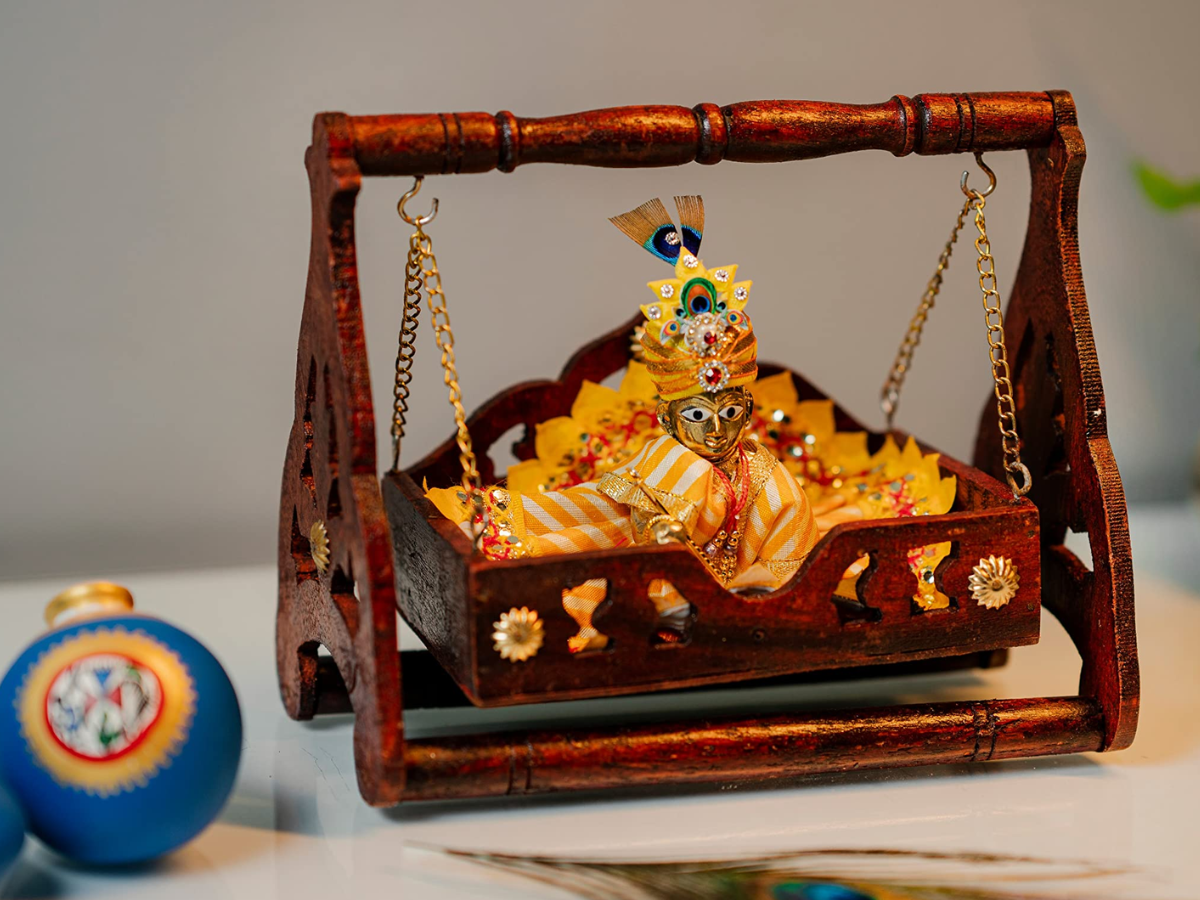
Lord Krishna’s birth, which is commemorated every year as Janmashtami, will be celebrated with midnight rituals rich in symbolism and devotion. For Janmashtami 2025, the Shubh Muhurat for performing Krishna’s birth and the sacred Panchamrit bath is between 12:04 AM and 12:45 AM on August 16–17 night. The devotees will have a 43-minute period to perform these rituals in their pure form.
Symbolic Birth with a Cucumber
One of the characteristic aspects of the celebration is the symbolic birth ritual with a new cucumber. Devotees keep the cucumber intact with the stem at the altar, prior to the commencement of the Muhurat. When the favorable time comes, the stem is sliced with a coin, as a gesture of cutting an umbilical cord. This gesture means the divine arrival of Baby Krishna (Laddu Gopal).
Soon thereafter, homes and temples are filled with the blowing of conch shells, ringing of temple bells, and chanting of devotional mantras to greet the newborn deity.
Step-by-Step Panchamrit Bath Ritual
After the symbolic birth, devotees move to the Panchamrit Snan, a five-ingredient ceremonial bath that carries profound spiritual meaning.
- Gentle Massage & Initial Bath – The Laddu Gopal idol is massaged gently and bathed in pure water.
- Sandalwood Paste Application – A sandalwood paste is applied to the idol for beauty and fragrance.
- Preparation for Bath – Two clean receptacles are so prepared: one in which to place the idol and another which contains water mixed with holy Ganga water and tulsi leaves. Mantras are recited by devotees while pouring this water.
- Panchamrit Bath Sequence – The idol is bathed in sequence with milk, curd, honey, sugar, and Ganga water.
- Adornment & Worship – Once dried, the idol is clothed in new clothes, decorated with a peacock feather crown and flute, and worshipped with aarti.
- Swinging Ceremony – Laddu Gopal is rocked gently within a decorated floral swing (jhula) to the tune of bhajans.
Important Guidelines for Devotees
To preserve the sanctity of the rituals, religious elders advise:
- Use only clean, dedicated vessels for the bath.
- Pour water with the conch shell.
- Never put the idol on the floor.
- Do not pour the used water down drains rather, sprinkle it around the house or pour it into a tulsi plant.
The Spiritual Importance
These customs entwine symbolism with strong practical devotion, keeping in mind Krishna’s modest yet godly descent. The cucumber birth ritual symbolizes cleanliness and new beginnings, whereas Panchamrit bath is a symbol of love and respect.
As August 16 nears, India’s temples and houses will be filled with the chant, the sound of the conch, and rhythmic swaying of Laddu Gopal, reveling in the eternal delight of Krishna’s birth.