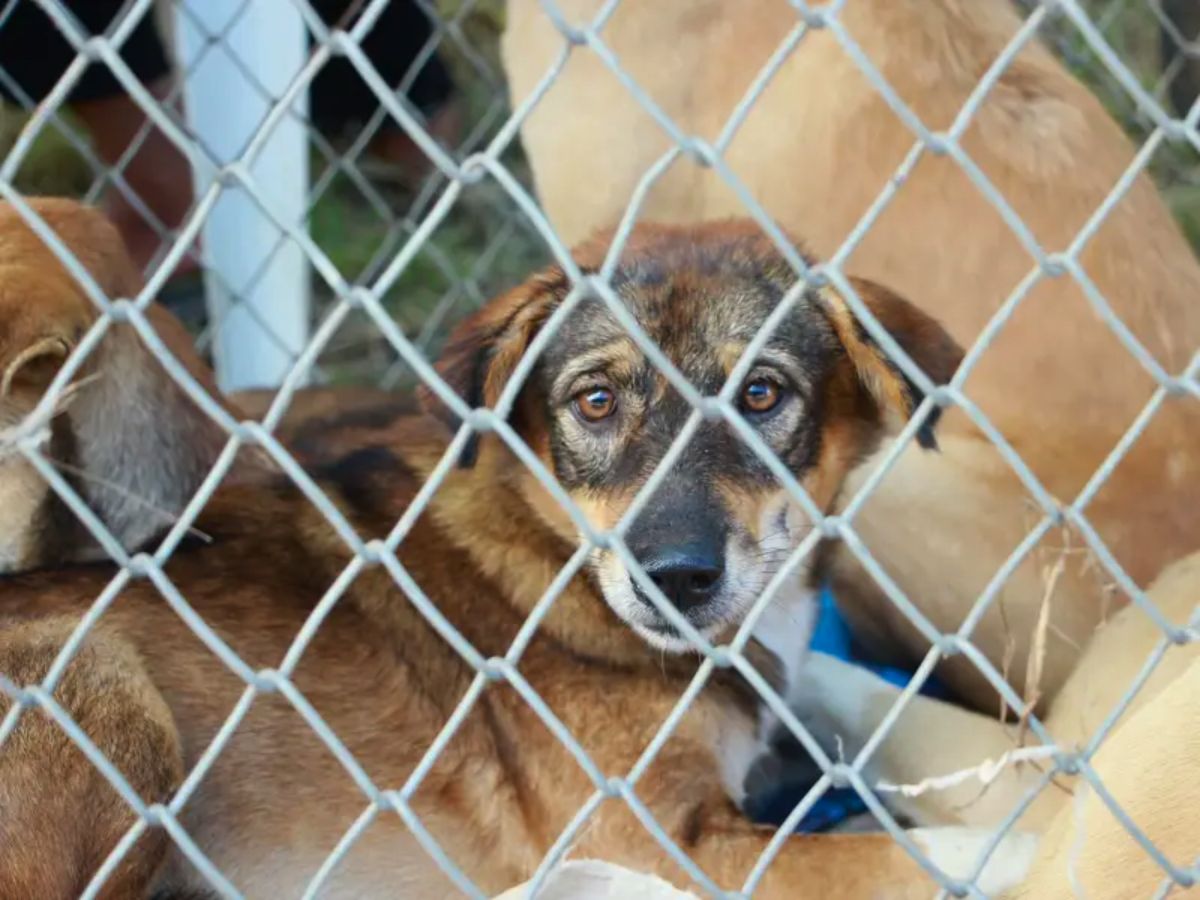
The Supreme Court has directed the Delhi government and civic bodies in Gurugram, Noida, and Ghaziabad to immediately remove stray dogs from all localities and house them in shelters. The court barred the return of the animals to the streets.
The order has triggered sharp criticism from PETA India, which called mass displacement “unscientific” and “never effective.” The animal rights group warned it would cause chaos, public uproar, and suffering for dogs, without solving the problem of bites or population growth.
Court Steps In, Calls for Urgent Action
A bench of Justices JB Pardiwala and R Mahadevan said the move was in public interest and should be implemented without emotional considerations. “Pick up dogs from all localities and shift them to shelters. For the time being, forget the rules,” Justice Pardiwala told amicus curiae Gaurav Agarwala.
ALSO READ: Raveena Tandon on SC Stray Dog Ruling: ‘Need Sterilisation, Not Just Relocation’
The court directed the Delhi government to create shelter space for at least 5,000 dogs within six to eight weeks as an initial step. These shelters must have adequate staff for sterilisation and vaccination, CCTV monitoring to prevent release, and the ability to expand in the future
PETA Counters: ‘Jailing Dogs Never Worked’
PETA India’s Senior Director of Veterinary Affairs, Dr Mini Aravindan, warned that Delhi’s estimated 10 lakh community dogs — with less than half sterilised — cannot be effectively managed through displacement. “Communities think of neighbourhood dogs as family, and the displacement and jailing of dogs has NEVER worked,” she said.
She stressed that large-scale removal would not curb the dog population, reduce rabies, or prevent bites. Instead, she urged strict sterilisation and vaccination, closure of illegal pet shops and breeders, and adoption drives.
ALSO READ: Stray Dogs in Delhi-NCR: What We Know So Far About the Supreme Court’s Removal Order
Long-Standing Policy Gap
Dr Aravindan pointed to a 2001 government mandate for sterilisation and vaccination, which she said also calms canine behaviour. She criticised the Delhi government for failing to implement this effectively. “Had the Delhi government implemented an effective sterilisation programme, there would hardly be any dogs on the road today,” she said.
Public Trust and Policy Credibility at Stake
This conflict between animal rights advocacy and the judiciary’s urgency highlights a larger issue, striking a balance between public safety and humane animal management. PETA is concerned that the court’s choice to seek immediate relief from recent dog bite incidents may erode public trust in government policy by ignoring long-term scientific solutions.
ALSO READ: SC on Delhi Stray Dogs: ‘Put Them in Shelters, Keep Capital Safe’
By contrasting safety concerns with compassion, the argument now runs the risk of dividing communities & perhaps setting a precedent for other governments handling stray animal issues.