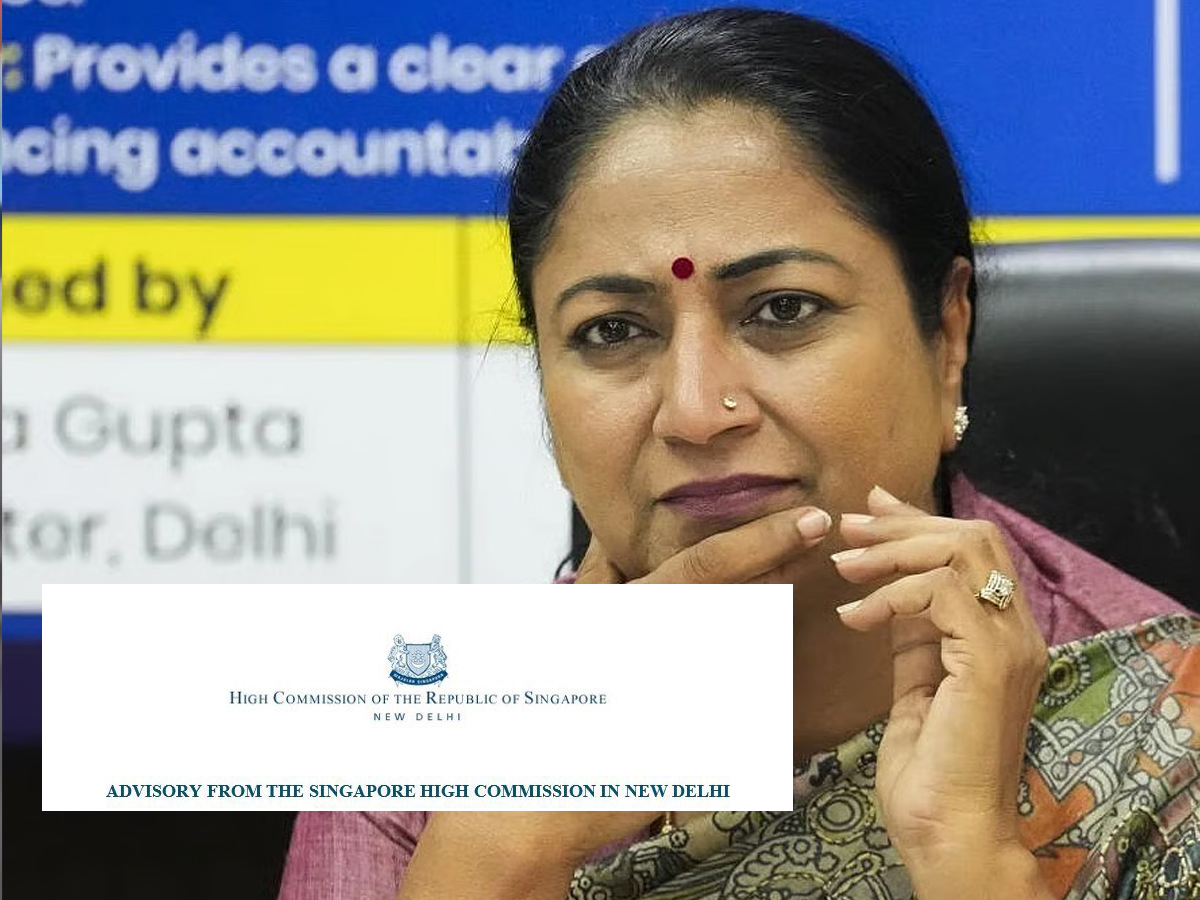
Delhi’s air pollution crisis has taken a global turn. As toxic smog choked the national capital and authorities enforced the strictest pollution curbs under GRAP-4, Singapore issued an advisory for its citizens living in Delhi. The move quickly sparked a political clash, with the Aam Aadmi Party launching a sharp attack on Delhi Chief Minister Rekha Gupta.
AAP’s Veiled Attack on Delhi CM
The Aam Aadmi Party accused the Delhi government of failing to control the pollution emergency. Taking a dig at Chief Minister Rekha Gupta, AAP’s Delhi unit chief Saurabh Bharadwaj posted on X, “Chachi brings international embarrassment for India,” and added, “The Singapore High Commission warns its citizens against Delhi pollution.”
Chachi brings International Embarrassment for India
Singapore Highcommission warns it’s citizens against Delhi Pollution pic.twitter.com/1Bj87VnVIN
— Saurabh Bharadwaj (@Saurabh_MLAgk) December 15, 2025
The remark intensified the political debate around air quality management in the capital, which has once again slipped into a public health emergency.
Why Singapore Issued the Advisory
The Singapore High Commission in Delhi issued an alert after air quality levels worsened sharply across the National Capital Region. It also activated an emergency contact line for its nationals.
In its advisory, the High Commission said, “The Delhi authorities have urged residents to stay indoors, especially children and those with respiratory or cardiac ailments, and to use masks if stepping out. In this regard, the High Commission urges Singapore nationals in the Delhi National Capital Region to pay heed to this advice.”
The advisory came soon after authorities imposed Stage 4 of the Graded Response Action Plan.
What Is GRAP-4 and Why It Matters
GRAP-4 is the strictest level of Delhi’s pollution control framework. It comes into force when air quality reaches ‘severe plus’ or ‘hazardous’ levels.
Under GRAP-4, construction activities stop, non-essential diesel vehicles face restrictions, and residents are advised to limit outdoor movement. The decision reflects the seriousness of the situation as pollution crosses dangerous thresholds.
Delhi Air Quality Slips to Hazardous Levels
Delhi’s air quality deteriorated further over the weekend. A thick blanket of smog covered large parts of the city and nearby areas. Visibility dropped sharply, affecting daily life and travel.
Data from the Central Pollution Control Board showed Delhi’s average AQI touching 461 at 7 am, compared to 431 a day earlier. An AQI above 450 falls in the ‘hazardous’ category, posing serious health risks to everyone.
Impact on Flights and Travel
The Singapore advisory also warned of possible disruptions to air travel. Poor visibility raised concerns about delays and cancellations at the Indira Gandhi International Airport.
Citizens were advised to track airline updates closely and contact the High Commission if consular help was needed. Airlines also issued alerts as smog continued to affect flight operations.
Political Heat Rises With Pollution
The pollution crisis has once again become a political flashpoint in Delhi. The AAP blamed the current administration for failing to take preventive steps ahead of winter.
The advisory from a foreign mission added pressure on the state government, with the opposition claiming it reflected poorly on governance and preparedness.
Health Concerns Grow Across NCR
Doctors continue to warn residents about the health impact of prolonged exposure to toxic air. Children, elderly people, and those with lung or heart conditions remain at high risk.
Authorities have urged people to stay indoors, use masks when stepping out, and avoid strenuous activity.