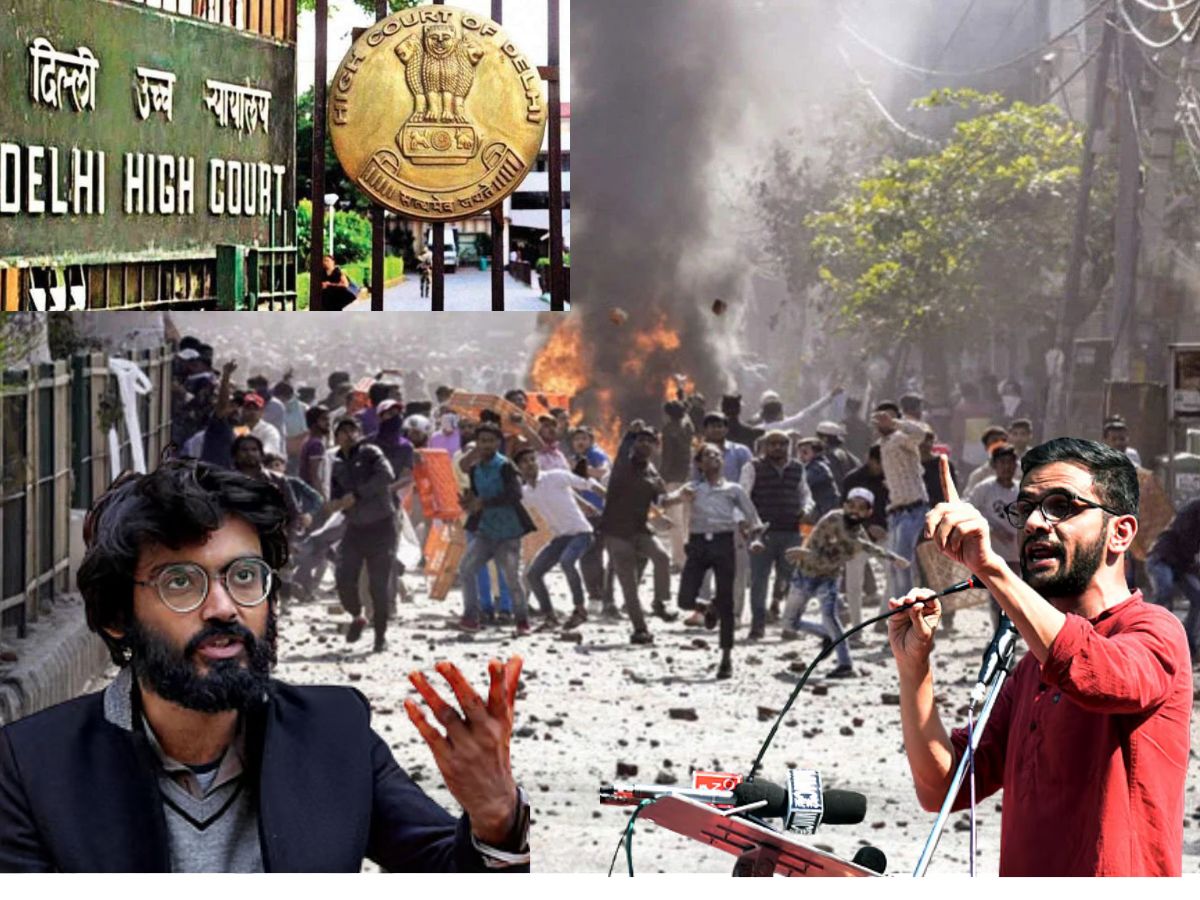
The Delhi High Court passed a landmark order by rejecting bail for Sharjeel Imam, Umar Khalid, and seven others accused in the alleged conspiracy case related to Delhi riots. The bench of Justice Naveen Chawla and Justice Shalinder Kaur rejected all the bail applications, holding the alleged involvement of the accused in the riots prima facie “grave”, asserting the requirement of a fair and un-rushed trial. This clearly seems as if the system constituting executive and judiciary intends to push the narrative of national security.
Statement by the Judiciary
The ruling has been received with varied reactions; the defenders of the accused condemn the ongoing judicial postponements and emphasise the presumption of innocence until conviction. Student organisations and protest groups displayed solidarity, marching to grab attention on the issue of extended detention without trial. Legal professionals and a group of national security experts emphasise the court’s role in reconciling individual rights with national security interests under special laws such as UAPA.
Background of the Case
The Delhi riots in 2020 killed 53 individuals and left hundreds injured, instigated during protests against the Citizenship Amendment Act (CAA). Sharjeel Imam, Umar Khalid, and others stand accused under harsh laws, such as the Unlawful Activities (Prevention) Act (UAPA), on charges of conspiracy, incitement, and orchestrating violence that escalated the communal violence. They have been detained since different dates between January and September 2020, with the trial still undecided.
Court’s Reason Behind Denying Bail
The High Court noted that Sharjeel Imam and Umar Khalid seemed to be among the “first ones to act” once the CAA was enacted, purportedly launching protest campaigns using WhatsApp groups and pamphlets requesting “chakka jams” (road closures) and protests in Muslim-dominated areas. The court pointed out that their orations and activism were read as fomenting violence and adding to the conspiracy leading to the riots.
The court noted that the prosecution has made out a prima facie case against them based on substantial evidence such as thorough investigations, additional charge sheets, and testimony of almost 60 witnesses, including protected witnesses. It noted that a hurried trial would be prejudicial to the accused as well as to the interest of the state in the administration of justice.
Bail Denial for Others as Well
Bail applications of seven others viz. Athar Khan, Khalid Saifi, Mohd Saleem Khan, Shifa-Ur-Rehman, Meeran Haider, Gulfisha Fatima, and Shadab Ahmed were also dismissed on the same grounds due to their purported involvement in the conspiracy. Independently, Tasleem Ahmed, one of the accused in the companion case under UAPA, had his bail application rejected as well.
The Delhi High Court’s ruling serves as a turning point in the long-drawn-out legal saga of the 2020 Delhi riots. By refusing Sharjeel Imam, Umar Khalid, and others bail, the court has reaffirmed the seriousness of the charges as well as the necessity of a fair, considered, and complete judicial process. The pace and direction of the trial are to be smoothen up soon, but the rhetoric of compromising national security in the name of individual’s freedom of speech has to have its limits.