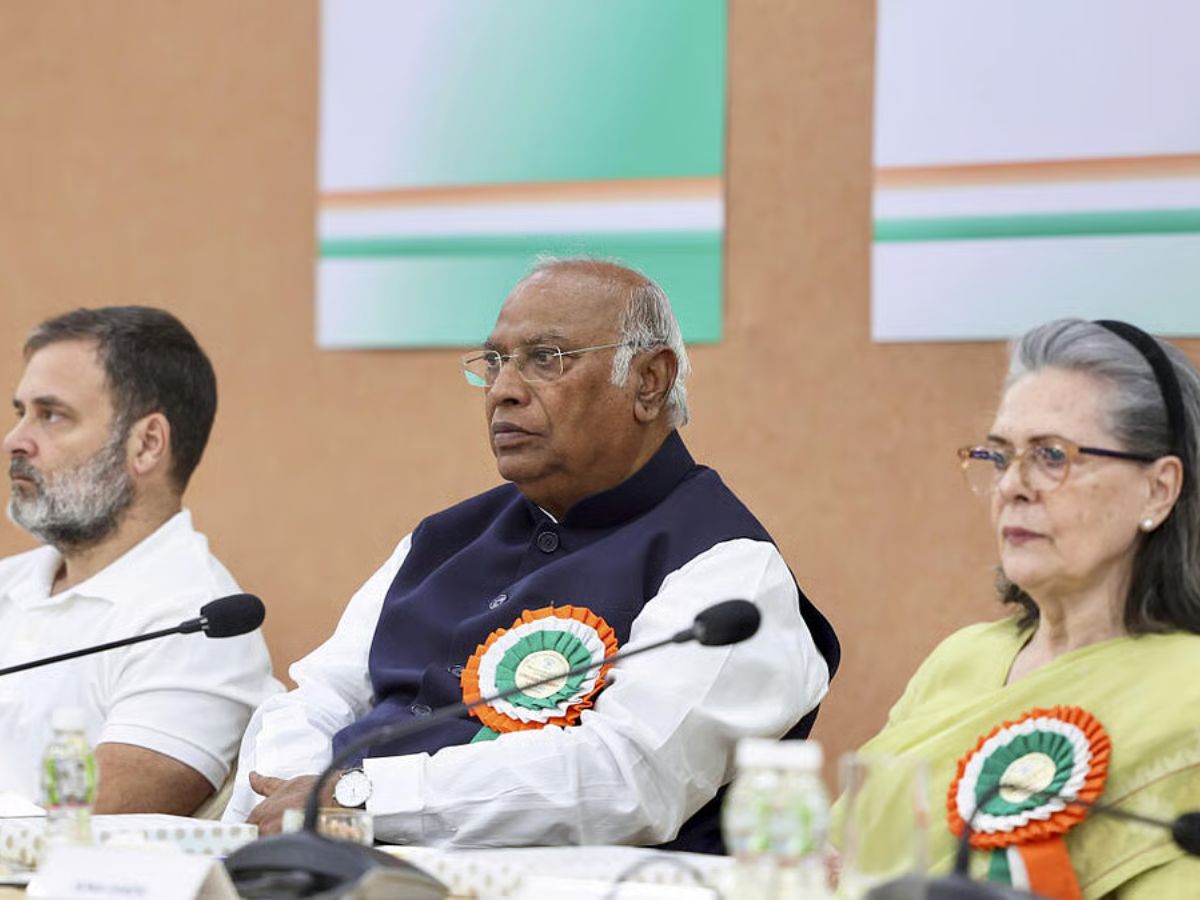
Indian aviation is at a crossroads. Recently, Congress leader Rahul Gandhi raised concerns over a potential duopoly and monopoly in domestic air travel, noting that a single airline’s dominance could affect ticket prices, connectivity, and regional access. He highlighted that such dominance could make smaller cities dependent on a single operator, leaving passengers with little choice and exposing the system to operational disruptions.
In response, the Aviation Ministry clarified that competition exists across the country and the government remains committed to increasing air connectivity, especially under the UDAN-RCS regional scheme. Yet, despite these assurances, data shows a startling reality of IndiGo. The airline has a monopoly on more than half of India’s domestic routes, raising questions about market concentration and long-term implications for passengers and competitors alike.
IndiGo Monopoly
As the largest airline in India, IndiGo operates 900 domestic routes, accounting for almost 80% of all sectors in the country. Of these, it maintains a monopoly on 514 routes. This translates to over 57% of its network being served solely by IndiGo, leaving passengers with no alternative carrier on these sectors.
While the term “monopoly” often has negative connotations, it also highlights IndiGo’s role in maintaining connectivity to smaller cities and remote airports where other carriers find operations unprofitable. Without IndiGo, thousands of passengers would lose essential air links that connect tier-2 and tier-3 cities to major hubs.
Other airlines also operate monopoly routes. Alliance Air flies 128 routes, with 80 (62.5%) as monopoly sectors, largely under UDAN-RCS. Regional carrier Star Air operates 71 routes, with 50 as monopolies. IndiaOne and Fly91 operate nearly all their routes as monopoly services.
Interestingly, the Air India group, including Air India and Air India Express, focuses on major domestic and international hubs. As a result, Air India maintains just 16 monopoly routes out of 159, and Air India Express has 28 out of 247 routes. Akasa Air has only two monopoly sectors, while SpiceJet operates 11.
Data from aviation analytics firms also reveals that of the total 1,131 domestic routes, 737 are served by a single airline, meaning nearly 70% of all routes in India are effectively monopoly routes. While IndiGo dominates, this reflects a broader market structure where smaller carriers and regional airlines serve niche routes.
IndiGo Airline Monopoly Breakers
Not all routes are monopolized. India has 249 sectors served by two airlines, creating some level of competition. IndiGo competes primarily with Air India Express on 125 of these and with Air India on 63. Other duopoly routes include combinations of regional and low-cost carriers like Akasa Air, SpiceJet, and others.
Only seven duopoly sectors exist where IndiGo is absent. Interestingly, SpiceJet, which once aggressively competed with IndiGo, has faded from most major routes. Meanwhile, Akasa Air has selectively entered duopoly routes on high-demand sectors such as Delhi–Mumbai and Mumbai–Bengaluru, where slot constraints make competition intense.
This duopoly data shows that while IndiGo dominates most routes, it is not unchallenged on all sectors, and competitive pressure persists in major city pairs, particularly on high-revenue routes.
Top 5 Airlines in India
India’s domestic aviation market is currently dominated by a few carriers:
- IndiGo – 900 routes, 64% market share, monopoly on 514 sectors
- Air India Express – 247 routes, mostly international and secondary domestic routes
- Air India – 159 routes, focusing on major hubs
- SpiceJet – Limited routes, some duopoly competition
- Akasa Air – Small but expanding, competing on select duopoly sectors
Regional carriers like Star Air, IndiaOne, and Fly91 operate mostly monopoly routes under government schemes. Analysts note that these airlines fill a strategic role in regional connectivity while IndiGo controls most high-density and profitable routes.
How IndiGo Gained Its Monopoly Status?
IndiGo’s monopoly is rooted in both strategic planning and the historical decline of Air India. The national carrier’s privatization struggles and conversion of Air India’s domestic low-cost operations into Air India Express left a vacuum in domestic connectivity.
While Air India Express focused on cost-efficient international operations, IndiGo expanded aggressively in domestic markets. Its careful route planning, fleet standardization, and operational efficiency allowed it to dominate both metropolitan and tier-2/3 cities, creating a network effect that competitors have struggled to match.
Experts note that IndiGo’s strategy of penetrating underserved airports while maintaining low operational costs helped it solidify its monopoly, especially in regions where government incentives under UDAN-RCS made routes viable but unattractive to smaller carriers.
Why is There No Government Airline?
India lacks a fully functional government airline outside the Air India umbrella due to decades of policy, financial issues, and privatization. While Air India was nationalized for strategic purposes, inefficiency, financial losses, and mismanagement led private competition to take centre stage.
The government now encourages private low-cost carriers to expand domestic connectivity, particularly in smaller cities, instead of directly operating all domestic routes. This indirectly increases monopoly sectors for airlines like IndiGo, which are able to capitalize on underserved markets without competition.
IndiGo Crisis: Centre First Response in Parliament
In the wake of the IndiGo crisis, Civil Aviation Minister Ram Mohan Naidu provided the government’s first formal response in Parliament. Addressing concerns in the Rajya Sabha, the Minister highlighted the government’s stern stance on IndiGo’s operational lapses, calling the crisis a result of crew rostering issues and internal planning failures.
Minister Ram Mohan Naidu stated:
“The crisis happened due to problems in their crew rostering and internal planning failure.”
“An enquiry is being conducted, and we will take strict action to set an example for any non-compliance in the future.”
He further added that the DGCA consulted with all airlines regarding FDTL (Flight Duty Time Limitations) implementation over the past month, with compliance expected from November 1 onwards. The statement underscored that while IndiGo dominates Indian skies, operational responsibility and compliance are non-negotiable.
IndiGo: Meteoric Expansion
IndiGo’s growth has been strategic and sustained, not a product of luck. Its expansion can be traced as follows:
- 2007: 14 aircraft
- 2009: 25 aircraft
- 2015: 100 aircraft
- 2019: 250 aircraft
- January 2023: 300 aircraft
The airline stunned the aviation world with massive Airbus orders:
- 2019: 300 A320neo aircraft (~Rs 2.3 lakh crore)
- 2023: 500 aircraft (~$50 billion), the largest single commercial aviation order in history
- Recent: 30 Airbus A350-900s with 70 purchase options for future wide-body expansion
By FY23, IndiGo posted revenue of ~Rs 55,877 crore and net profit of ~Rs 2,998 crore, with a domestic market share of about 62.1%, now close to 64.2%.
IndiGo Business Model
IndiGo’s low-cost, high-efficiency model focuses on:
- Fleet standardization (Airbus A320/A321 family)
- Rapid turnaround times
- Point-to-point domestic connectivity
- High aircraft utilization
- Controlled operational costs
This allowed the airline to grow while maintaining profitability, even during industry downturns and crises. Its disciplined approach to operations, maintenance, and network planning has been central to building its monopoly.
IndiGo Financial Loss Due to the Crisis
Despite its market dominance, IndiGo has faced record financial setbacks during the ongoing crisis. While the airline has not released a consolidated “total loss” figure, publicly available financial disclosures provide a clear picture:
- Q2 FY25: ₹987 crore loss
- Q2 FY26: ₹2,582 crore loss
- Cumulative known loss: ₹3,569 crore
These back-to-back heavy losses stem from multiple triggers:
- Rupee depreciation and forex shocks
- Rising aircraft lease and maintenance costs
- Global supply chain disruptions affecting aircraft delivery and spare parts
The losses reflect both operational missteps and external economic pressures, highlighting that even market leaders like IndiGo are vulnerable to structural inefficiencies and macroeconomic shocks.
Why Monopoly Isn’t Necessarily Bad?
While monopolies can affect pricing and choice, IndiGo’s control over underserved routes ensures continued connectivity. Smaller cities and towns benefit from air links that may otherwise remain unserved. Government schemes like UDAN-RCS have leveraged private airlines’ operational efficiency to expand regional air travel.
The challenge lies in balancing dominance with fair competition, ensuring ticket pricing remains accessible, and encouraging new entrants to increase duopoly or triopoly sectors.
Future of Indian Aviation
Aircraft induction is set to rise as supply chain issues ease. More airports and routes will open under UDAN-RCS, increasing regional connectivity. Regional and low-cost carriers are likely to increase duopoly sectors, challenging IndiGo in major city-pair markets. IndiGo is expected to retain dominance on smaller routes, but competition may intensify on metropolitan corridors.
What IndiGo Monopoly Means for India?
IndiGo’s monopoly is a product of strategic expansion, efficient operations, and historical market conditions shaped by the decline of Air India’s domestic operations. While concerns about duopoly and monopoly remain, IndiGo has also bridged connectivity gaps in smaller cities, ensuring passengers maintain access to vital air links.
The Indian aviation market is expanding rapidly. As new carriers enter and regional connectivity grows, monopolies may shrink. However, for now, IndiGo remains the unrivalled backbone of Indian skies, flying over half of the country’s domestic routes alone.