
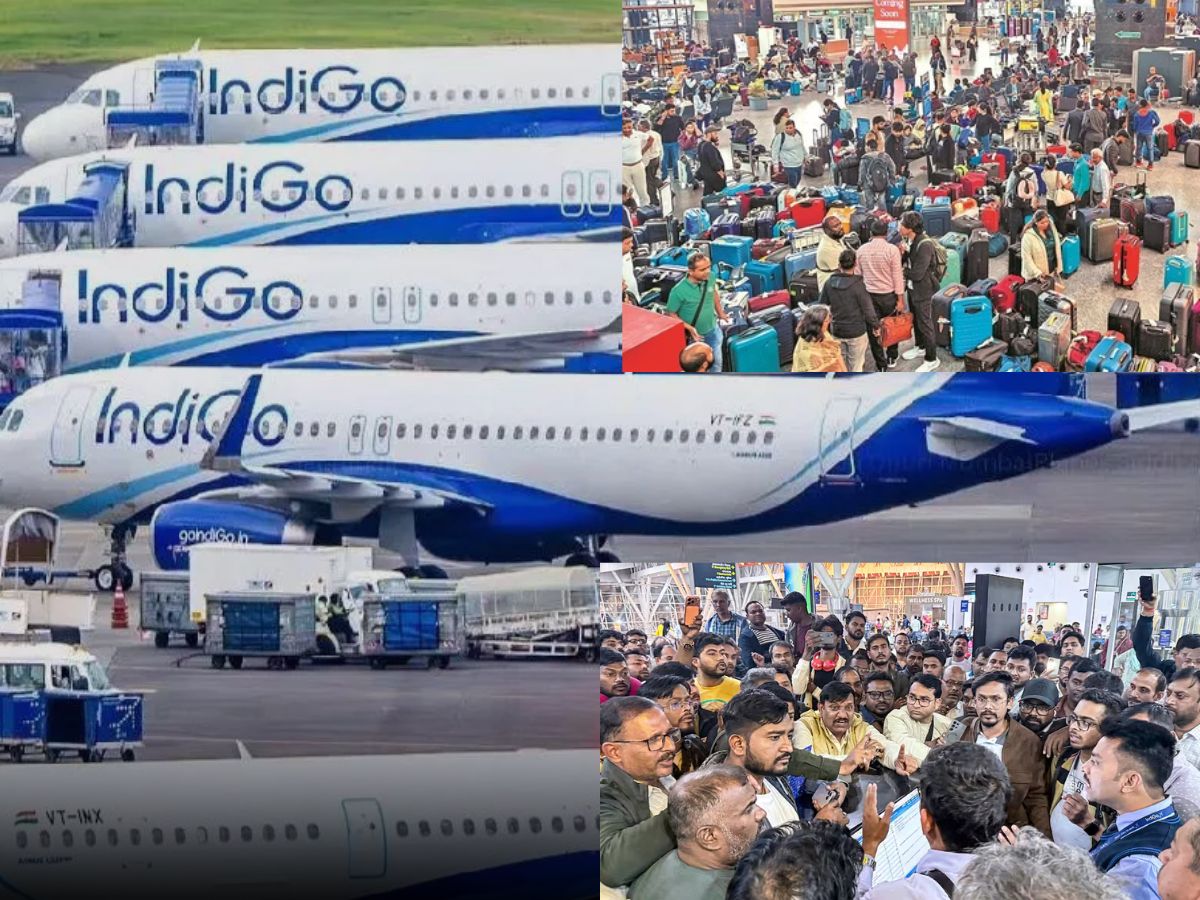
Recently, IndiGo, India’s largest airline, plunged into the worst domestic aviation crisis. Over a span of days, hundreds of its flights were abruptly cancelled or delayed across the country. Airports such as Chhatrapati Shivaji Maharaj International Airport (Mumbai), Indira Gandhi International Airport (Delhi), Kempegowda International Airport (Bengaluru) and others saw long queues, frustrated crowds and chaos as passengers discovered their flights had been scrubbed with little notice.
In many cases, people reached the airport after completing security, only to be told their flights were cancelled, sometimes after repeated reschedules and missed connecting flights.
The disruption affected thousands of travellers, many missed work, weddings, and travel plans; budgets were disturbed as fares surged, and alternate transport was sought. This sudden collapse has jolted India’s aviation sector, raising urgent questions about airline resource planning, regulatory oversight, and passenger rights.
What Triggered the Mass Cancellations at IndiGo?
The main trigger was the enforcement of the revised Flight Duty Time Limitations (FDTL) norms by DGCA (Directorate General of Civil Aviation). While these fatigue-protection rules were notified in early 2024, the second, stricter phase took effect from 1 November 2025, and that’s when the strain on crew availability reportedly became unmanageable for IndiGo.
According to IndiGo’s own submission to the aviation ministry, it underestimated how many additional pilots and crew would be needed under the new norms. Hence, almost immediately after the rules kicked in, staff shortages started showing up, leading to widespread cancellations.
What Has Impacted IndiGo’s Services?
Many factors disrupted IndiGo’s operations, but the most significant was the implementation of new crew-duty and rest rules by the regulator. The new rules dramatically changed how frequently pilots and crew could fly, extending mandatory weekly rest, curtailing night duties and restricting night landings, which made crew rostering more complex.
According to IndiGo, this coincided with a seasonal increase in demand (winter schedule, more flights) and additional pressure due to weather, airport congestion, and some technical glitches.
The combination of stricter rest norms + high demand + insufficient crew availability created the worst chaos in Indian aviation history. On the ground, the airline struggled to roster enough pilots and cabin crew to meet the revised norms, leaving many flights without a qualified crew.
Why So Many Flights Got Cancelled?
There are several interlocking reasons for the scale of cancellations:
- Crew shortage: The new FDTL norms require more rest between flights, shrinking each pilot’s flying availability. Since IndiGo did not recruit or buffer sufficiently, they lacked enough active crew.
- High dependency: IndiGo operates a very large share of India’s domestic flights, so even minor crew constraints translate into large numbers of grounded flights.
- Roster rigidity: The stricter rules reduced flexibility in scheduling. Night flights and night landings, previously frequent, were drastically curtailed, limiting the airline’s ability to cover flights that go past midnight or early morning.
- Operational and external stressors: The airline also cited technical glitches, weather, and airport congestion as aggravating factors.
Because of these constraints, many flights that had been scheduled could not be operated, resulting in mass cancellations.
How Many Total IndiGo Flights Got Cancelled?
On December 4 alone, more than 550 flights were cancelled nationwide and on December 5, more than 10000 flights got cancelled, and passengers were left stranded. Over the larger span of the crisis (early December), cumulative cancellations were above 1,200 flights. Daily, at the peak, airlines were reportedly cancelling 170–200 flights per day. By way of scale, considering that IndiGo normally operates about 2,300 flights daily, this represents a substantial portion of its network.
What Were the FDTL Rules Which Led to This Crisis?
The key culprit is the revised Flight Duty Time Limitations (FDTL) regime implemented by DGCA. The main changes:
- Weekly rest period: Increased from 36 hours to 48 consecutive hours per week for pilots/crew.
- Night duty window redefinition: Night now defined as 12:00 AM–06:00 AM (vs earlier 12:00 AM–05:00 AM), expanding the period considered “night.”
- Limit on night landings: Maximum of two night landings per pilot per week (down from six earlier).
- Limit on consecutive night duties: No more than two consecutive night-duty flights.
The stated goal of these rules was to prevent pilot fatigue, improve safety, and align Indian aviation with global norms.
What is the Role of DGCA in the IndiGo Crisis?
DGCA is the regulatory authority that designed and mandated these FDTL norms as part of aviation safety oversight. The revised rules are part of the civil aviation regulations. When the crisis hit, with widespread cancellations and stranded passengers, DGCA responded by partially relaxing certain rules to help stabilize the situation:
- It withdrew the clause that prevented airlines from substituting “weekly rest” with crew leave — restoring flexibility for airlines under stress.
- In effect, DGCA granted a one-time exemption to InterGlobe Aviation (parent company of IndiGo) for night-duty rules until 10 February 2026.
- In public statements, DGCA noted that the disruption largely stemmed from “transitional challenges” in complying with the new roster rules.
How has this IndiGo Crisis Benefited Other Airlines?
Because IndiGo accounts for a very large share of domestic air travel, its disruption created a temporary vacuum. That offered other airlines a chance to absorb some displaced demand, hike fares, add flights, or get last-minute bookings at premium prices. Several news reports suggest airfares skyrocketed on major routes.
Moreover, some airlines, less reliant on night operations or with more flexible crew strength, may have faced fewer disruptions, giving them an operational advantage.
However, due to the suddenness and scale of IndiGo’s crisis, it is unclear if others could fully capitalize. Many domestic passengers may have postponed travel or switched to alternative transport modes rather than pay elevated fares or face their own booking uncertainty.
IndiGo Airline Chaos: How to Get a Refund for Cancelled Flights?
Because cancellations were initiated by the airline, passengers are typically entitled to a full refund of the fare or an option to rebook on alternate flights, as per normal airline cancellation policies. Several passengers have reported getting refunds or “Plan B” rescheduling options.
Given the extraordinary scale, airlines and airports have reportedly arranged accommodations, snacks, and lounge access for some affected passengers (senior citizens, vulnerable travellers).
If you or any traveller were impacted, the best is to reach out to IndiGo’s customer service and ask either for a refund or a rebooking under their disruption / “Plan B” policy.
Has this Type of Large-Scale Crisis Ever Happened Before?
Based on the current level of crisis, this whole scenario is being described as ‘India’s worst airline disruption in recent years.’
While airlines in India have faced cancellations and delays in the past (weather, strikes, technical faults), a simultaneous nationwide meltdown triggered by regulatory-norm compliance and crew shortage affecting such a large share of flights has not happened.
Some pilot bodies and analysts have even argued this was somewhat “avoidable,” given that airlines had nearly two years to prepare for the FDTL changes (which were announced in 2024).
What is the IndiGo Pilot Roster?
Crew rostering, assigning pilots and cabin crew to flights while respecting mandated rest periods and duty-time limits, lies at the heart of the crisis. Under the new FDTL framework, roster planning became more constrained, the weekly rest period increased, night-landings and night-duty flights curtailed, and consecutive night duties were banned.
IndiGo reportedly underestimated how many additional pilots and crew members the revised rostering rules would require. They did not hire enough to build a buffer.
As a result, many scheduled flights could not be manned, leading to cancellations. In some cases, flights may have been delayed past midnight (due to tech glitches or weather), which automatically violated the night-duty limits, forcing cancellations after the delay.
How Many IndiGo Flights Take Off Per Day?
Sources indicate that under normal operations, IndiGo runs about 2,300 flights daily across its network. Given that scale, even a relatively modest reduction in crew availability can significantly disrupt operations.
Which City was Most Impacted Due to the IndiGo Crisis?
While multiple cities saw major disruption, Mumbai appears to have been among the worst hit. On one of the worst days, the airport recorded 118 flight cancellations by IndiGo (74 departures + 44 arrivals), leading to overcrowding and chaos at terminals.
Delhi, as the hub of many domestic flights, also saw large-scale cancellations; on certain days, virtually all IndiGo domestic flights departing Delhi were cancelled till December 5 midnight. Other metro cities, Bengaluru, Hyderabad, and Kolkata, also reported hundreds of cancellations and major passenger inconvenience.
What is the Take CEO of IndiGo?
The current CEO of IndiGo is Pieter Elbers. He admitted that December 5 was the most chaotic day. With over a thousand flights cancelled, many travellers were left stranded across major airports. “I, on behalf of all of us at IndiGo, would like to extend our sincerest apologies for the major inconvenience this has caused to many of our customers on account of delays or cancellations,” he said.
What is the Salary of the IndiGo Cabin Crew Per Month?
While exact salaries vary depending on experience and role, approximate figures based on industry reports and employee data are as follows:
- Trainee/Fresher: Around ₹25,000–₹35,000 per month during training, increasing to ₹35,000–₹50,000+ once flying regularly.
- Mid-Level Crew (0–2 years): ₹35,000–₹60,000 per month (including allowances).
- Experienced Crew (3–5 years): ₹50,000–₹70,000 per month.
- Senior Crew / In-Charge (5+ years): ₹70,000–₹90,000+ per month.
These figures are approximate and can vary based on location, type of flights (domestic vs. international), and perks provided by the airline.
By When Can the IndiGo Airline Chaos Be Resolved?
IndiGo has submitted to DGCA that it expects “normalised and stable operations” by 10 February 2026, the date until which it has sought operational exemptions from certain FDTL norms.
However, actual recovery may depend on how fast the airline can recruit or roster additional crew, incorporate any regulatory changes, and manage demand surges.
IndiGo Crisis: Cancelled Flights in Each City
Based on media reports from early December 2025, the disruption hit major Indian airports as follows (approximate daily cancellations at the peak of the crisis):
- Delhi (Indira Gandhi International Airport): 172 flights cancelled
- Mumbai (Chhatrapati Shivaji Maharaj International Airport): 118 flights cancelled
- Bengaluru (Kempegowda International Airport): 100+ flights cancelled
- Hyderabad (Rajiv Gandhi International Airport): 75 flights cancelled
- Kolkata (Netaji Subhas Chandra Bose International Airport): 60–70 flights cancelled
- Chennai (Chennai International Airport): 50 flights cancelled
Smaller cities such as Jaipur, Ahmedabad, Pune, and Lucknow also saw dozens of cancellations. Overall, the peak disruption involved 500+ flights cancelled nationwide per day, with cumulative cancellations exceeding 1,200 flights in the first few days of December.
How the IndiGo Crisis Benefitted Railways?
With widespread air travel disruption, many passengers shifted to railways. Indian Railways responded by:
- Adding 116 additional coaches to premium long-distance trains on affected routes.
- Increasing frequency of select trains connecting major metros (Delhi–Mumbai, Delhi–Bengaluru, Mumbai–Bengaluru).
- Prioritizing bookings for stranded passengers and offering additional Tatkal quotas.
- Improving last-minute ticket availability to accommodate a sudden spike in travel demand.
This temporary surge helped the railways meet heightened demand and partially absorbed the passenger traffic displaced by air cancellations.
Who are the 4 Members of the DGCA Panel?
In response to the IndiGo disruption, the Directorate General of Civil Aviation (DGCA) set up a four-member committee to review and assess the circumstances. The panel is tasked with submitting findings and recommendations within 15 days. The members are:
- Joint Director General Sanjay K Bramhane
- Deputy Director General Amit Gupta
- Senior Flight Operations Inspector Captain Kapil Manglik
- Flight Operations Inspector Captain Rampal
This panel is expected to examine roster planning, compliance with new pilot duty and fatigue rules, and recommend measures to prevent similar crises in the future.
How Many Additional Flights Have Been Added to Each Airline?
Due to the ongoing IndiGo crisis and the large-scale wave of flight cancellations, other Indian carriers have begun stepping in to absorb the sudden passenger overflow. So far, SpiceJet is the only airline to publicly announce concrete operational changes, confirming that it will operate 100 additional flights over the next few days to stabilise capacity on high-traffic routes such as Delhi–Mumbai and other major domestic sectors.
While Air India, Vistara, Akasa, and AirAsia India are also accommodating passengers through up-gauging aircraft, re-routing, and opening last-minute inventory, none of them have released official numbers on exactly how many extra flights they are adding. At this stage, the only confirmed figure is SpiceJet’s 100-flight expansion, with other airlines increasing capacity more quietly and on a rolling, demand-based basis.
Price of the Cheapest Flight During the IndiGo Airline Chaos
During the IndiGo crisis, domestic airfares across India surged to record highs, but a few routes still showed comparatively lower fares because they were less in demand. The cheapest flights available during the crisis started at around ₹7,000–₹9,000, mostly on short regional routes and at non-peak hours.
On major metro routes, tickets that normally cost ₹3,000–₹5,000 were selling for ₹20,000–₹40,000, while some long-hauls even crossed ₹60,000+. So even the lowest fares during the crisis were significantly inflated compared to normal pricing, showing how badly the reduced IndiGo capacity distorted the market.
Price of the Most Expensive Flight During the IndiGo Airline Chaos
During the IndiGo crisis, the costliest domestic flight prices in India touched unprecedented levels, with some last-minute tickets crossing ₹80,000–₹1,02,000 for a one-way journey. On the heavily travelled Delhi–Mumbai route, fares spiked as high as ₹83,890, while routes like Delhi–Bengaluru and Delhi–Chennai even touched ₹1.02 lakh for urgent same-day travel.
Other busy metro routes saw fares consistently shooting past ₹70,000–₹80,000, driven by the sudden collapse of IndiGo’s seat capacity and the resulting demand–supply imbalance. What would normally be a ₹6,000–₹10,000 ticket turned into one of the most expensive domestic fares India has ever recorded, reflecting the intensity of the aviation disruption.
IndiGo Crisis: Timeline of Events
- 1 November 2025: Phase 2 of FDTL norms comes into effect (stricter rest and night-duty rules).
- Early December 2025: As the winter schedule begins and demand rises, the crew shortage begins to show. IndiGo starts cancelling flights.
- December 2–4, 2025: The worst of cancellations hits 130–200 flights per day; by Dec 4, more than 550 flights cancelled that day alone; cumulative 1,200+ cancellations since start of crisis.
- Airports across major metros report chaos, stranded passengers, overcrowding, lack of communication.
- Airlines (IndiGo) submit requests for exemptions/relaxations; DGCA receives representations.
- 5 December 2025: DGCA partially relaxes the rules and withdraws the clause preventing substitution of leave for weekly rest; grants IndiGo a one-time exemption on night-duty rules till 10 February 2026.
- IndiGo states it will cut back on flight operations starting 8 December to stabilise scheduling, and aims for full restoration by 10 February 2026.
Is the IndiGo Crisis due to Pilot Shortage?
Yes, pilot and more broadly crew shortage under the new FDTL rules appears to be the main cause. Multiple credible news sources and IndiGo’s own submissions attribute the mass cancellations to a shortage of available pilots, especially under tightened rest-duty norms. That said, external factors — technical issues, weather, airport congestion — also magnified the impact.
Why was IndiGo Hit Harder than Other Airlines?
There are 3 intertwined reasons:
- Market share and scale: IndiGo handles an outsized proportion of domestic flights in India, about 60–65% of domestic passenger traffic.
- Roster/capacity planning: Unlike smaller or more diversified airlines, IndiGo did not sufficiently increase pilot/crew count or buffer staff despite knowing about the new FDTL norms well in advance.
- Heavy use of night flights & tight scheduling: With many flights scheduled late at night or early morning, the new night-duty restrictions disproportionately impacted IndiGo’s roster; other airlines with fewer night flights or more flexible networks had less exposure.
Hence, the structural size + lack of buffer + heavy night-duty reliance made IndiGo far more vulnerable than other carriers.
IndiGo Total Loss due to this Crisis?
IndiGo has not released a consolidated “total loss” figure for the current crisis, but publicly available financial disclosures give a clear picture of the scale of the damage. The airline posted a ₹987 crore loss in Q2 FY25, followed by a far steeper ₹2,582 crore loss in Q2 FY26, taking its known cumulative hit to roughly ₹3,569 crore.
These back-to-back heavy losses stem from the same crisis triggers rupee depreciation, forex shocks, higher lease and maintenance costs, and global supply disruptions.
IndiGo Crisis: What is the Impact on the Passengers?
Thousands of passengers were stranded at airports, some with their luggage misplaced or delayed. Long waits, sometimes without adequate communication, food or accommodation. Their travel plans were disrupted. People missed flights, connecting flights, and events, and some had to rebook on alternate airlines or modes, often at much higher cost.
Airfares reportedly surged on alternate flights/airlines due to sudden demand, putting pressure on passengers financially. Many flights were delayed for hours, worse for connecting flights — cascading delays added to chaos.
Who is Accountable for the IndiGo Airline Chaos?
Accountability is multifaceted:
The regulatory framework (FDTL) was introduced by DGCA to improve safety. In that sense, DGCA is responsible for the norms. But many argue the regulator should have better phased the implementation or provided more transition support.
The main blame, however, is being directed at IndiGo management. Despite a two-year notice, the airline failed to recruit or prepare adequate crew, failed to build buffer capacity, and misjudged demand, making “cost-cutting over long-term stability” a strategic error.
IndiGo Airline Chaos: Possible Fixes
With the DGCA granting temporary exemptions (weekly-rest clause, night-duty relaxations) until 10 February 2026, IndiGo has committed to rebuilding its roster, recruiting more crew, and stabilising scheduling. Starting December 8, the airline plans to cut back on overall flight operations temporarily, a move aimed at avoiding further chaos and giving time to reset.
If crew recruitment, rostering, and schedule adjustments go smoothly and if external factors (weather, congestion, tech glitches) remain manageable, operations may gradually return to near-normal by early 2026.