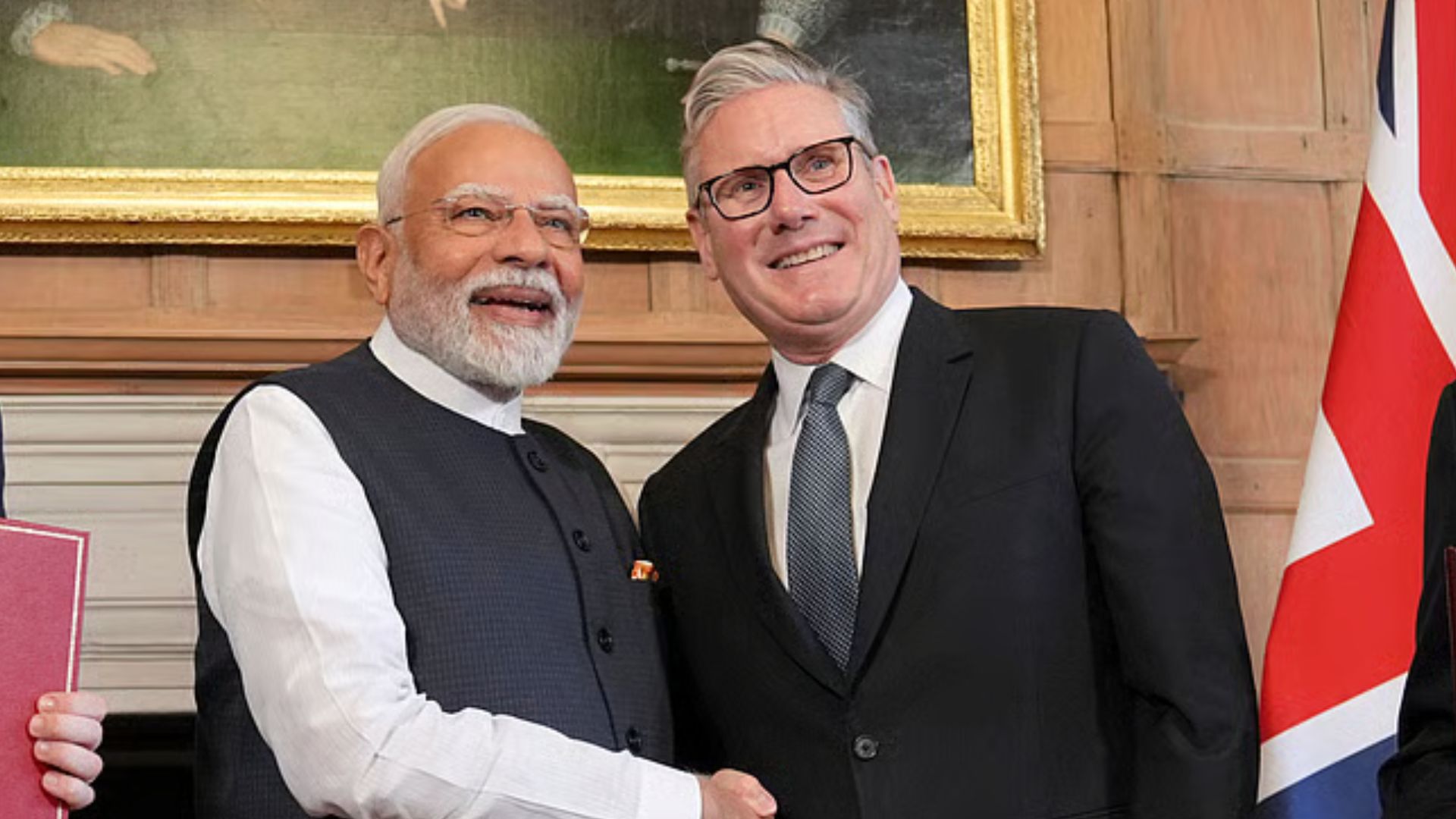
India and the United Kingdom formally signed the Comprehensive Economic and Trade Agreement (CETA) a sweeping Free Trade Agreement (FTA) designed to redefine bilateral trade ties between the two countries on July 24, 2025,. The goal is ambitious yet strategic to double trade volumes from USD 56 billion to USD 112 billion by 2030. With 26 comprehensive chapters, CETA extends beyond traditional trade. It includes critical areas such as goods, services, digital trade, intellectual property, labour mobility, gender inclusion, and government procurement. Experts hail this deal as India’s most expansive and forward-looking FTA to date.
Near Total Duty-Free Access for Indian Exports
One of the biggest victories for India lies in the market access gained in the UK. As of FY2025, India exported around USD 14.5 billion worth of goods to the UK. Under CETA, an estimated 99% of Indian exports worth nearly USD 23 billion will now enter the UK without duties. This move benefits major export categories such as textiles, leather, gems and jewellery, marine products, electronics, and toys. The removal of trade barriers allows Indian businesses to compete on better terms in the British market.
Boost for Labour-Intensive Industries
CETA is expected to significantly uplift labour-heavy sectors such as textiles, footwear, and garments. These industries, which employ millions in India, could see export growth of 30% to 45% by 2030. Analysts predict that this boost could create anywhere between 500,000 and 1 million new jobs, supporting economic growth in both rural and urban regions. MSME hubs like Tiruppur, Kanpur, Agra, and Jalandhar are especially expected to benefit from this export surge.
Agricultural and Marine Products Get a Lift
India has also secured duty-free access for over 95% of agricultural and processed food products. This includes high-demand items like spices, pulses, pickles, mango pulp, and seafood. The deal aligns with India’s vision of reaching USD 100 billion in agri-exports by 2030. States such as Kerala, Andhra Pradesh, and Tamil Nadu are positioned to make the most of this, especially considering the UK’s USD 5.4 billion marine product market.
UK Secures Deeper Entry into Indian Markets
From the UK’s perspective, India has agreed to eliminate tariffs on 90% of British exports, with 64% seeing immediate relief. These include essential UK export items such as machinery, salmon, lamb, electronics, and aerospace parts. Another 26% of products including beverages, cosmetics, and auto parts will receive phased tariff cuts over a decade. This allows UK industries to gradually establish or expand their presence in India’s rapidly growing consumer market.
A Toast to British Spirits and Beverages
The UK’s iconic spirits industry scored a big win. Tariffs on Scotch whisky and gin, which were earlier as high as 150%, will immediately drop to 75% and fall to 40% by the tenth year. This represents a monumental opening for the UK’s beverage sector in India, where demand for premium imported spirits is steadily rising. The agreement also supports broader British interests in sectors like medical devices, confectionery, and aerospace components.
Automobiles: A New Tariff Quota System
In a move designed to balance trade liberalisation with domestic industry protection, India has introduced a Tariff Rate Quota (TRQ) for the import of UK vehicles. Under this system, tariffs on high-end petrol and diesel cars will reduce from over 100% to just 10% over a 15-year period. Initially, 10,000 vehicles per year will benefit, with the quota gradually increasing to 37,000 units annually by year fifteen. However, electric, hybrid, and hydrogen-powered vehicles are excluded for the first five years a strategic step to give India’s green mobility sector time to mature.
Spirits Under Minimum Import Price Conditions
Tariff cuts on premium alcohol will follow a managed approach. Products like vodka, rum, cider, and premium whisky will see tariffs drop from 110% to 75% over ten years, but only if they meet a Minimum Import Price (MIP) threshold. This ensures that low-quality imports don’t flood the Indian market. Both governments will review and adjust the MIP every 15 years to account for inflation, keeping the system equitable and updated.
Strategic Exclusions to Shield Domestic Interests
To protect sensitive sectors, both countries have made selective exclusions. India has kept tariffs on apples, walnuts, whey protein, blue cheese, gold bars, smartphones, and certain seeds, while the UK has excluded meat, egg-based products, rice, and solid cane sugar. These exclusions safeguard farmers, small traders, and vulnerable producers from the adverse effects of sudden global competition.
Public Procurement: India Opens Doors for UK Bidders
In a historic first, UK companies will gain access to India’s public procurement system. Through platforms like the Central Public Procurement Portal (CPPP) and the Government e-Marketplace (GeM), British firms can now bid for nearly 40,000 government contracts. These cover areas such as infrastructure, transportation, green energy, and telecom. This move not only benefits UK companies but also reflects India’s evolving procurement policies that are more transparent and globally integrated.
Services and FDI Liberalisation
CETA includes significant liberalisation in the services sector and foreign direct investment (FDI). India will now allow 100% FDI in telecom and up to 74% in insurance. Moreover, UK firms in sectors like finance, auditing, environmental consulting, and accounting can operate without needing to establish a local office. This opens vast opportunities for British companies and strengthens India’s position as an investment-friendly economy.
Intellectual Property: WTO-Aligned Assurances
The agreement features a pathbreaking intellectual property clause. India has committed to ensuring “adequate remuneration” in cases of compulsory licensing, bringing its framework in line with WTO norms. This provision is seen as a big trust booster for foreign investors, especially in the pharmaceutical and tech sectors, as it balances innovation protection with public access.
Easier Mobility and Lower Costs for Professionals
CETA introduces smoother professional movement between the two countries. The deal includes 1,800 annual visas for Indian chefs, yoga teachers, artists, and other professionals. It also implements a Double Contribution Convention (DCC), which allows Indians working in the UK to avoid paying social security taxes in both countries for up to three years. This measure is a financial relief for Indian professionals abroad.
Impact on MSMEs and Indian States
The benefits of the deal will ripple across various Indian states and MSME clusters. Punjab will gain from better exports of textiles and sports goods, Gujarat from gems and chemicals, Kerala from spices and seafood, and Tamil Nadu from electronics and leather. MSME-rich towns like Tiruppur, Agra, and Kanpur are likely to see enhanced global visibility, increased orders, and employment growth. CETA brings not just foreign trade opportunities but also local development potential.
The agreement still requires ratification by the UK Parliament, expected by mid‑2026. Meanwhile, the Indian government plans to organise 1,000 outreach events in just 20 days to raise awareness among exporters, MSMEs, and local governments. CETA is also expected to become a template for India’s future trade negotiations with global blocs like the EU and the United States.
The India–UK CETA is a strategic, future-ready trade pact that aligns economic expansion with social priorities. By reducing trade barriers, opening services, and protecting key industries, the deal marks a win–win partnership for both nations. Now, it’s up to businesses, entrepreneurs, and governments on both sides to capitalise on these unprecedented opportunities.