With the unveiling of the Vikram-I rocket, an orbital launch vehicle fully developed by a private company for the first time in the country, India’s journey into space has reached a whole new dimension.
Prime Minister Narendra Modi inaugurated Skyroot Aerospace’s new Infinity Campus in Hyderabad and presented the finished rocket to the world, marking a historic moment for India’s growing space economy.
PM Modi rightly noted that India now possesses space capabilities that are rare globally. Over the last six to seven years, the push of the government for private sector involvement has turned the space sector into an open, innovation-driven environment.
This new ecosystem has empowered bright minds, like the team at Hyderabad-based Skyroot Aerospace, to build a next-generation orbital vehicle named in honor of the father of India’s space program, Vikram Sarabhai.
Vikram 1 Rocket Final Launched in Hyderabad
Skyroot Aerospace was founded in June 2018 by former ISRO scientists. The company has been working aggressively toward moving from concept to a complete orbital launch vehicle.
They successfully launched their suborbital rocket, Vikram-S, in November 2022. Development of the bigger, orbit-capable Vikram-I rocket has been underway for roughly three to four years since the company’s inception and initial design work.
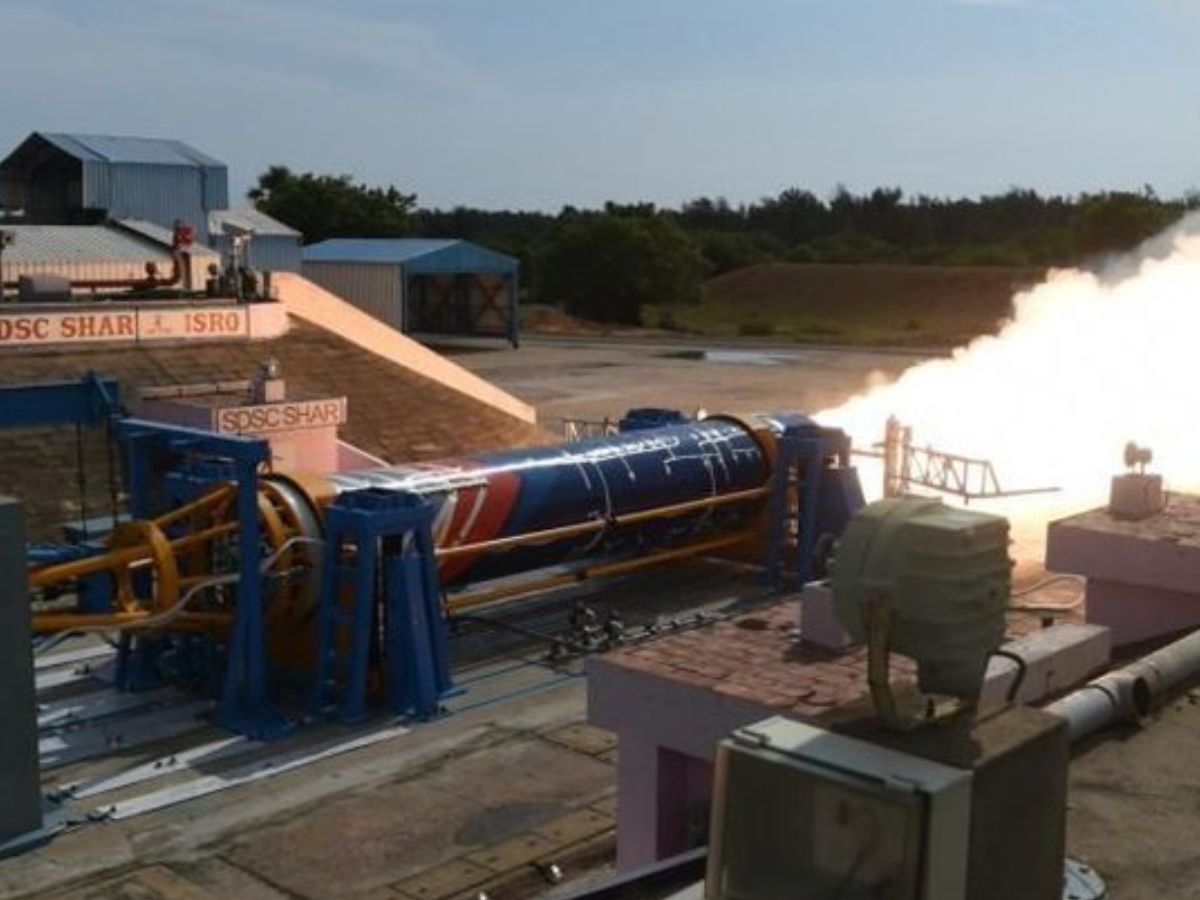
The main stages involved the design of the vehicle, extensive testing of its unique carbon-composite structure, and a number of successful static-fire tests of both its solid and liquid fuel stages from 2022 to 2024, including the Kalam-100 and Kalam-250 engines, respectively.
The final unveiling on November 27, 2025, represents the completion of its physical build and ground tests, positioning it for its inaugural orbital flight, which the company is currently targeting for early 2026.
This relatively quick turnaround gives evidence of the speed and efficiency that private enterprises bring to bear on this complex field of rocket science.
Also Read: Hema Malini Breaks Silence on Dharmendra Deol Death: ‘My Loss is Indescribable’ | PICTURES
Unique Features of Vikram-I
- Named after Vikram Sarabhai, honoring the founder of India’s space program.
- All-carbon composite structure: Makes the 20-meter-tall rocket lightweight yet incredibly strong.
- Rapid Launch Capability: Designed to be assembled and ready for launch within a record 24-hour timeframe from any site.
- 3D-Printed Engines: Leverages advanced manufacturing to decrease engine weight by 50% and manufacturing time by 80%.
- Four-Stage System: Employs dependable solid fuel for the first three stages, with a restartable hypergolic liquid upper stage for high-precision orbit changes.
- Ultra-low-shock separation: Advanced pneumatic system features for smoothly separating the stages of a rocket.
Capabilities of Vikram-I:
- Low Earth Orbit (LEO) Maximum Payload: Up to 350 kg to LEO.
- Sun-Synchronous Orbit (SSO) Payload: Up to 260 kg can be carried to SSO.
- Mission Flexibility: Designed for dedicated missions, rideshare launches, and deploying satellites into multiple orbits.
- Orbital Adjustment Module: Equipped with a restartable upper stage, enabling very accurate delivery to the final required orbit.
Also Read: What Is Cyclone Ditwah? All You Need to Know About the Next Storm in the North Indian Ocean