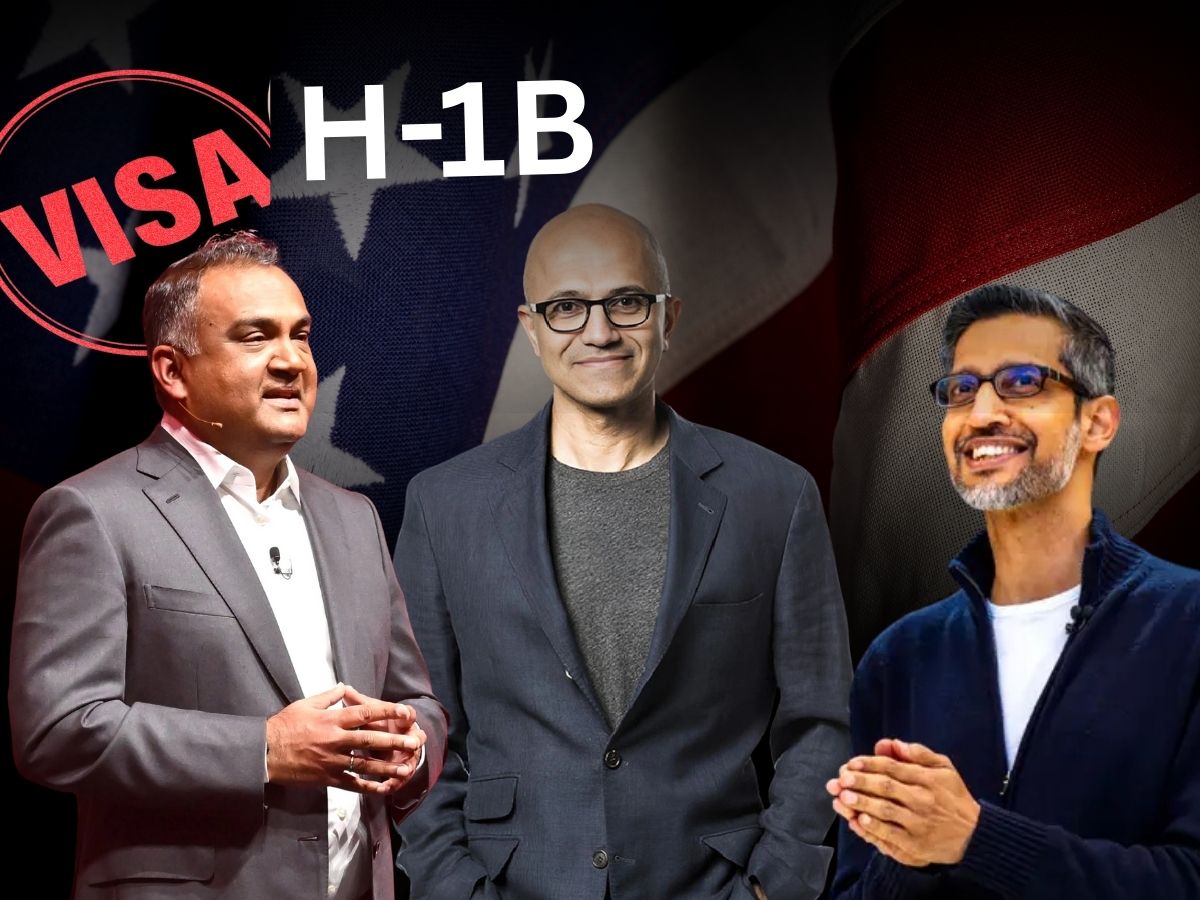
Over the last few decades, USA has been home to some of the most powerful Indian-origin corporate professionals in leadership roles. Most of these CEOs and senior officials today had started American journey on the H-1B visa, a work visa meant to bring highly skilled foreign professionals to assist US industries. This program has been a key driver in gathering the talent pool of India and the corporate world of America, driving innovation, growth, and global leadership. Now that the visa fee has been increased to $100,000 for H-1B, people’s aspirations of jobs in US have been severely damaged.
Pioneers in Industry Leadership
One of the most well-known Indian-origin CEOs to come through the H-1B route is Sundar Pichai, CEO of Alphabet, the parent company of Google. Pichai’s journey from India to Stanford University and then Google is a testimonial of the many talented professionals initially granted H-1B visas, enabling them to establish their careers in the United States.
Similarly, Satya Nadella, CEO of Microsoft, utilised the opportunities provided under this visa program to transform the global software giant with renewed vision and growth. Other leaders worthy of this mention are IBM CEO Arvind Krishna and Adobe Systems CEO Shantanu Narayen, who also started their US careers on H-1B visas. YouTube CEO Neal Mohan and Palo Alto Networks CEO Nikesh Arora also point to the diversity and innovation led by Indian-origin CEOs in the technology industry. In other sectors, the names like Raj Subramaniam (FedEx), Vasant Narasimhan (Novartis), and Leena Nair (Chanel) are India’s growing presence in logistics, pharma, and high-end fashion respectively.
H-1B Visa: A Gateway of US for Talent
H-1B visa has enabled these talented individuals to drive some of the world’s largest businesses by bridging America’s technology and research industry skill gaps.
India has been the single largest source out of where H-1B holders have been visiting US for several years, representing a massive share of the world’s talent pool in STEM professions. Not only has this immigration of skilled professionals strengthened corporate America, but bilateral relations between India and the United States have also grown stronger through technology sharing and business relationships.
Challenges and Resilience
Nonetheless, the H-1B route has also encountered recent setbacks in the form of higher visa charges to $100,000 and policy reform, leaving its future accessibility uncertain and affordability shaken. Nevertheless, the legacy and continuing influence of Indian CEOs in America are well acknowledged. Their success tales continue to inspire many young professionals in India, and the US visa route remains a gateway for them to reach the peak of global leadership.
Nutshell
Indian-origin CEOs of US multinationals are a testament to the revolutionary potential of the H-1B visa. From technology to pharma to logistics, their influence is an incredible story of opportunity, struggle and leadership journey in two historically great nations. As policy makers push reforms with the future of work visas, it is nevertheless apparent that these leaders demonstrate how skilled immigration fuels innovation and economic growth in America.