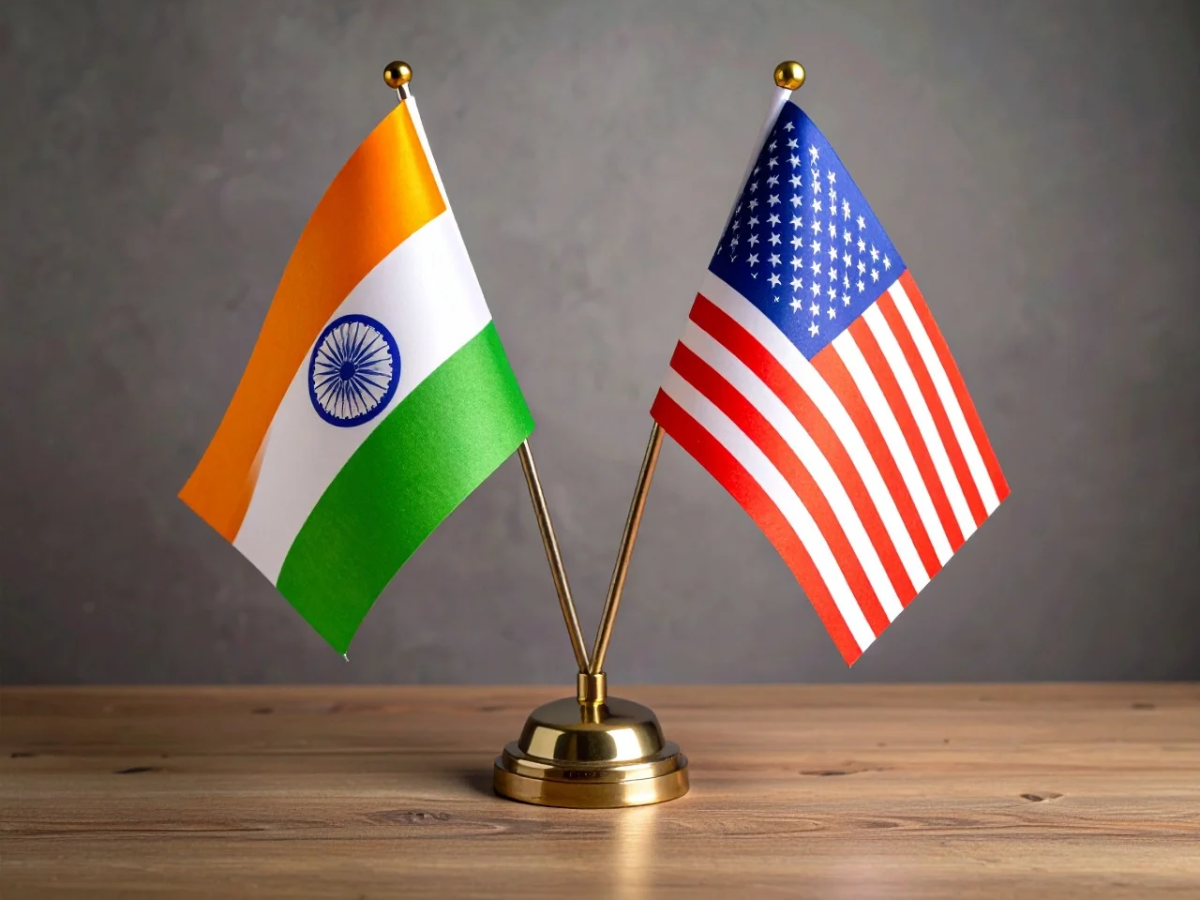
Against the backdrop of President Donald Trump’s retaliatory tariffs on Indian products and criticism of energy and defense buys from Russia, India on Friday stated that its relationship with America had faced many challenges but New Delhi was keen on moving the relationship forward.
Focus on Substantive Bilateral Agenda
Responding to the US’s 25% reciprocal tariff that becomes effective on August 7 and an unspecified additional penalty for purchasing Russian oil, external affairs ministry spokesperson Randhir Jaiswal told a weekly media briefing that India remains focused on the “substantive agenda” that the two sides have agreed on to drive the relationship. He also pointed to the potential for growing the “strong defence partnership” with the US.
At the same time, Jaiswal defended India’s procurement of energy and defence hardware from Russia, saying New Delhi and Moscow have a “steady and time-tested partnership”. He also made it clear that defence requirements are determined by India’s national security imperatives and strategic assessments.
Partnership Built on Shared Values
“India and the US share a comprehensive global strategic partnership anchored in shared interests, democratic values and robust people-to-people ties. This partnership has weathered several transitions and challenges,” Jaiswal said in response to several questions regarding Trump’s tariff policy.
“We remain focused on the substantive agenda that our two countries have committed to and are confident that the relationship will continue to move forward,” he said.
The India-US defence partnership has strengthened over the last several years and decades, he said. “There is potential for this partnership to grow further under the India-US COMPACT for the 21st century,” he added, referring to the COMPACT or Catalyzing Opportunities for Military Partnership, Accelerated Commerce & Technology arrangement that was finalised when Prime Minister Narendra Modi met Trump in Washington in February.
Indian Government Monitoring Situation Closely
To the US 25% tit-for-tat tariff effective from August 7 and a penalty yet to be specified for buying Russian oil, external affairs ministry spokesperson Randhir Jaiswal said at a weekly media briefing that India is still intent on the “substantive agenda” the two countries have agreed upon to propel the relationship. He also cited the possibility of increasing the “strong defence partnership” with the US.
“The relationship is not just about trade. It is also about defence, technology, students, people-to-people ties, the mobility of professionals and shared interests in the Indo-Pacific,” one of the people said. “We have endured worse patches in the past, such as after India’s nuclear tests in 1998.”
Jaiswal’s remarks came a day after commerce minister Piyush Goyal told Parliament that India will take “all necessary steps” to secure its national interest in the wake of the reciprocal tariff unveiled by Trump. Goyal said the government is examining the implications of the development and is engaged with all stakeholders, including exporters and industry, to assess the situation.
Negotiating a Balanced Trade Deal
In an initial response to Trump’s punitive tariff on India, the commerce ministry said India and the US are engaged in negotiations for concluding a “fair, balanced and mutually beneficial” trade deal and New Delhi remains committed to that objective. At the same time, the government pledged to protect the interests of Indian farmers, entrepreneurs and Micro, Small and Medium Enterprises (MSMEs).
Trump has unleashed a barrage of social media posts this week, reiterating his claim that India’s tariffs are among the world’s highest and criticising India for having the “most strenuous and obnoxious” trade barriers and for buying a majority of its military equipment and energy from Russia. “I don’t care what India does with Russia. They can take their dead economies down together, for all I care,” he said on social media.
Meanwhile, Jaiswal justified India’s purchase of energy and defense equipment from Russia, stating New Delhi and Moscow maintain a “stable and tested relationship”. It was also made clear that defense needs are decided by India’s national security priorities and strategic interest.
Differentiating Policy from Personality
Individuals close to the issue informed that the Indian side is making a difference between Trump’s actions and the institutionalized relationship between India and America, which extends beyond trade. On the other hand, the Indian side is cautious about the impulsive and volatile nature of the American leader’s actions, the individuals said on condition of anonymity.
In declaring a trade agreement with Islamabad, Trump jokingly implied that Pakistan can sell oil to India after the neighbour’s hydrocarbon reserves are tapped using US help. He has also reiterated his assertion that he facilitated a ceasefire between India and Pakistan in May when the two countries engaged in hostilities after New Delhi launched an offensive to destroy terror infrastructure in areas under Islamabad’s control as revenge for the Pahalgam terror attack. The Indian side has indicated that no foreign nation played a role in the cessation of military operations.
Jaiswal responded to questions on these issues by saying that the sourcing of India’s energy needs is “guided by what is on offer in the markets and what is the prevailing global circumstances”.
India-Russia Ties Stand Independently
In the context of India-Russia relations, Jaiswal said India’s bilateral relationships with various countries “stand on their own merit and should not be seen from the prism of a third country”. He added, “India and Russia have a steady and time-tested partnership.”
Jaiswal said the sourcing of India’s defence requirements is “determined solely by our national security imperatives and strategic assessments”.
Soon after the US and Western allies imposed sweeping sanctions on Russia for invading Ukraine, India increased the import of cheap Russian commodities, particularly oil and fertilizers. Russia quickly replaced Iraq and Saudi Arabia as the primary crude suppliers to India, the third-largest oil importer in the world. India is now the largest importer of seaborne Russian oil, and imported Russian oil valued at $50.2 billion during 2024-25.
Russia vs. US: India’s Diversified Defence Portfolio
In discussing the 25% punitive tariff on India in a social media message this week, Trump also mentioned imposing a penalty for the purchase of Russian military and energy equipment. He has also threatened to impose tariffs of up to 100% on nations purchasing Russian oil if Russia fails to achieve a peace agreement with Ukraine by August 7-9.
While Russia continues to account for close to 60% of the inventory of India’s armed forces, the US has emerged as a key supplier of sophisticated weapon systems over the past two decades. Since 2008, India has contracted for US defence equipment worth at least $24 billion, including transport and maritime surveillance aircraft, maritime and attack helicopters, anti-ship missiles and howitzers.