
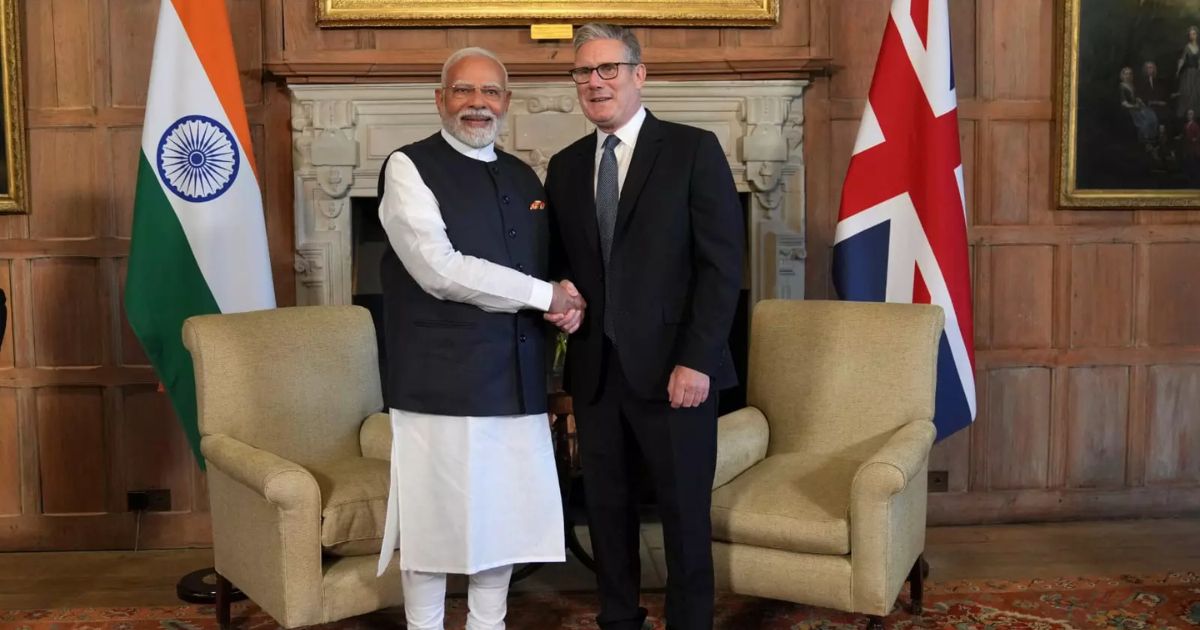
India and the UK signed a historic Free Trade Agreement (FTA) on Thursday in the presence of PM Narendra Modi and UK PM Keir Starmer. The agreement is the biggest trade agreement to be signed by the UK post-Brexit. Following three years of talks, the agreement guarantees a $34 billion increase in bilateral trade annually.
It slashes duty on 99% of Indian exports and widens UK markets to industries such as textiles, gems, footwear, and seafood. India, in turn, will reduce the average tariff rate on UK imports, slashing some tariffs from 15% to 3%. Both leaders described the agreement as a job, business, and prosperity-changer.
What Did the Leaders Said?
PM Modi had termed the deal as “historic” and a roadmap towards co-prosperity. The FTA would prove beneficial to Indian industries such as textiles, gems and jewellery, seafood, and footwear as it will provide wider access to the UK market, he stated. Farmers, MSMEs, artisans, and youth would benefit from the agreement, he claimed.
This Agreement is not only economic but a vision of growth,” Modi said. He also pointed out that UK-produced items such as medical devices would now be more accessible to Indian consumers.
PM Starmer referred to the FTA as “the most significant” after Brexit. “It will increase wages, improve living standards, and benefits business,” he stated. He stressed quicker, cheaper trade and better access for British exports like whisky and cars.
What the Deal Does to India?
The FTA removes duties on 99% of Indian exports, providing Indian exporters with a significant competitive advantage in the UK’s $23 billion import market. It will widen access to traditional exports such as textiles, leather, gems, and seafood. Indian officials estimate Indian footwear and leather exports to the UK may reach more than $900 million.
India’s MSMEs will gain the most. Small and medium enterprises, women entrepreneurs, and artisans will have improved access to markets, international brand recognition, and enhanced incomes. The FTA promotes the use of e-commerce and digital tools to drive Indian goods overseas.
Benefits for Both Economies
For Britain, the agreement facilitates easier export of products like whisky, cars, and medical devices to India. Reduced Indian tariffs will encourage more British companies to enter the Indian market.
Both sides also agreed on greater protection for geographical indications and intellectual property. This increases the branding and authenticity of Indian traditional products in international markets.
Step Toward Deeper Ties
The India-UK FTA is a lot more than a trade agreement. It’s a message of increased confidence and shared advantage. It’s a new benchmark for post-Brexit trade diplomacy and a sign of India’s increased economic influence in the global arena.