
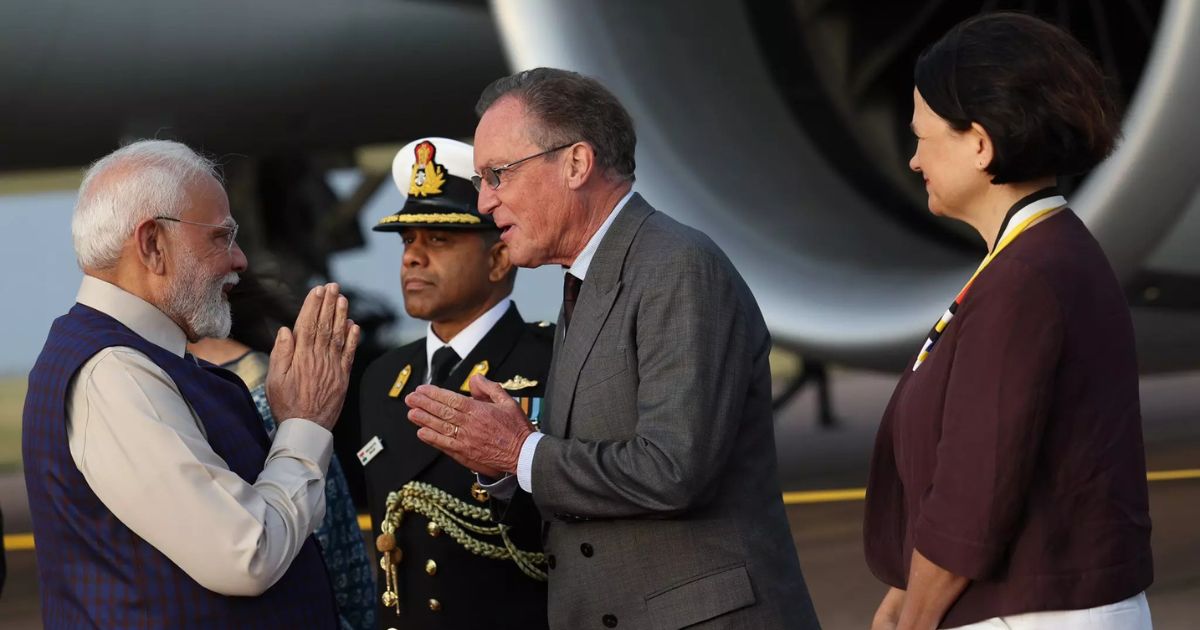
India and the United Kingdom are poised to sign their long-anticipated Free Trade Agreement (FTA) today, concluding a decade-long effort to bolster bilateral economic ties—one shaped by Brexit, paused by political upheavals, and finally spurred into motion by mounting global trade uncertainties.
This will be one of India’s most comprehensive trade deals to date, opening the floodgates for deeper cooperation in advanced services, easier mobility for professionals, and phased entry of high-end British automobiles and premium liquor into the Indian market.
A Historic Shift in Trade Strategy
India’s pivot toward Western trade partners began in earnest after its 2019 withdrawal from the China-backed Regional Comprehensive Economic Partnership (RCEP). New Delhi started looking for newer, more balanced relationships as concerns over Chinese import surges and restricted access to the ASEAN market grew.
The UK, fresh off its Brexit saga, emerged as a natural partner. However, progress was erratic—hampered by leadership churn in London, missed timelines including Boris Johnson’s symbolic “Diwali deadline,” and economic policy inconsistencies.
That changed with the Labour Party’s landslide win in May 2025 under Keir Starmer. Political clarity and renewed commitment from both sides finally brought the agreement across the finish line.
What the FTA Covers
According to the Ministry of Commerce and Industry, the FTA offers:
- Tariff elimination on 99% of traded items, covering virtually 100% of India’s export value.
- Market access across goods, services, intellectual property, and government procurement.
- A social security pact eliminating double contributions for Indian professionals on short-term assignments in the UK.
- Eased mobility for Indian professionals—including yoga instructors, musicians, chefs, contractual workers, and intra-corporate transferees, along with their dependents.
Notably, negotiations around a separate Bilateral Investment Treaty (BIT) are still underway.
India’s Trade Ambitions Just Got Real
The agreement also has symbolic significance since it establishes India as a capable trade negotiator in a world that is rushing to adjust to protectionist tendencies and shifting world powers. In fact, observers see the India–UK deal as a potential template for future mega trade pacts—especially the complex, ongoing dialogue with the European Union.
India–UK bilateral trade stood at $21.34 billion in 2023–24, up from $20.36 billion the previous year. India’s exports rose by 12.6% to $14.5 billion, while imports grew modestly at 2.3% to $8.6 billion.
Trump Effect Looms Over Trade Diplomacy
Interestingly, US President Donald Trump’s return to office has triggered fresh urgency among global powers to diversify markets and ink economic safety nets. One senior Indian official remarked, “The world’s trade playbook is being rewritten—and the India–UK FTA is a timely, strategic response to that.”
With this deal, India has not only ensured better access for its goods and talent but also taken a giant step toward becoming a pivotal player in shaping a new global economic order.