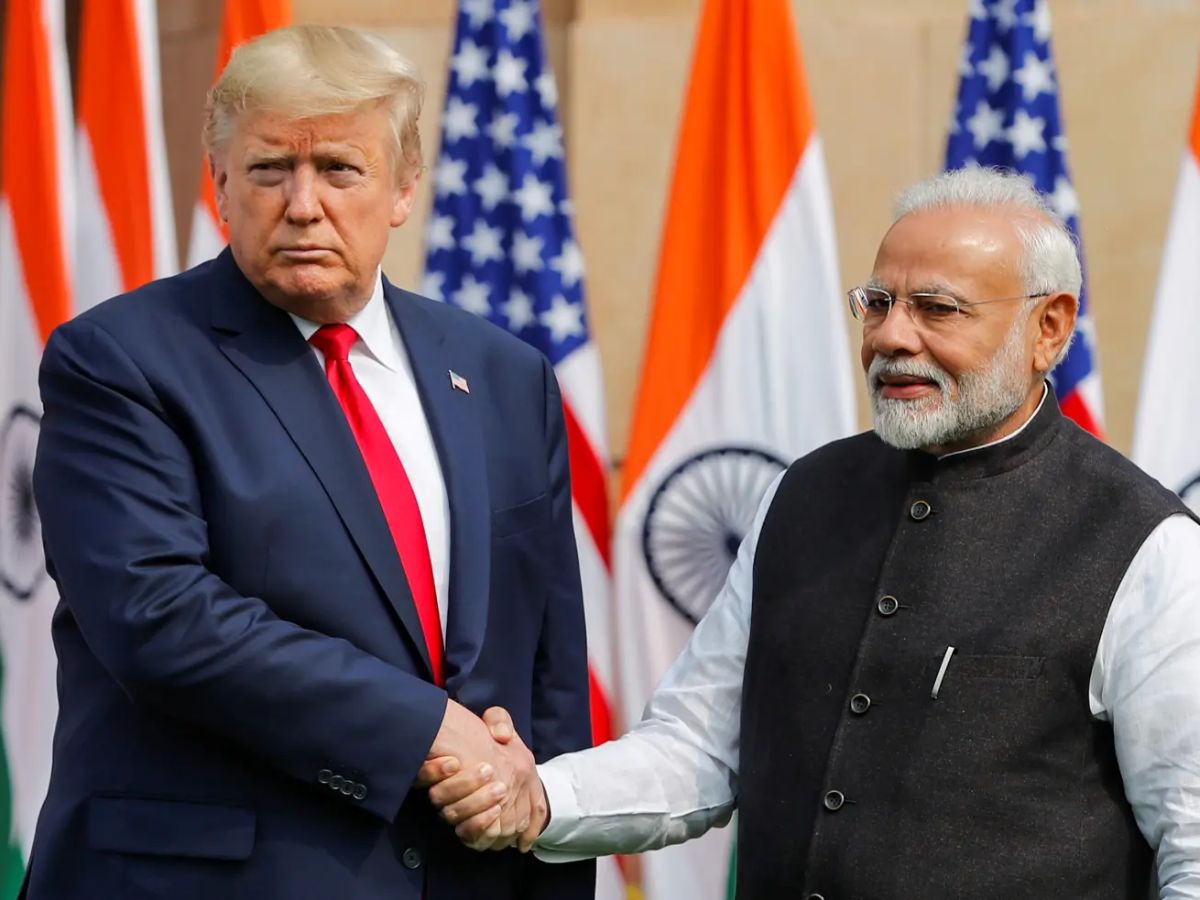
Amid growing turbulence in Indo-US trade ties, Commerce Minister Piyush Goyal assured the Lok Sabha on Thursday that India will “take all necessary steps” to safeguard its national interests, as Washington prepares to impose a steep 25% tariff on Indian goods starting August 1.
Tariff Timeline: From Executive Order to August 1 Deadline
Goyal’s remarks come in the wake of U.S. President Donald Trump’s executive order dated April 2, triggering a 10% baseline tariff effective April 5. The cumulative tariff reached 26% for Indian goods, scheduled initially to kick in by April 9. However, enforcement was deferred twice, first by 90 days and then until August 1.
“India has been closely monitoring developments. The full country-specific tariff is now set to come into force on August 1,” Goyal informed Parliament.
Trump’s Trade Tirade: India ‘Obnoxious,’ Russia Ties Under Fire
President Trump, in a pointed post on Truth Social, accused India of maintaining some of the “highest tariffs in the world” along with “the most strenuous and obnoxious non-monetary trade barriers.” He added that India has “always bought a vast majority of their military equipment from Russia and is Russia’s largest buyer of energy, along with China.”
“Remember, while India is our friend… the August 1 deadline stands strong and will not be extended,” Trump warned in a follow-up post.
India’s Response: “Studying Implications,” Retaliation Not Ruled Out
Soon after Trump’s announcement, the Ministry of Commerce released a formal statement, confirming it had “taken note” of the President’s comments.
“India and the U.S. have been engaged in negotiations on concluding a fair, balanced, and mutually beneficial bilateral trade agreement. We remain committed to that objective,” the ministry said via a Press Information Bureau (PIB) release.
Sources suggest that while retaliatory options are being studied—including WTO consultations or counter-duties—India is in no rush to respond emotionally. “Every response will be calculated and in the national interest,” a top official said.
India’s Trade Strategy: Farmers, MSMEs, and National Sovereignty First
Reaffirming India’s position, the government emphasized that its priorities lie in defending the welfare of “farmers, entrepreneurs, and MSMEs.” The ministry cited the recently concluded Comprehensive Economic and Trade Agreement (CETA) with the UK as an example of India’s balanced trade diplomacy.
“We have never hesitated to protect our sovereignty and economic autonomy—even in the past. This case will be no different,” Goyal asserted.
Geopolitical Undercurrent: Russian Oil, Ukraine War Add Tension
Trump’s attack is seen as part of a wider pressure campaign targeting nations continuing energy or defence ties with Russia. With the Ukraine war far from over and sanctions tightening in the West, India’s strategic independence is being tested, especially as it continues to import discounted Russian crude and maintain historic defence ties with Moscow.
As India evaluates Trump’s August 1 ultimatum, the broader question remains—will this be another bump in a turbulent relationship or a recalibration of economic ties between two of the world’s largest democracies?
For now, India is choosing calm calculation over political theatrics. But with the clock ticking, the next move may shape trade diplomacy well beyond 2025.