
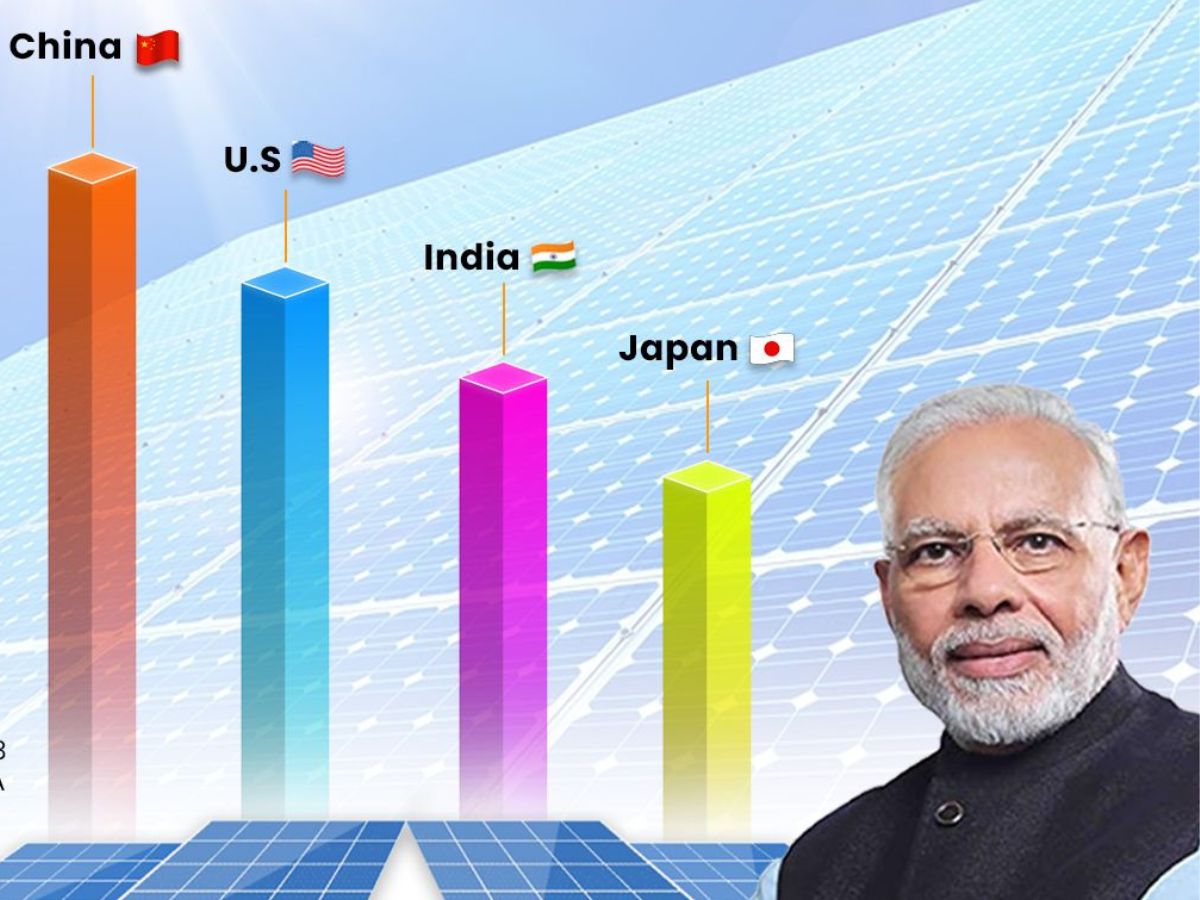
India’s emerges as the world’s third-largest producer of solar energy, surpassing Japan. This has far-reaching consequences, from at least what it looks like. Is it good enough though, both locally and globally, interesting to watch as the future pans out. India boasts of the best targets and aspirations through its ‘Panchamrit’ commitment.
Domestic Consequences
Energy Security and Sovereignty: India’s increased solar capacity decreases dependence on imported fossil fuels, shielding the economy from the shocks of global oil and gas prices. The transition, apart from improving energy security, also allows for the nation’s fast-growing power demand to be met in a sustainable way.
- Economic and Job Growth: The growth of the solar industry is creating a host of economic advantages. It has generated installers’ employment opportunities of millions in rural and semi-urban regions where there are limited opportunities for employment. Solar energy at reduced prices is becoming cheaper to produce, and this is favoring consumers as well as business.
- Environmental and Health Benefits: Growing adoption of solar reduces carbon dioxide and air pollutant emissions. This shift is beneficial for India’s climate target under the Paris Agreement and improves urban and rural air quality, which means improved public health.
- Technology and Manufacturing Boost: India’s solar drive is energizing domestic production, making India less dependent on imports of solar modules and materials. This aligns with the “Make in India” program, enhancing industrial self-sufficiency and export prospects.
International and Strategic Implications
- Global Climate Leadership: India’s solar success announces its intent on climate action, elevating its leadership among developing economies. This could strengthen India’s international negotiation hand and encourage other developing countries to accelerate renewable investments.
- Investment Magnet: Being one of the fastest-expanding renewable markets, India is still desirable for foreign direct investment and international green financiers. The magnitude and speed of deployment also propel innovation and technology transfers from international leaders.
Future Outlook
India’s solar path indicates that it is well on its way to achieving or surpassing its ambitious 500GW non-fossil capacity by 2030. The support of the government for large-scale solar parks, rooftop schemes, and grid modernization will be essential for long-term growth.
- Priorities For Future:
- Upgrades To Grids: High-scale integration of intermittent solar would necessitate massive investments in smart grids, transmission lines, and energy storage facilities.
- Financing Models: New financial tools will be necessary in order to draw ongoing private and international capital, such as green bonds and tariff systems.
- Skill Development: Widespread solar deployment will necessitate a professional workforce, creating demand for training and capacity building across the board.
- Inclusive Growth: Policies will have to ensure rural and underserved communities are able to benefit from access to solar energy, closing the urban-rural gap.
The Roadmap hereon
India’s new status as the world’s third-largest solar producer is a milestone moment in its energy future. The country’s future success will rely on integrated policies, technology improvements, and equitable growth, cementing India’s position as a global clean energy power in the coming years.