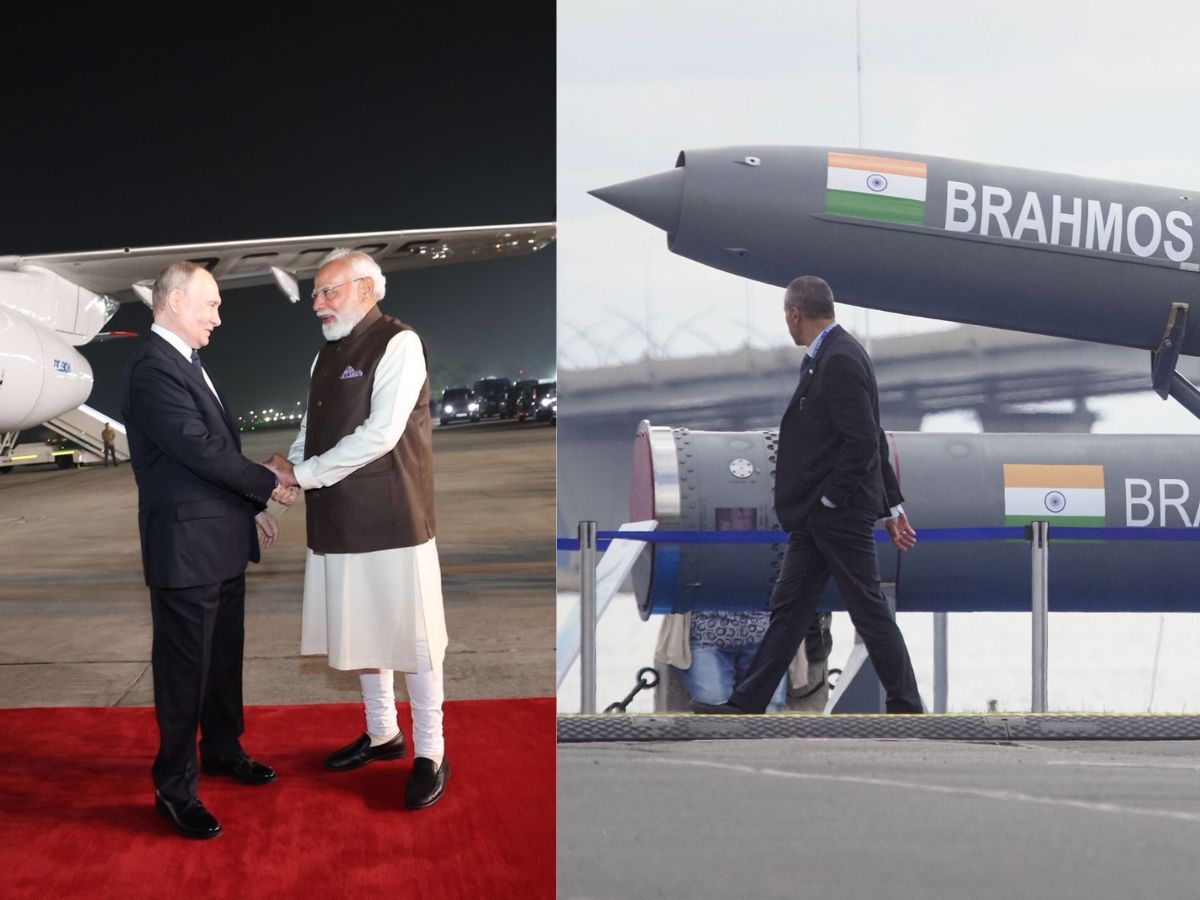
The ongoing India-Russia annual summit is poised to focus significantly on a series of high-value defence collaborations aimed at modernizing the Indian military. Discussions between Prime Minister Narendra Modi and President Vladimir Putin are expected to cover major projects, including a second overhaul of Su-30MKI fighters, the acquisition of long-range R-37 and S-400 missiles, and the co-development of next-generation BrahMos variants.
What Are the Major Defence Projects Up for Discussion?
According to defence sources, the agenda includes several critical initiatives to enhance India’s combat capabilities across air and missile defence.
Key projects likely to be discussed include:
- Su-30MKI Second Overhaul: A proposed plan to upgrade about 100 of India’s 272 Su-30 fighter jets to modern standards, separate from HAL’s own upgrade project for 84 aircraft.
- S-400 & S-500 Air Defence Systems: The focus is on accelerating the delivery of the last S-400 squadrons and examining the S-500 system, especially given their reported strong performance in recent battles.
- S-400 & S-500 Air Defence Systems: The plan includes speeding up the last two S-400 deliveries while exploring the S-500 system, which has reportedly shown strong results in recent missions.
- BrahMos NG & Extended Range: Co-developing a lighter Next-Generation (NG) BrahMos for fitment on all IAF fighters and extending the cruise missile’s range to over three times its current capability.
- Verba Air Defence System: Talks on acquiring the Verba, a very short-range air defence system (VSHORAD).
Why is This Modernisation Push Significant?
This broad upgrade agenda follows a period of major focus on boosting military strength. Rajnath Singh and the Defence Ministry have been actively improving the arsenal since recent confrontations. The discussions show a deliberate effort to maintain technological balance and meet emerging challenges using India’s long-standing defence cooperation with Russia.
The planned Su-30 upgrades and purchase of R-37 missiles are meant to greatly enhance the offensive range and strength of the IAF’s main fighter fleet. At the same time, speeding up S-400 deliveries and looking into the S-500 and Verba systems would build a strong, multi-layered air defence shield.
How Does This Fit the Broader India-Russia Partnership?
Defence cooperation remains the cornerstone of the India-Russia strategic relationship. The summit talks aim to transition from a buyer-seller dynamic to more joint research, development, and production, as exemplified by the BrahMos success story.
Clearing a deal for 280 S-400 missiles would signal that India still trusts Russian platforms. Additionally, collaborative efforts on next-generation BrahMos models and hypersonic technology demonstrate both countries’ pursuit of long-term technical dominance.
PM Modi welcomes Putin, shares glimpses of car ride to PM’s Lok Kalyan Marg residence
Read @ANI Story | https://t.co/WvLM0sNDr1#Russia #Putin #PMModi #India pic.twitter.com/KlK97o62bs
— ANI Digital (@ani_digital) December 4, 2025
Your Questions Answered: India-Russia Defence Talks FAQs
Q: What is the “second overhaul” for the Su-30MKI?
A: It is a major upgrade program proposed in partnership with Russia to modernize the avionics, weapons, and electronic warfare systems of approximately 100 Su-30MKIs, bringing them to contemporary standards to extend their service life and combat effectiveness.
Q: How do the R-37 missiles change the IAF’s capability?
A:The R-37 is a very long-range air-to-air missile that can strike targets over 200 km away. It would let IAF jets hit enemy aircraft, including AWACS and tankers, from far-off stand-off distances, well beyond the reach of most missiles used by nearby rivals.
Q: What is the status of India’s S-400 deal?
A: India has received some squadrons. In the upcoming fiscal year, the discussions will center on accelerating the delivery of the two remaining squadrons in accordance with the predetermined timeline.
Q: What is BrahMos NG?
A: The next-generation BrahMos is a planned lighter and smaller version of the current supersonic cruise missile. It is meant to fit a wider range of fighter jets, including lighter ones like the MiG-29 and Tejas, unlike the heavier model used now.
Q: Are these discussions about new purchases or ongoing deals?
A: The agenda includes a mix: expediting existing deals (S-400), discussing new acquisitions (R-37, Verba), and launching new co-development projects (Su-30 overhaul, BrahMos NG).