
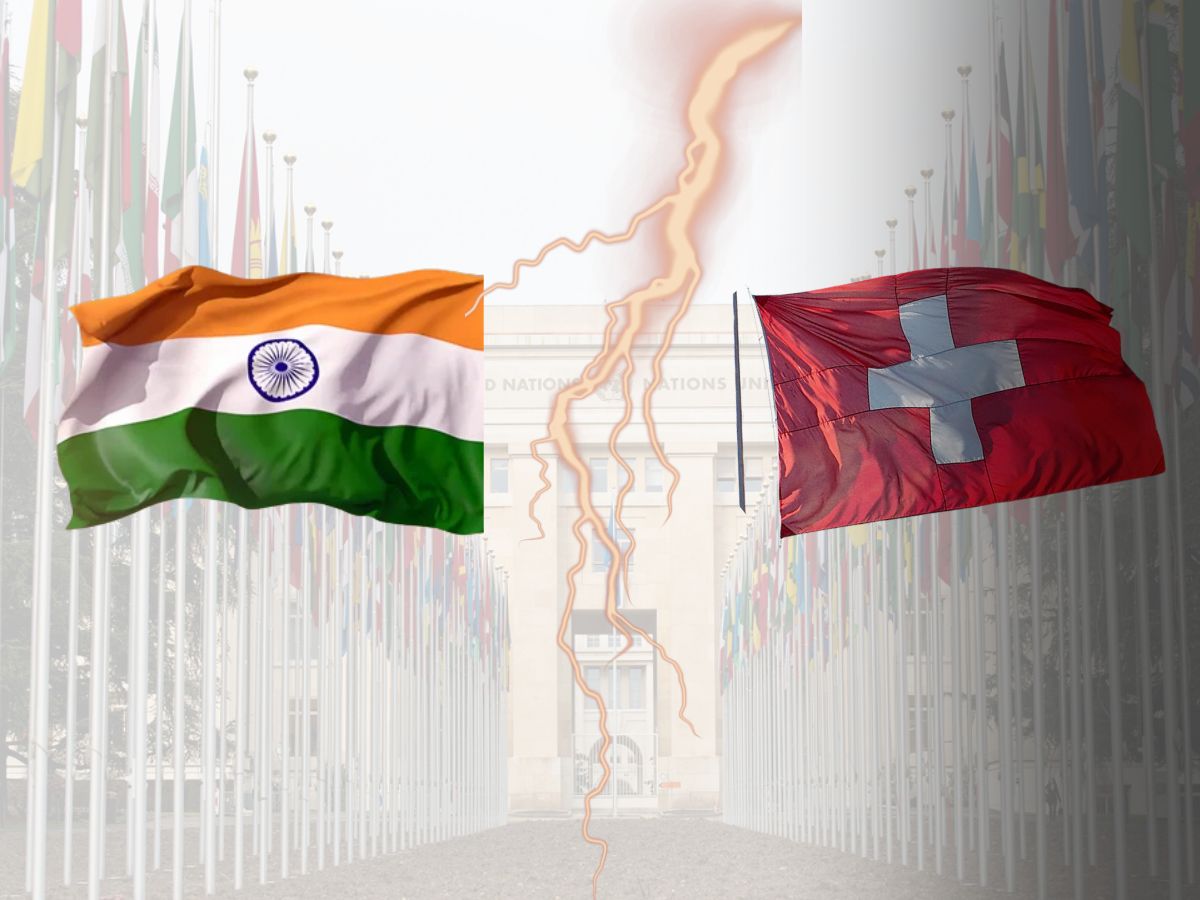
A surprising diplomatic unrest between India and Switzerland became the focus of 60th United Nations Human Rights Council (UNHRC) in Geneva. Certain remarks were made by Switzerland’s side regarding India’s human rights which was followed by a firm rebuttal by India’s diplomat Kshitij Tyagi, providing a significant moment within bilateral relations and highlighting intricacies within global discussion around sovereignty and minority rights.
ALSO READ | Nepal: Is Chinese Toolkit Active Behind Corruption and Mis-governance?
Switzerland’s Comments and Their Context
Switzerland raised concerns about protection of minorities and freedom of expression in India during the UNHRC session. It encouraged more efforts from India to protect these rights, with concern about recent trends that, in the view of Swiss delegates, could undermine democratic principles and human rights guarantees in the world’s most populous democracy.
This move also brought attention to Switzerland’s long-standing posture of human rights advocacy on the world stage. Nevertheless, the timing and tone of the remarks generated instant controversy in light of continuing strong cooperation between the two nations in other areas, such as recent breakthroughs in trade deals and science and technology collaboration.
India’s Strong Rebuttal by Kshitij Tyagi
Indian diplomat Kshitij Tyagi provided a critical counter to the comments of Switzerland in the same meeting. Tyagi described the Swiss remarks as “shallow and ill-informed” and claimed that the Swiss had misrepresented the democratic values of India and its record on human rights. Tyagi called on Switzerland to instead concentrate on resolving internal issues, listing topics such as racism, systematic discrimination, and xenophobia that afflict Switzerland itself.
Tyagi underscored India’s sovereign right to regulate its internal matters and safeguard its heterogeneous population. He condemned Switzerland for “wasting the valuable time of the Council” with what India saw as deceptive accounts, highlighting that India has always maintained the rights of minorities and freedom of expression within its constitutional paradigm.
Parallel Diplomatic Dimensions
Tyagi’s response also came in the backdrop of India calling out Pakistan’s manipulation of UN forums to malign India’s image, thereby highlighting the complex geopolitical rivalries that often color human rights discussions.
ALSO READ | Is the POTUS Caving? What does Trump’s Recent Soft Tone Mean..
In addition, India-Switzerland relations have also witnessed tensions not just in diplomatic postures. Post-January 2025, Switzerland withheld the Most Favored Nation (MFN) clause for India in their Double Taxation Avoidance Agreement (DTAA), affecting tax treaty benefits and financial flows between the two countries. Although separate from the human rights issue, this budgetary conflict has helped create a culture of increased scrutiny and tension.
Broader Implications
This incident at the UNHRC shows the difficulties nations experience in balancing domestic administration with global expectations of human rights. The comments of Switzerland and the counterarguments by India reflect how even healthy bilateral relationships can experience moments of conflict when norms of sovereignty and universal principles meet.
ALSO READ | Punjab Floods: Climatic Fluctuations Move Beyond Warnings
What to Conclude
In conclusion, the controversy and Tyagi’s forthright response reaffirm India’s stance of defending its internal policies on the international stage while calling for mutual respect among nations in global forums. The incident also reflects the broader dynamics at play in international diplomacy where human rights advocacy, geopolitical interests, and bilateral relations converge.
This conflict at the UNHRC has potential bearing on future discussions between Switzerland and India, signifying the need of careful engagement to balance differences with the promotion of cooperation.