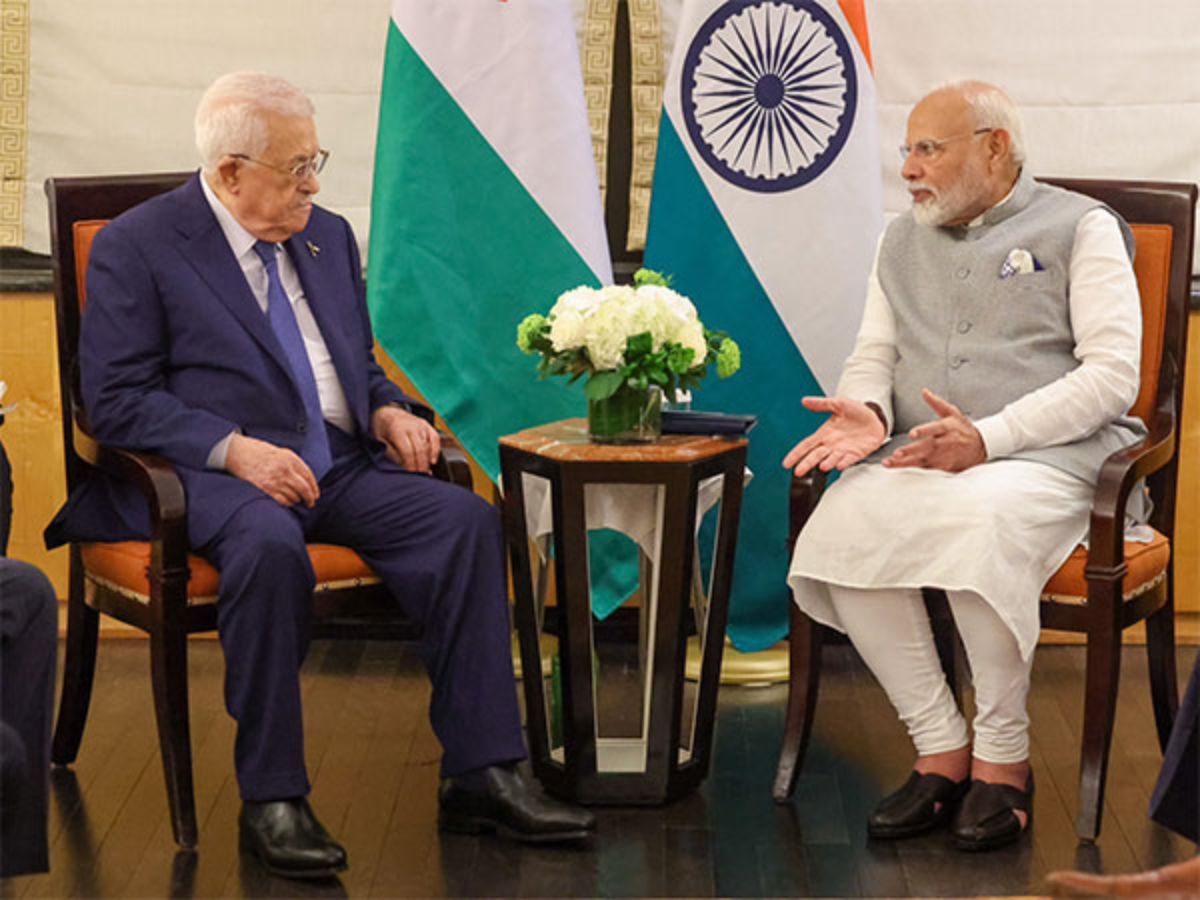
In a move that marks a significant evolution in its diplomatic position, India has voted in favour of a major United Nations resolution endorsing a peaceful two-state solution for Palestine and condemning the humanitarian crisis in Gaza. New Delhi has been abstaining on similar votes about the Israel-Hamas conflict, but this vote marks a marked break from that trend.
What Was the Resolution About?
A resolution entitled “Endorsement of the New York Declaration on the Peaceful Settlement of the Question of Palestine and the Implementation of the Two-State Solution” was put to a vote by the UN General Assembly. Introduced by France and co-hosted with Saudi Arabia, the resolution is based on a seven-page declaration from a July conference. It achieved overwhelming support, passing with 142 nations in favour. Only 10 countries, including Israel and the United States, voted against it.
UN General Assembly overwhelmingly backs two-state solution and creation of an independent Palestinian state:
142 in favor, 12 abstained, 10 opposed, including the US, Hungary, and Argentina. pic.twitter.com/gLNhOJOMDS
— Clash Report (@clashreport) September 12, 2025
What Does the New York Declaration Say?
The declaration is a thorough document that discusses both sides of the dispute.
Condemns Hamas: It explicitly condemns the October 7th Hamas attack on Israel that killed 1,200 people and saw over 250 taken hostage.
Criticizes Israel’s Campaign: The retaliatory measures of Israel are also criticized, pointing to “widespread civilian casualties, destruction of civilian infrastructure, and siege and famine” that have resulted in a humanitarian chaos. Gaza’s local health authorities say more than 64,000 people have died.
Calls for a Two-State Solution: It calls on Israeli leadership to commit to a two-state solution and demands it “immediately halt all settlement, land grabs and annexation activities.” It firmly states that “Gaza is an integral part of a Palestinian State” and must be unified with the West Bank, rejecting any occupation or forced displacement.
How Does This Represent a Shift for India?
India’s vote is being closely watched as a major policy signal. This is because:
A Shift in Approach: For three years, the Modi administration abstained from four consecutive UN General Assembly resolutions calling for a Gaza ceasefire. This persistent abstention was interpreted as an attempt to strike a balance between its expanding defense and strategic alliance with Israel and its historically close links to the Palestinian people.
A Vote for a Broader Consensus: By voting “yes,” India has now aligned itself with the overwhelming global consensus, including all Gulf Arab nations—key partners for India’s energy and economic security. In part driven by growing humanitarian demands and a desire for higher status in the international community, this change suggests a strategic realignment.
Also Read: ‘We Welcome The New Interim Government’: India Backs Sushila Karki-Led Nepal Amid Crisis
Who Opposed the Resolution and Why?
The resolution was strongly opposed by Israel and the United States. An Israeli foreign ministry spokesperson called the General Assembly a “political circus detached from reality” for not explicitly labeling Hamas a terrorist organization in the text. The U.S. Morgan Ortagus, a former diplomat, described the declaration and resolution as “political grandstanding” and “a gift to Hamas.” The mission to the UN expressed its objection to it.
India’s decision to break from its recent pattern and vote in favour underscores a nuanced but clear shift, prioritizing a collective call for peace and a two-state solution amid one of the world’s most protracted and devastating conflicts.