
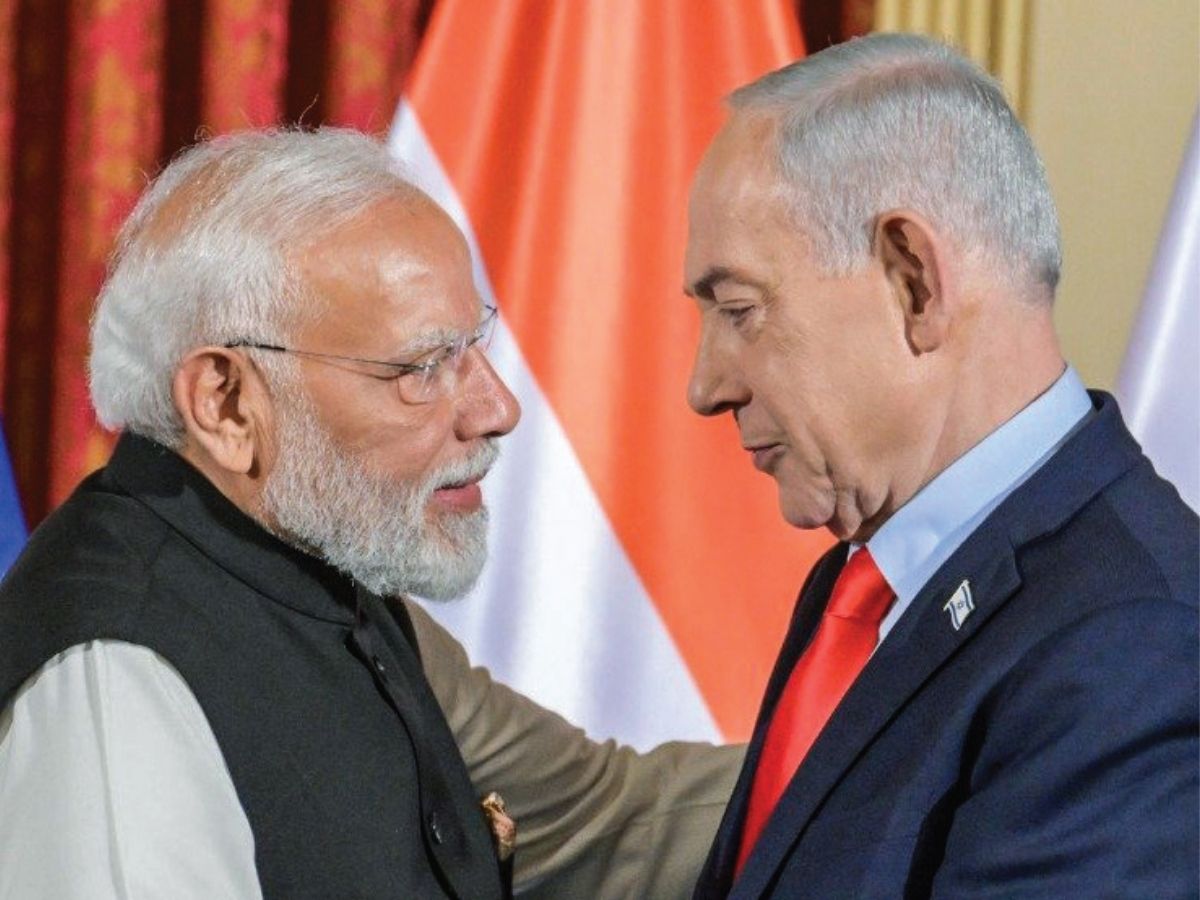
Diplomacy, at its most consequential, rarely announces itself in thunderclaps. It accumulates instead—document by document, sector by sector—until, almost quietly, the relationship in question begins to look different. The outcomes of Prime Minister Narendra Modi’s February 25–26 visit to Israel carry precisely that quality: not spectacle, but sediment; not symbolism alone, but scaffolding.
Seventeen agreements stretch across an unusually wide arc. There is earth and ocean here—geophysical exploration, fisheries, aquaculture, maritime heritage at Lothal. There is technology threaded through governance—AI in education, fintech regulation, cybersecurity architecture, horizon-scanning for strategic foresight. And there is livelihood, unmistakably so, in the labour mobility protocols spanning commerce, manufacturing, and restaurants, pathways that could place up to 50,000 Indian workers in Israel over five years through regulated routes.
Some initiatives feel almost tactile in their intent: an India–Israel Innovation Centre for Agriculture to test precision farming and satellite irrigation; UPI-linked remittance channels easing cross-border flows; arbitration bodies and universities exchanging expertise across fields as distant—and unexpectedly complementary—as Buddhist studies and mathematics. Alongside, a new cultural exchange cycle promises movement of artists, scholars, and ideas, softening the geometry of statecraft with human texture.
Above this granular lattice sits the formal elevation of ties to a Special Strategic Partnership, reinforced by ministerial science dialogue, joint work on critical technologies, expanded fellowships, and fresh academic and parliamentary forums. None of it is theatrical. All of it is structural.
And that, perhaps, is the point. Relationships mature not in moments, but in mechanisms. This visit builds many.