
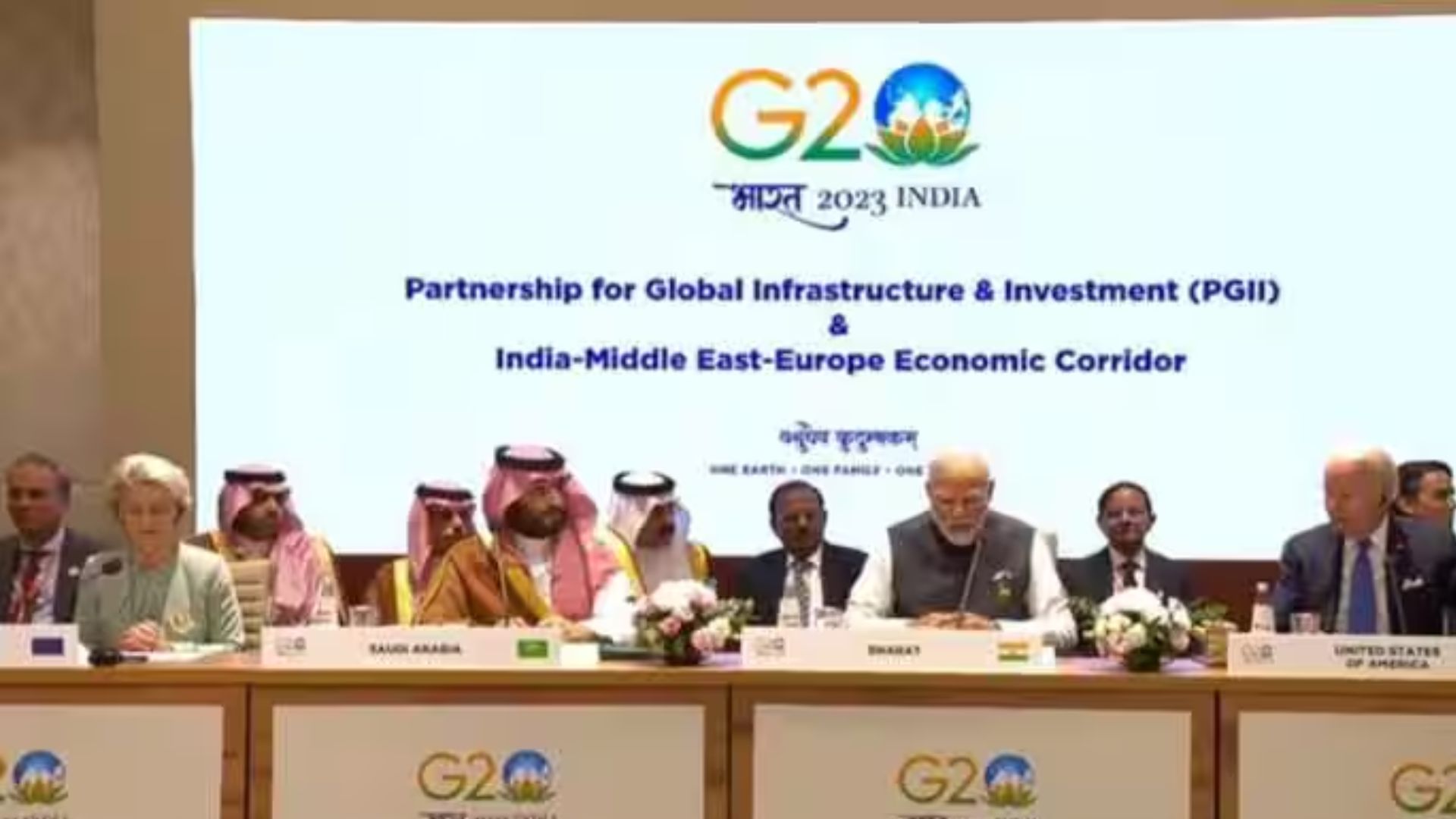
India is currently welcoming diplomats from several major nations to push forward the India-Middle East-Europe Economic Corridor (IMEC) an ambitious connectivity initiative that aims to link India, the Middle East, and Europe through a network of railways and ports. This initiative is being seen as a strategic alternative to China’s Belt and Road Initiative (BRI).
Despite ongoing geopolitical tensions including India’s complex relationship with the US and instability in West Asia the high-level engagement signals strong commitment to the project’s advancement.
Strategic Meeting Led by India’s National Security Council
The two-day meeting, which started on Tuesday, is being organized by India’s National Security Council Secretariat. Representatives from countries like the United States, UAE, France, and Italy are attending to explore ways to move the project forward.
The IMEC has eight core members: India, the UAE, Saudi Arabia, France, Germany, Italy, the US, and the European Union. Additionally, Jordan, Israel, and Greece have joined the dialogue, while Egypt and Oman — because of their key locations — are also expected to play important roles.
European Nations Offer Ports as Entry Points
Several European nations are already aligning their infrastructure with the project. Italy, France, and Greece have proposed their ports as main entry gateways for IMEC into the European continent, reinforcing the corridor’s importance for regional and global trade.
IMEC Seen as a Modern Silk Road
Earlier this year, Commerce and Industry Minister Piyush Goyal described IMEC as more than just a trade route. Speaking at a high-level roundtable, he said, “It is a modern-day Silk Route, a partnership of equals, which fosters synergy, connectivity, and inclusive prosperity.”
He added that the corridor would offer major logistical advantages. According to Goyal, “It will bring down logistics costs by up to 30%, reduce transportation time by 40%, and create seamless trade linkages across continents.” He further said, “We will not only be linking trade; we will be linking civilisations and cultures—from Southeast Asia to the Gulf, from the Middle East to Central Europe.”
Economic and Geopolitical Implications
Experts believe IMEC is a game-changing initiative for India’s economic growth. Shishir Priyadarshi, president of Chintan Research Foundation, a Delhi-based think tank, remarked that the project could significantly boost India’s development. However, he emphasized that “a holistic approach with strong participation of private businesses would be essential to see this project through.”
From a geopolitical perspective, IMEC is also viewed as a symbol of India’s rising global influence. It coincides with India’s emergence as the world’s fourth-largest economy and represents its ambitions to shape global economic and political frameworks.
Strengthening Ties Across Regions
The project also reflects India’s growing ties with West Asia and Israel. It builds on the diplomatic momentum created by the Abraham Accords, signed in September 2020, which brought Israel closer to Arab nations.
By enhancing direct connectivity to Europe, IMEC is expected to open up new business opportunities and boost India’s role in global trade. As trade between India and the European Union expands, the corridor is seen not only as a commercial venture but as a strategic tool to deepen partnerships and promote regional integration.