India has drawn up a global strategy to counter the United States’ steep 50 per cent tariff on its textile imports. The plan is to launch dedicated outreach programmes in 40 countries, including major markets in Europe, Asia, and the Middle East.
Officials say the move is not only about damage control but also about reducing dependence on the US and making India a stronger player in the global textile trade.
India Outreach Plan
According to officials, Export Promotion Councils (EPCs) and Indian Missions abroad will lead the diversification effort. Their focus will be on showcasing India as a “reliable supplier of quality, sustainable, and innovative textile products.”
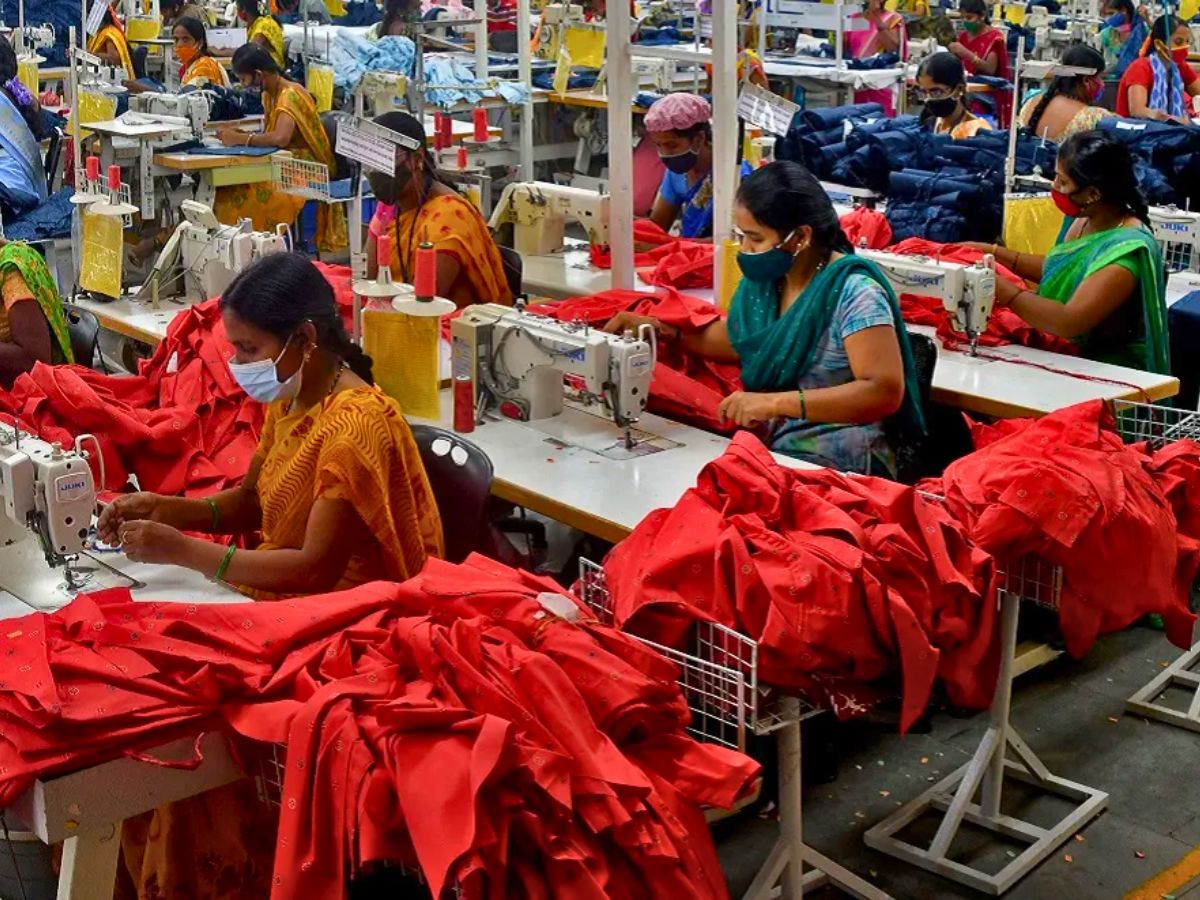
The outreach strategy includes linking buyers to India’s specialised textile clusters in Surat, Panipat, Tiruppur, and Bhadohi. Tiruppur, known as the knitwear capital of India, is especially important because thousands of small exporters there depend on the US market. Industry leaders say fresh buyers in other regions will help cushion the blow from America’s tariff wall.
ALSO READ: Commonwealth Games 2010 Scam: But Is India Ready for the CWG 2030 Bid?
Which 40 Nations and Why These Countries?
The 40 countries include Australia, Belgium, Canada, France, Germany, Italy, Japan, Mexico, Poland, Russia, Spain, South Korea, Turkiye, the Netherlands, the UAE, and the UK.
An official explained that India already trades with more than 220 countries, but these 40 hold the key to real growth. Together, they import over $590 billion worth of textiles annually. India’s current share is only about 5–6 per cent, leaving a huge untapped market. By focusing on both traditional and emerging destinations, India hopes to grow its global footprint.
Why Did Trump Impose the Tariff?
The US tariff, which doubled from 25 per cent to 50 per cent on August 27, affects Indian exports worth over $48 billion. Former President Donald Trump said the decision was a “punishment” for India’s oil purchases from Russia amid the Ukraine war.
The sharp increase has left Indian exporters at a disadvantage compared to rivals like Bangladesh, Vietnam, Sri Lanka, and Indonesia, which enjoy lower duty access to the American market.
ALSO READ: Vaishno Devi Tragedy: What Happens Next to the Landslide Victims’ Bodies?
India’s Textile Sector Feels the Pressure
India’s textile and apparel sector is valued at $179 billion, with exports worth $37 billion. In global rankings, India stands sixth with a 4.1 per cent market share. But the latest tariff shock threatens this position.
According to Mithileshwar Thakur, Secretary General, Apparel Export Promotion Council (AEPC), “The textiles sector, with exports of $10.3 billion, is one of the worst-impacted sectors, next only to gems and jewellery with $12 billion, and electrical and mechanical machinery with $9 billion exposure to the US market.”
He added, “The total 50 per cent tariff on Indian imports into the US has effectively driven the Indian apparel industry out of the US market as the gap of 30-31 per cent tariff disadvantage vis-a-vis major competing countries like Bangladesh, Vietnam, Sri Lanka, Cambodia & Indonesia.”
In places like Tiruppur, where over 10,000 knitwear units employ lakhs of workers, the pain is already visible. Exporters warn that if orders keep shrinking, job losses will rise, making alternative markets critical.
Commerce Ministry’s Next Steps
The Commerce Ministry will hold meetings this week with exporters from different sectors to explore new opportunities. Officials said work is moving quickly on the Export Promotion Mission, announced in the Union Budget 2025–26.
The mission aims to support exporters with market intelligence, sustainability standards, and better use of free trade agreements.
ALSO READ: 2030 Commonwealth Games: Will Gujarat Host One of the World’s Biggest Sporting Events?
Diversification Beyond the US
The United States accounts for about 20 per cent of India’s $437 billion exports, making it the largest trading partner. But this dependence has made India vulnerable to policy shocks.
India is currently being forced to diversify due to the tariff situation. The nation intends to transform this setback into a long-term opportunity by entering new markets, negotiating free trade agreements, and strengthening a more robust ‘Brand India’ identity, and according to officials, India will become more resilient and well-positioned in the global textile market if it relies less on the US.